
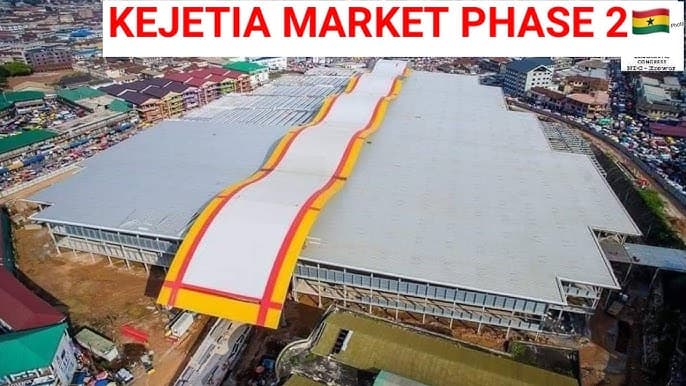
About 150 workers on the stalled Kejetia Phase II Market Project in Kumasi have been laid off by construction company CONTRACTA, according to sources close to the project.
The affected workers include engineers, technicians and labourers, and are said to make up nearly two thirds of the workforce on the project.
Sources told Silver News Akwadaa Nyame that the layoffs followed months of inactivity at the construction site, with workers reportedly staying home while continuing to receive salaries despite the suspension of work.
The sources said there was an arrangement under which the Government of Ghana was expected to subsidise part of the workers’ salaries during the period the project remained inactive.
However, the agreement was allegedly not honoured, leaving CONTRACTA to carry the financial burden alone.
The Kejetia Phase II project, intended to complement the redeveloped first phase of the Kejetia Market, has been stalled for years, raising concerns among traders, residents and workers about the future of the development.
Some affected workers expressed frustration and appealed to the government to release funds to allow construction to resume.
“We are pleading with government to release the money for the project to continue so that we can return to work and support our families,” one worker said.
Others warned that the layoffs could worsen hardship for many households already struggling with the rising cost of living.
“This is the only work some of us rely on to survive. Without it, life will become very difficult for many families,” another worker said.
The latest development has renewed concerns over the prolonged delay of the Kejetia Phase II project and its impact on jobs and the local economy in Kumasi.
The Phase 2 redevelopment of the Kumasi Central Market (Kejetia Phase 2) is a stalled project estimated to cost €305 million.
The project has reached approximately 70% completion but has remained halted for over three years due to unpaid certificates and financing uncertainties, sparking major protests from traders in 2026