
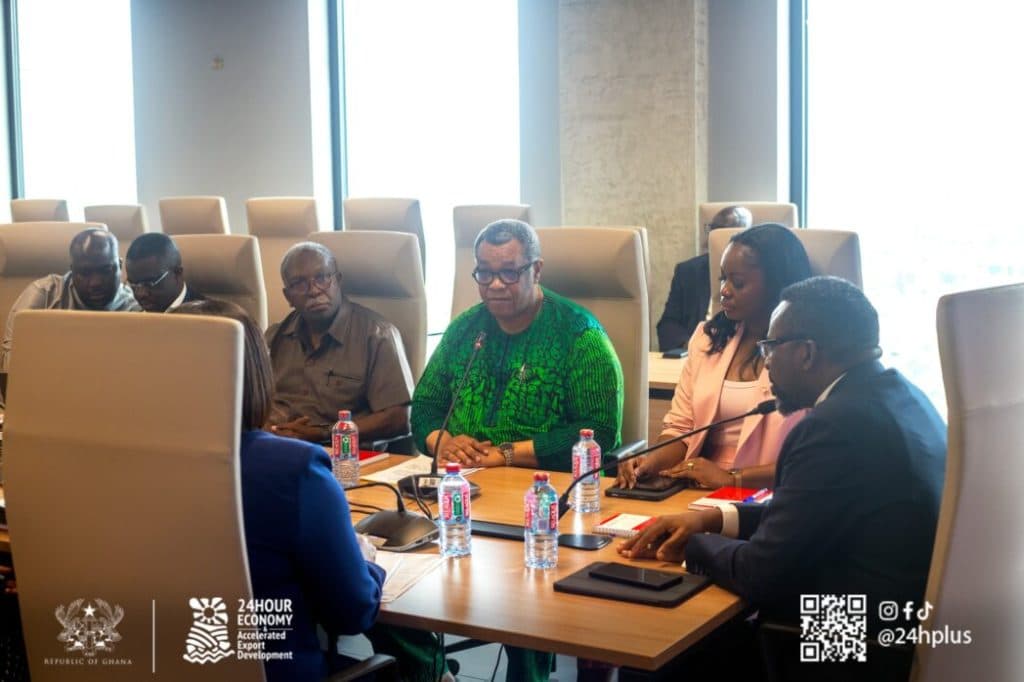
The 24 Hour Economy Secretariat has deepened consultations with the Bank of Ghana, placing food price stability, enterprise financing and support for production at the centre of talks as the programme moves into its operational phase.
At a high level meeting in Accra, officials from the Secretariat and the central bank examined how the flagship 24 Hour Economy initiative can reinforce Ghana’s recent macroeconomic stabilisation while protecting financial stability.
The discussions focused on practical measures that go beyond policy statements and translate into real support for businesses, farmers and exporters. Officials explored ways to use targeted, micro level interventions to expand production, grow exports and strengthen local enterprises without undermining monetary policy gains.
A key proposal tabled was the creation of a Food Security and Price Stabilisation Fund. The fund is expected to help moderate sharp swings in food prices, ease inflationary pressures and strengthen national food security. It is designed to complement existing monetary policy tools by tackling supply side constraints that often drive up the cost of food.
Beyond food security, the meeting addressed access to finance for businesses expected to operate under the 24 Hour Economy framework. The two sides considered a dedicated 24H+ credit policy, coordinated credit appraisal systems and syndicated lending arrangements to reduce risk for banks while expanding credit to viable enterprises.
They also discussed recognising credit insurance schemes, introducing foreign exchange hedging tools to protect small and medium enterprises from currency risks, and deploying digital platforms to widen access to trade and finance.
For many business owners, access to affordable credit and stable prices remain daily challenges. Officials say aligning the 24 Hour Economy programme with the country’s broader macroeconomic and financial stability framework is essential to ensure that expanded economic activity translates into jobs, stable incomes and sustainable growth.
The engagement with the Bank of Ghana marks a significant step in building the financial services architecture needed to support round the clock economic activity as the 24 Hour Economy programme moves from planning to implementation.



