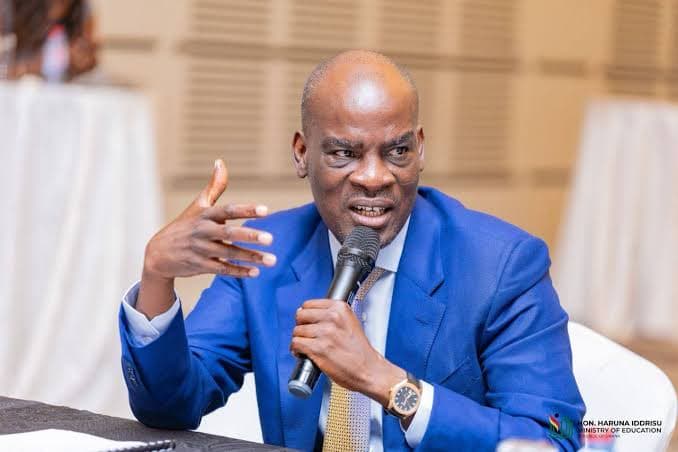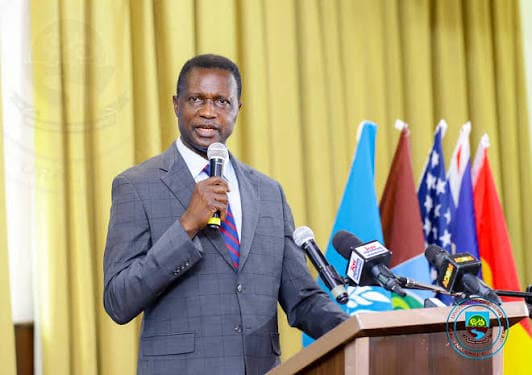
Former Education Minister Yaw Osei Adutwum has warned that Ghana’s education system is facing a serious teacher shortage, with about 30,000 classrooms reportedly without teachers.
According to him, the situation could leave nearly one million students without adequate teaching and learning support if urgent steps are not taken.
Speaking on Metro TV’s Good Evening Ghana on Tuesday, September 8, Dr Adutwum said the scale of the shortage should concern policymakers because the problem directly affects the quality of education children receive.
“We have 30,000 classrooms currently that don’t have teachers,” he said.
He explained that when the number of affected classrooms is translated into student numbers, the potential impact becomes even more worrying.
“You’re talking about close to a million students who could potentially be sitting in classrooms without a teacher,” he said.
Dr Adutwum said the current Education Minister had recognised the problem and requested clearance for 50,000 teachers, but only 7,000 were reportedly approved.
“The Minister of Education asked for 50,000 teacher clearance. They gave him 7,000,” he said.
For him, the gap requires immediate political attention because the consequences will eventually show up in students’ academic performance.
“If the President doesn’t act quickly, we are going to be in trouble,” he warned.
His comments come against the backdrop of concerns over poor performance in the West African Senior School Certificate Examination (WASSCE), particularly in core subjects such as Mathematics.
Dr Adutwum argued that Ghana cannot address poor examination outcomes without first dealing with the conditions under which students learn.
He said weaknesses in students should be identified much earlier, particularly when they enter senior high school, so that teachers can intervene before those weaknesses become major problems at the WASSCE level.
The former minister also linked the teacher shortage to the broader question of Ghana’s economic future.
He argued that education should not be treated simply as a social service but as an investment in the country’s human capital.
According to him, ensuring that students have teachers in the classroom is one of the basic requirements for developing the skills Ghana needs to compete in a changing global economy.
The former minister has also called for greater attention to STEM, artificial intelligence and information technology, arguing that Ghana must equip young people with practical skills that can translate into productive employment.
“We cannot memorize our way out of poverty,” he said.
Dr Adutwum believes the country’s education system must therefore focus not only on getting children through examinations but also on building the knowledge and skills required to drive economic transformation.