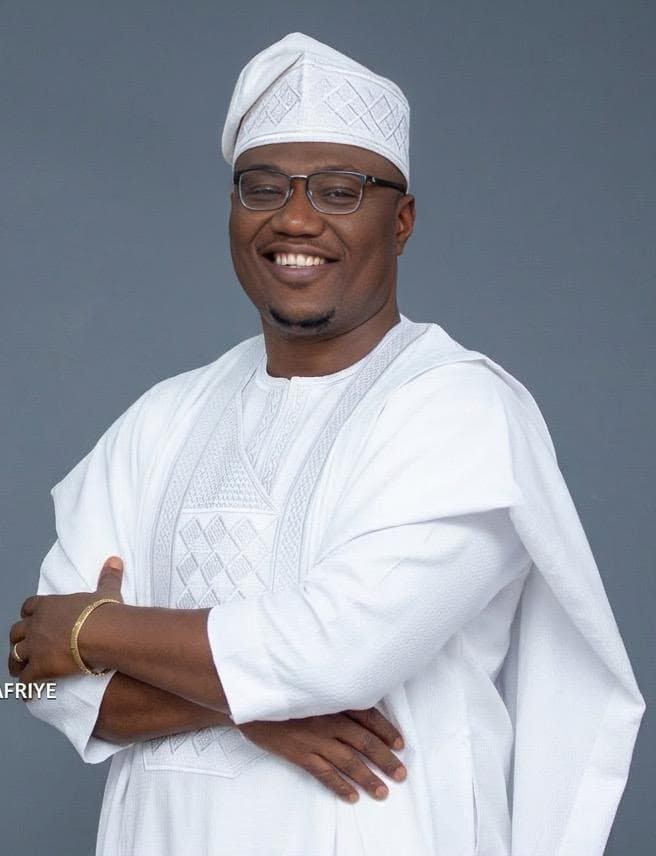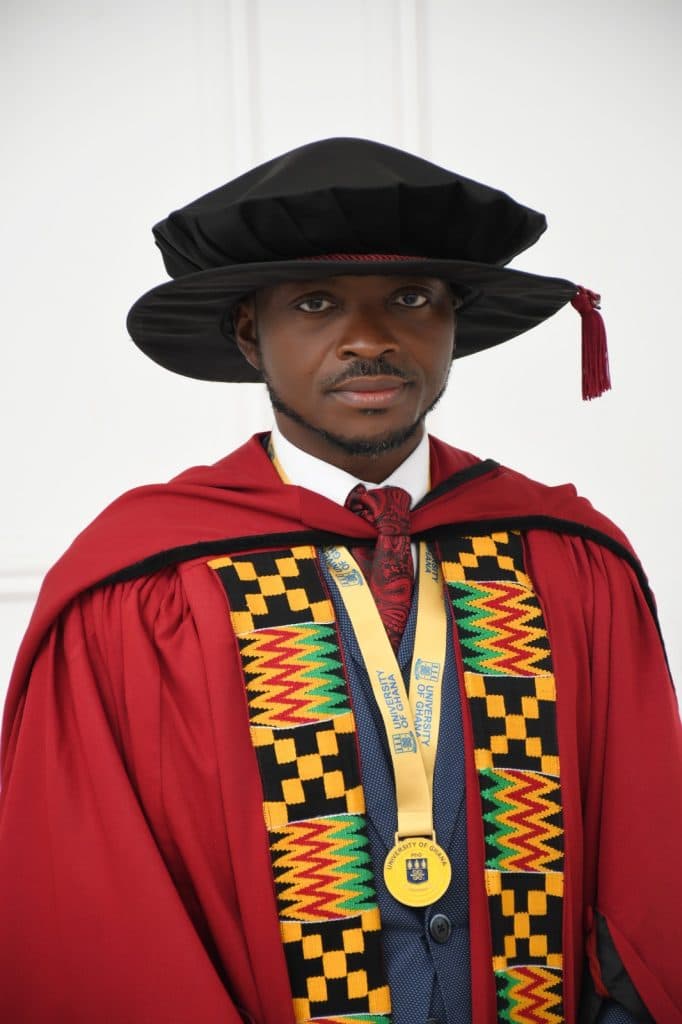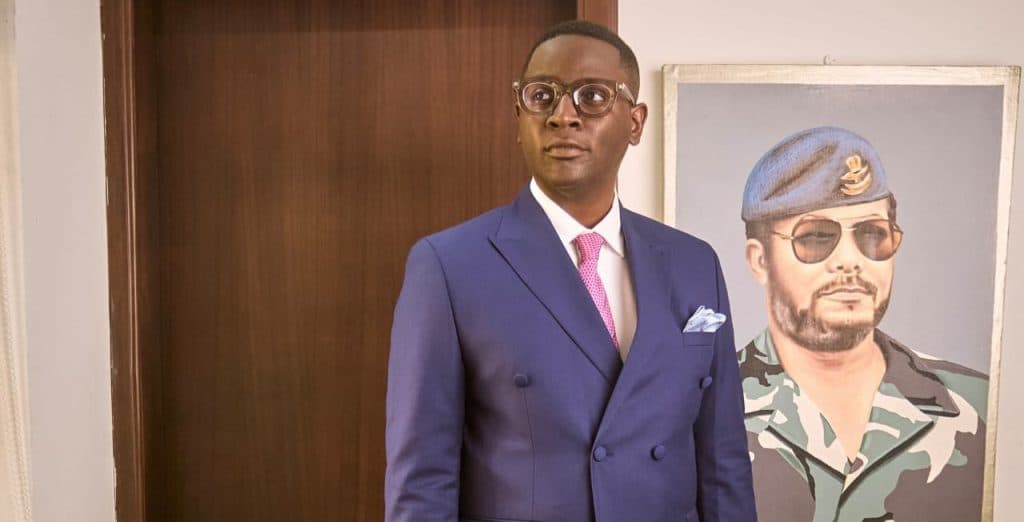
There comes a time in the life of every region when the call to serve is answered not by the usual seekers of political office, but by those who have already dedicated themselves to the work of building and preserving. Such a moment may now be upon the Volta Region, as V. L. K. Djokoto establishes an exploratory committee to contest the position of Regional Secretary for the National Democratic Congress.
At thirty, Djokoto enters the political arena with a record that speaks for itself – a young man who has chosen service over self-promotion, substance over spectacle. He represents the best of what our region has always produced: sons and daughters educated to the highest standards, rooted in our traditions yet equipped to meet the challenges of our times.
The Making of a Leader
To understand V. L. K. Djokoto is to understand a life devoted to preparation and service from the earliest age. At Christ the King International School and later The Roman Ridge School —where he became senior prefect in sixth form — he was a talented footballer who loved to debate current affairs and excelled academically, particularly in history. Even then, the patterns were clear: a young man who combined physical discipline with intellectual curiosity, leadership with scholarship.
In 2016, he graduated from Swansea University with a degree in law after three years of undergraduate study. As a fresh graduate, his first position was as Legal Aide to the Ghana Armed Forces, where he gained direct experience of the discipline and structure of military service—an education in rigour that would serve him well in every endeavour that followed.
He then served as court clerk at the Circuit Court, the High Court’s Finance Division, and as legal researcher at the Supreme Court. At court, he understudied judges, learning the justice system not as a distant observer but as an insider who understood how justice is actually administered in our country. This was no theoretical education. This was the practical school of how institutions function and how decisions are made.
From there, he joined Enjoy magazine, where he wrote a column that became popular in diplomatic circles. This marked the beginning of his career in journalism—a career that would see him join Class FM as a broadcast journalist and producer focused on politics, and later Metropolitan Entertainment Television, where he served as assistant producer of Good Evening Ghana whilst also working as a court reporter. Here was a young man who could move between law and journalism, between the courtroom and the newsroom, bringing to each the insights gained from the other.
During this period, he took on perhaps his most audacious project: becoming proprietor of the Accra Evening News and reviving Kwame Nkrumah’s historic newspaper. Think of what that means. A newspaper founded by the father of our nation, silent for years, brought back to life by a young man barely in his twenties. It was an act of cultural preservation that spoke to a deeper understanding of what Ghana needs—not just economic development, but the revival of institutions that connect us to our history and identity.
He is also co-founder of the Ghana Equestrian Society, bringing to Ghana a sport long associated with discipline, tradition, and excellence.
A Family’s Commitment to Ghana
Since 2018, Djokoto has led D. K. T. Djokoto & Co., the old family office established in 1950 that has stood as a pillar of Ghana’s economic and political life. Founded in those crucial years before independence and administered by traditional leaders from the start, this institution has witnessed the birth of our nation and walked alongside its journey through the decades.
The firm specialises in four areas that are crucial to Ghana’s development: real estate, rural development, public relations, and arts and culture. For seventy-five years, through governments of every political colour, through prosperity and hardship, through all the tensions that have tested our democracy, this firm has maintained one unwavering commitment: to provide sound, independent counsel to those who shape the destiny of our nation.
When you examine their clients — the Ministry of Finance, the European Union, the National Petroleum Authority, Société Générale Ghana — you see institutions that form the backbone of our country’s development. This is not the work of opportunists. This is the patient building of trust, the steady accumulation of knowledge, the unglamorous but essential work of competence. It is precisely the kind of experience our politics desperately needs but too seldom attracts.
Proven in the Heat of Campaign
Some may ask whether a man of business, culture, and journalism can handle the demands of political organisation. The 2020 campaign answered that question decisively. As Communications Team Lead for Professor Jane Naana Opoku-Agyemang, the NDC’s Vice-Presidential candidate, Djokoto showed exactly what he is capable of when the stakes are highest.
He led a small team of photographers and a filmmaker with the skill of someone who knows how to achieve much with limited resources — a talent our region understands well. He directed the creative work with a sharp eye for both beauty and strategy, understanding that in today’s politics, what people see matters as much as what they hear. He selected images for the press with the judgement of someone who knows that a single photograph can make or break a message.
But it was in the work of communication itself that Djokoto truly distinguished himself. He wrote public statements for social media with the precision of a trained lawyer and the insight of a journalist who understands what moves people. He crafted human-interest stories about the Vice-Presidential candidate for the Daily Graphic, Ghana News Agency, Citi News, JoyNews, and Radio Gold—stories that reminded voters, amidst all the political noise, of the human beings behind the manifestos. He produced short films that captured attention in an age when everyone’s focus is divided in a hundred directions.
This was no accident. This was the disciplined application of real skills — honed in courtrooms and newsrooms, in the family office and on the campaign trail — to the most demanding test in democratic politics: a national campaign. It proved beyond doubt that Djokoto has not merely ideas about politics but the practical ability to deliver results under pressure.
A Vision Rooted in Reality
What distinguishes Djokoto from many who seek political office is that his vision for the Volta Region is not built on promises alone. It rests on actual work already done, on studies already completed, on plans already drawn.
D. K. T. Djokoto & Co has carried out detailed feasibility studies across our region, with particular attention to Keta Municipal District. These are not the superficial surveys politicians commission to decorate their campaign literature. These are serious evaluations of what our region can produce and what investments it needs: millet and rice cultivation, fisheries for crabs and oysters, the revival of traditional crafts like mat-weaving and boat-making, improved net technology, sugarcane and coconut farming.
Here is someone who comes to politics asking not “What can the Volta Region do for me?” but “What specific investments can turn the Volta Region’s potential into prosperity?” That is the difference between rhetoric and reality, between promises and actual plans.
Through his work in rural banking along our coast, Djokoto has seen with his own eyes how access to financial services can transform communities. He understands that development is not simply about government programmes but about creating the economic foundations that allow our people to build their own futures.
Preserving Who We Are
Yet Djokoto’s vision goes beyond economics. In an age when globalisation threatens to wash away the distinctive character of our cultures, when the rich texture of African civilisation risks being eroded, he has devoted himself to preserving and celebrating who we are.
His revival of the Accra Evening News — transforming Nkrumah’s newspaper into what he calls a “post-partisan cultural newspaper”— is not a tool for any faction but a platform for genuine national conversation. He has built a private collection of African art worth £250,000, preserving decades-old treasures from across our continent. He has written a book, Revolution, and a play, Afro Gbede. He finances what he describes as “a cultic arts and culture department intensely focused on engineering a radiant legacy.”
This is not the dabbling of a dilettante. This is a profound understanding that our economic future cannot be separated from our cultural confidence. Development that ignores identity is development that fails. The Volta Region’s strength lies not in becoming something other than ourselves but in becoming more fully what we have always been.
Prepared for Leadership
After Swansea, Djokoto completed the Legal Practice Course at City St George’s, University of London. He is currently pursuing an MPhil in African Studies at the University of Ghana—a scholar and practitioner who understands that leadership today requires both technical expertise and cultural depth.
He has been interviewed by the Washington Post, Joy News, Business & Financial Times, and Graphic Showbiz. He has appeared in documentary films. But he has not sought attention for its own sake. He has used these platforms to advance ideas, to celebrate Ghana’s heritage, to articulate a vision of development that honours our traditions whilst embracing the innovations necessary for progress.
Building Consensus for Service
The exploratory committee Djokoto has assembled tells you something important about how he approaches leadership. It includes party bosses who understand the machinery of politics, friends who know his character, family who have watched him grow, and business associates who have worked alongside him. This is not a committee assembled for show. This is a group of people whose judgement matters, whose counsel will be honest, and whose combined wisdom will help determine whether this candidacy can truly serve the region’s interests.
In bringing together these different voices — political experience, personal loyalty, family wisdom, and professional insight — Djokoto demonstrates the kind of inclusive approach that effective leadership requires. He is not charging forward on ambition alone but seeking the counsel of those who can offer different perspectives on what the Volta Region needs and whether he is the right person to provide it.
What the Volta Region Needs
Ghana faces serious challenges: economic uncertainty, the erosion of cultural identity, the difficult work of making democracy deliver tangible improvements in people’s daily lives. We need leaders who bring more than fine words to the table.
The Volta Region needs representatives who understand our particular challenges and opportunities. We need someone who has studied our industrial potential in detail, who has invested in our financial infrastructure, who has celebrated our cultural heritage. We need someone whose commitment to our region is demonstrated not by campaign promises but by years of actual work. We need someone who has already proven, in the crucible of a national campaign, that he can communicate effectively, manage competently, and deliver results.
To our Ewe people, I say this: we have always valued education, hard work, and dedication to community. We have always believed that leadership must be earned through service, not claimed through mere ambition. In V. L. K. Djokoto, we see these values embodied. Here is a young man who has served in our courts, worked in our newsrooms, led in business, preserved our culture, and proven himself in national politics. Here is someone who could have pursued a comfortable career anywhere in the world, yet who has chosen to dedicate himself to Ghana and to our region.
V. L. K. Djokoto may or may not ultimately stand for the position of NDC Regional Secretary. The exploratory committee — composed of party bosses, friends, family, and business associates — will assess whether such a candidacy truly serves the region’s interests. But in establishing that committee, in offering his record for public scrutiny, he has already done something valuable: he has reminded us what politics can be when it attracts not merely the ambitious but the competent, not merely the articulate but the accomplished, not merely those who seek power but those who have already shown they know how to use it wisely.
The Volta Region will be watching. Ghana will be watching. And we will judge not by words alone, but by the record of service that has brought this young man to this moment.
Source: Gideon Agurogo