
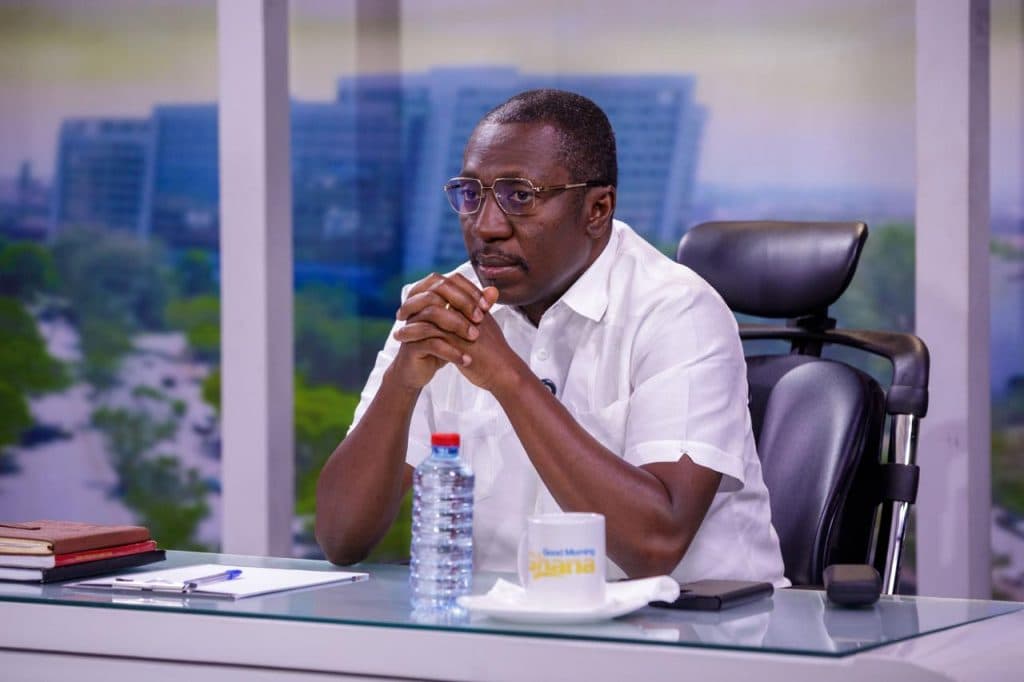
Minority Leader in Parliament, Alexander Afenyo-Markin, says leading the New Patriotic Party caucus in Parliament has been one of the most challenging political assignments of his career, particularly given what he describes as the smallest minority size in Ghana’s Fourth Republic.
Reflecting on his transition from Majority Leader to Minority Leader, Afenyo-Markin said he assumed office in February 2024 during a turbulent period marked by internal party pressures, a looming general election, and a highly competitive political environment with the opposition National Democratic Congress.
“It was a difficult time. The numbers were tight, tensions were high, and the political stakes were enormous,” he said.
He recalled that Parliament at the time was sharply divided, with near-equal representation between the New Patriotic Party and the NDC, creating what he described as a “shaky centre” that required careful navigation.
The Minority Leader also referenced disputes over parliamentary control, including controversies surrounding the declaration of vacant seats, which eventually led his side to seek judicial intervention to restore its position.
Despite the challenges, Afenyo-Markin said the period tested his leadership and preparedness, adding that he relied heavily on studying past parliamentary leaders to shape his strategy.
He cited figures such as J. H. Mensah and Osei Kyei-Mensah-Bonsu as key influences, noting that he spent considerable time reviewing parliamentary records and proceedings to understand how they managed difficult political transitions.
“I took time to study history and develop a strategy that fits the current circumstances,” he said.
Speaking on Metro TV’s Good Morning Ghana with host Moro Awudu on April 6, Afenyo-Markin credited his leadership team for helping stabilise the caucus, stressing the roles of Deputy Minority Leader Patricia Appiagyei, Chief Whip Frank Annoh-Dompreh, and other key figures, including, Habib Iddrisu and Jerry Ahmed Shaib.
He described the team as disciplined and hardworking, noting that their collective effort has enabled the Minority to remain effective despite its numerical disadvantage.
On criticisms that the Minority is engaging in “fishing expeditions” by amplifying minor issues to target the government, Afenyo-Markin rejected the claim, insisting that the caucus is fulfilling its constitutional duty to scrutinise the executive.
“In politics, you can get it wrong sometimes, and I accept that. But overall, we are doing very well,” he said.
He pointed to instances where the Minority’s interventions led to policy reviews, including concerns over fees linked to transactions involving the Bank of Ghana and the Gold Board, which he said were reduced after the issue was raised publicly.
Afenyo-Markin maintained that scrutiny of government actions is not limited to the Minority alone, adding that civil society and other stakeholders also play oversight roles.
“We are not the only ones holding government accountable,” he said.
He further accused the government of inconsistencies, particularly on its stance against sole-sourcing, arguing that some recent procurement decisions contradict earlier commitments made by the NDC.
“Ghanaians will, in time, judge these actions,” he added.
On leadership and relevance in Parliament, Afenyo-Markin stressed that effectiveness is not determined by position but by individual contribution.
“It is what you bring to the table—research, preparation, and commitment, that makes you relevant,” he said, encouraging MPs to prioritise diligence and substance over titles.
He concluded that while the Minority faces significant constraints, it remains focused on strengthening its strategy and preparing for future political contests, expressing confidence that sustained effort will yield results in the years ahead.



