
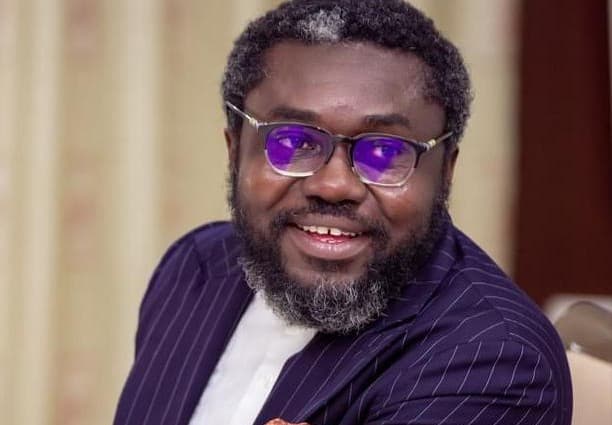
Social activist and private legal practitioner, Oliver Barker Vormawor has rejected claims that African voices lack legitimacy in global conversations on slavery, colonialism and reparations, insisting that historical complicity does not erase injustice.
Speaking on Metro TV’s Good Morning Ghana with Moro Awudu, Vormawor said arguments that diminish African perspectives because of internal involvement in the slave trade or colonial systems are “completely incorrect” and risk distorting history.
He explained that complicity within oppressed groups has never been used to deny the brutality of unjust systems elsewhere.
He cited the experience of African Americans under Jim Crow laws and the presence of Jewish collaborators during the Holocaust, noting that such realities have not undermined the recognition of those atrocities.
Applying the same reasoning to Africa, Vormawor said participation by some Africans in colonial administrations or the slave trade does not invalidate the broader history of exploitation or weaken the moral case for justice and reparations.
He stressed that during colonial rule, modern Ghana as a unified state did not exist, and individuals who served in colonial structures operated within imposed systems of power.
Their roles, he said, should not be used to question the legitimacy of independence struggles or the right to commemorate them.
Vormawor called for greater public education to distinguish between individual complicity and systemic injustice, describing independence movements as necessary responses to oppression rather than contradictions.
On reparations, he urged a shift in focus beyond Europe to include how African societies such as Ghana can pursue repair and rebuilding.
This, he said, involves acknowledging historical roles where necessary while strengthening efforts to preserve cultural identity and reconnect with the diaspora.
He pointed to ongoing discussions around defining reparations in practical and developmental terms, identifying mechanisms for repair within affected societies, and securing the return of looted cultural artifacts.
Cultural restitution, he added, remains a critical issue, noting that many artifacts taken during colonial rule hold deep historical and spiritual value for communities and must be returned as part of any meaningful reparative process.
Vormawor warned that the greatest risk to the reparations debate is the whitewashing of history, arguing that ignoring or distorting the past undermines accountability and progress.
“If reparations are to be taken seriously,” he said, “the conversation must be honest, inclusive and grounded in historical truth.”



