
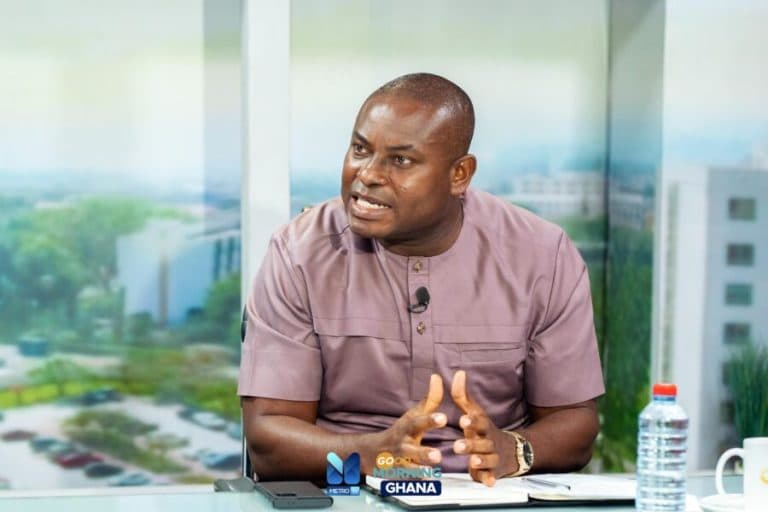
Richard Ahiagbah, the Director of Communications for the New Patriotic Party (NPP), has called for the removal of the CEO of the Ghana Free Zones Authority, following a controversial public incident.
Ahiagbah’s demand comes after recent developments that have raised serious concerns about the state of political discourse in the country. Speaking on Joy News, Ahiagbah linked the controversy to a wider national issue of what he described as the growing “politics of insult,” a phenomenon he believes is corroding the values of democratic dialogue in Ghana.
“This is about the disrespect of an individual simply for expressing their views,” Ahiagbah emphasized, highlighting that public figures should not resort to intimidation or insults in political discussions.
Ahiagbah noted that the apology, given in front of President John Mahama, signaled the government’s recognition of the severity of the situation. However, he insists that an apology alone is insufficient.
“An apology alone cannot suffice; we need real action to reinforce our commitment to protecting free speech and to prevent the recurrence of such behavior,” Ahiagbah stated.
According to Ahiagbah, the issue goes far beyond personal conduct and cuts to the heart of Ghana’s constitutional rights, particularly the freedom of citizens to express their views without fear of intimidation or political retribution.
“The actions of a political operative should never be allowed to intimidate citizens into silence, especially when those citizens are exercising their rights under the constitution,” Ahiagbah said. “We must act decisively to prevent a culture where public figures feel emboldened to silence others through disrespectful and insulting tactics.”
He emphasized that without clear consequences for such behavior, the country risks setting a dangerous precedent, one where future political operatives might feel justified in resorting to similar tactics without facing any repercussions.
“The next logical step is for the Chief of Staff to consider removing [her] from office,” he insisted. “This is not just about one individual; it’s about setting a standard for how we engage in political discourse in Ghana. If we fail to take action, we may see this sort of behavior escalate.”



