
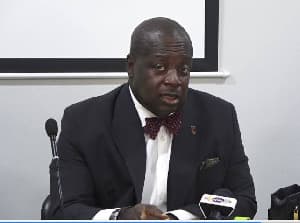
Supreme Court nominee Anthony Forson Jnr has rejected calls for a limit to be placed on the number of judges who can serve on Ghana’s highest court.
He told Parliament’s Appointments Committee that the Supreme Court’s wide constitutional powers and heavy workload made it difficult to justify a fixed ceiling.
“I’m one of the advocates of no capping, because of my experience and the kind of seminars that I have been to,” he said.
Mr Forson referred to discussions during an earlier constitutional review process involving Justice Jones Victor Mawulorm Dotse.
He said Justice Dotse had raised concerns about limiting the number of Supreme Court judges without first reconsidering the wide range of cases the Constitution assigns to the court.
“Because of the jurisdictions which have been given to the Supreme Court, which is so wide, capping will bring a problem,” he stated.
The nominee said any attempt to introduce a cap should therefore follow a review of the court’s constitutional jurisdiction.
“Unless, as a country, we decide to reduce the jurisdictions which have been allocated to the Supreme Court for now, there should be no cap,” he said.
Why the cap is being proposed
The proposal to set a maximum number of Supreme Court judges has formed part of Ghana’s wider debate over constitutional reform.
Those in favour argue that a cap would prevent the court from being expanded indefinitely and could help control public spending.
They have also raised concerns about the potential for governments to influence the composition of the court by increasing the number of judges when politically convenient.
The Constitutional Review Committee previously proposed a ceiling of 15 judges. The government has since proposed a maximum of 19, including the Chief Justice.
Supporters of the proposal say a defined limit would provide greater certainty over the size of the apex court while allowing it to retain enough judges to handle its workload.
Mr Forson disagrees.
He argued that the number of judges should be determined by the work the court is required to do, rather than by an arbitrary ceiling.
He also pointed to the reasons previously given for expanding the court, saying its existing membership had struggled to cope with its workload.
“So for now, I disagree that there should be a cap,” he noted.