
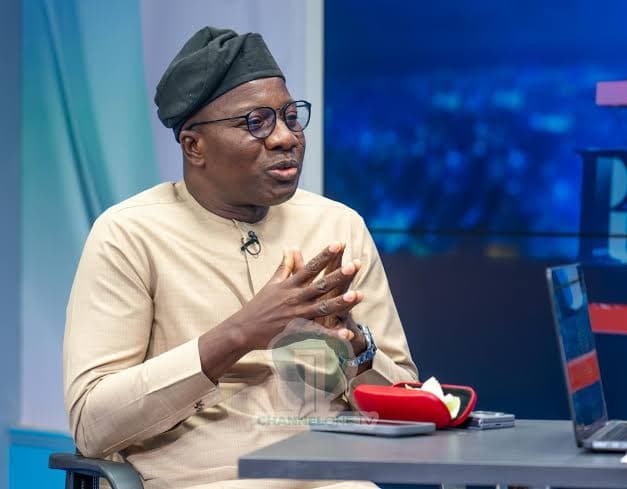
Minister-designate for Local Government, Chieftaincy and Religious Affairs, Mahama Ayariga, says he will push for increased government funding for the Chieftaincy Institution if approved by Parliament.
Appearing before Parliament’s Appointments Committee on Thursday, August 27, 2026, Mahama Ayariga described the institution as one of Ghana’s key constitutionally recognised bodies, with important responsibilities in the country’s traditional governance system.
He said traditional authorities perform legislative and adjudicatory functions through structures ranging from traditional councils and paramountcies to the Regional and National Houses of Chiefs.
“The Chieftaincy Institution is perhaps, if not the most important, constitutionally guaranteed establishment. And we have in the Constitution assigned very important responsibilities to the Chieftaincy Institution,” he said.
Mr Ayariga said the institution requires adequate resources to carry out those responsibilities effectively.
He therefore pledged to engage the Finance Minister to secure better budgetary allocations for the Chieftaincy Institution.
“What I can assure you is that I will try and get the Minister of finance to make adequate budgetary provision for the chieftaincy institution,” he told the committee.
Ayariga backs stronger local revenue mobilisation
Beyond central government funding, Mr Ayariga said local authorities must improve their ability to generate revenue to support important institutions within their jurisdictions.
He pointed to unpaid or poorly collected fees, levies, charges and rates as areas where Metropolitan, Municipal and District Assemblies could raise additional funds.
“There are so many fees, levies, charges, rates that we are supposed to be collecting that we are not collecting,” he said.
According to him, better revenue mobilisation would give assemblies more room to support sectors that play important roles in their communities, including traditional authorities.
He said chiefs remain important partners in local governance, helping to manage communities at the local and regional levels.
“Chiefs do perform a very critical role at the local and regional level up to the National House of Chiefs level,” he said.
Mr Ayariga said his approach would therefore combine increased funding from central government with stronger revenue mobilisation by local authorities.
“I will explore getting increased government allocation. I will also explore getting the local government authorities to mobilise the revenues that are supposed to be collected at the local level and support the traditional authorities because they really do help them in the governance of the spaces that the assemblies are responsible for,” he said.