Some families inherit wealth. Others inherit businesses. The Ayews inherited the Black Stars.
For more than four decades, one family has carried the hopes of a football-loving nation—not just through brilliance on the pitch, but through resilience, leadership, and sacrifice. Their legacy is measured not only in goals and captaincy, but in the willingness to endure pain for the red, gold and green.
It all began with Abedi Ayew “Pele.”
As a young midfield genius, Abedi was part of Ghana’s triumphant squad that lifted the 1982 Africa Cup of Nations (AFCON)—the nation’s fourth continental title. It was the beginning of an extraordinary international career that would later see him become captain of the Black Stars and one of Africa’s greatest footballers.
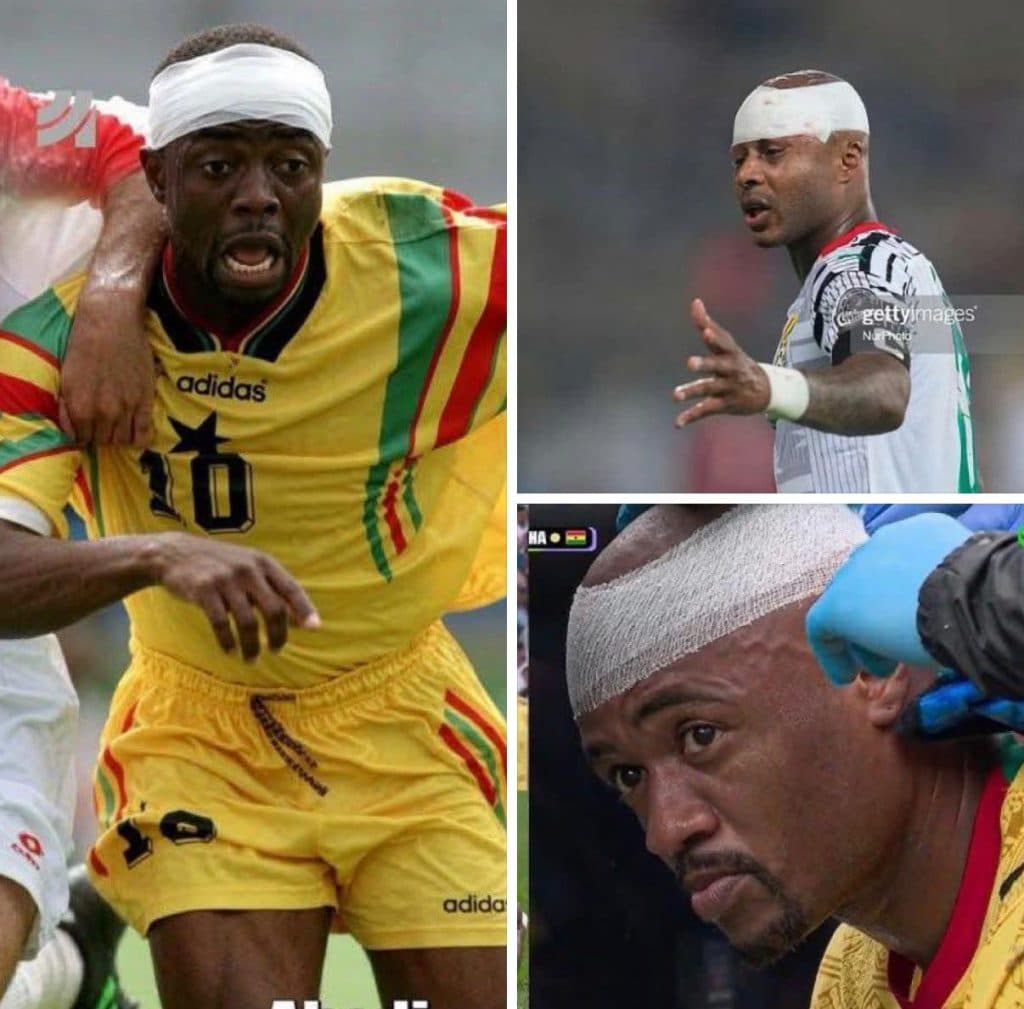
Throughout his career, Abedi played with unmatched flair, often finishing matches carrying the physical scars of battle. The white bandage around his head became an unforgettable symbol of his fighting spirit. Even when injured, he refused to abandon his country, choosing duty over comfort and inspiring generations of Ghanaians.
History, however, did not stop with Abedi.
It continued through his sons.
André Morgan Rami Ayew, affectionately known as Dede, inherited not only his father’s football talent but also his leadership qualities. Rising through Ghana’s youth ranks before captaining the senior national team, André became one of the Black Stars’ most dependable servants. Across AFCON tournaments and FIFA World Cups, he repeatedly played through pain, never allowing injury to diminish his commitment whenever Ghana called.
Then came Jordan Ayew.
Often judged for his quiet personality but never for his commitment, Jordan has consistently answered the national call with determination. During Ghana’s 2026 FIFA World Cup encounter with England, he suffered a nasty head injury that left him bleeding. After receiving treatment, he returned to the pitch wearing a white bandage—a powerful image that instantly reminded Ghanaians of his father decades earlier.
It was more than a coincidence.
It was a legacy.
Three generations.
Three captains.
One unwavering commitment to Ghana.
From AFCON champion Abedi Ayew Pele, to captain André Ayew, to captain Jordan Ayew, the Ayew family has repeatedly placed national pride above personal comfort. They have worn the captain’s armband with honour, accepted criticism with dignity, and continued to fight through pain whenever the Black Stars needed them most.
The white bandage has become more than a medical dressing.
It is a symbol of sacrifice.
A reminder that greatness is not only about lifting trophies or scoring goals, but also about refusing to quit when the nation depends on you.
Some families pass down fortunes.
The Ayews passed down courage.
And as the story of Ghana football continues to be written, the Ayew name will forever stand as a testament to resilience, leadership, and an enduring love for the Black Stars—a family that has bled, captained, and sacrificed for Ghana across generations.