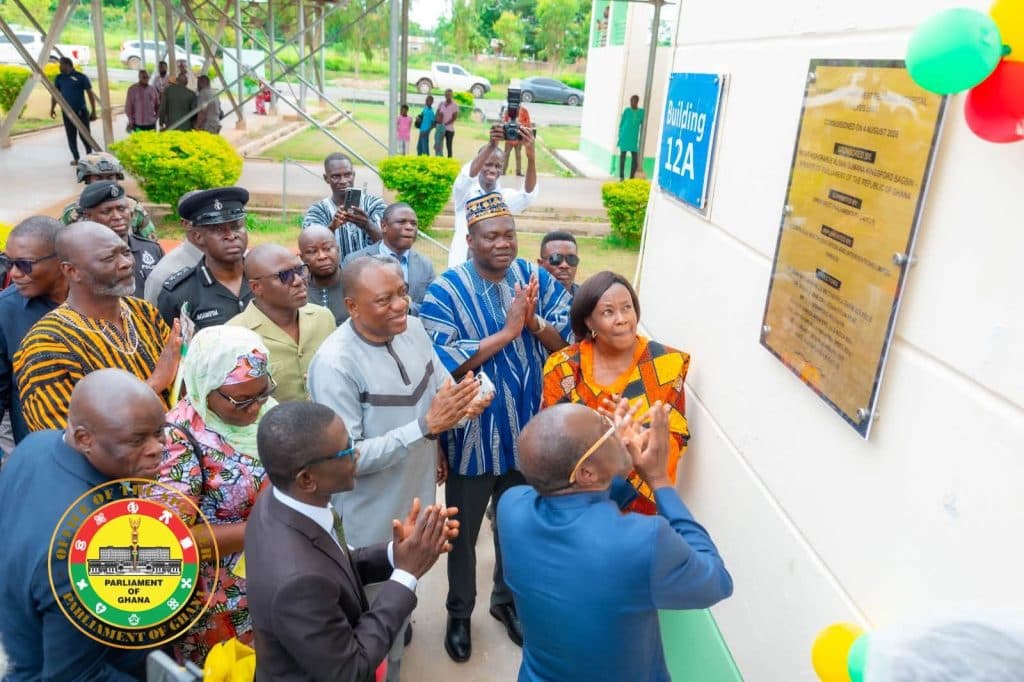
Thousands of people living with kidney disease in northern Ghana are expected to have easier access to lifesaving treatment after an expanded dialysis unit, valued at an estimated GH¢4 million, was commissioned at the Upper West Regional Hospital in Wa.
The facility was officially opened on Tuesday by the Speaker of Parliament, Alban Sumana Kingsford Bagbin, in partnership with Sustainable Health Education and Interventions Limited (SHEILD), with support from the Upper West Parliamentary Caucus, the Ministry of Health, the Ghana Health Service and other development partners.
The expanded unit is expected to reduce the long and costly journeys many patients previously had to make to access dialysis treatment in southern Ghana.
The project has added six new dialysis machines, supporting equipment and staff training, significantly increasing the hospital’s capacity to provide specialist kidney care. It is expected to serve residents of the Upper West, Upper East, Savannah, North East and Bono regions, as well as other parts of northern Ghana.
Speaking at the commissioning ceremony, Mr Bagbin described the project as an important step towards improving access to quality healthcare and ensuring that where people live does not determine the care they receive.
“For the mother praying beside the hospital bed of her child, for the father whose greatest wish is simply to remain healthy enough to provide for his family, for the young person with dreams still waiting to be fulfilled, and for every patient battling kidney disease in this region, this investment is for you,” he said.
He added that people in the Upper West Region deserved quality healthcare and called for continued collaboration to strengthen specialist medical services across the country.
Kidney disease is becoming an increasing public health challenge in Ghana. According to figures cited during the event, chronic kidney disease claims more than 4,000 lives each year, while fewer than 500 dialysis machines are available nationwide.
Treatment also remains expensive, with patients requiring three dialysis sessions each week at a cost ranging between GH¢1,200 and GH¢3,000.
Because most dialysis centres are concentrated in Accra and Kumasi, patients from northern Ghana have often travelled hundreds of kilometres for treatment, placing heavy financial and emotional pressure on families.
Board Director of SHEILD, Dr Sylvie Anie, said the expanded facility represented far more than additional equipment.
“It represents hope for patients and families who have struggled for years to access specialised kidney care. Our vision is to ensure that quality healthcare becomes more accessible, more equitable and more sustainable for every Ghanaian,” she said.
Another Board Director of SHEILD, specialist surgeon Dr John Nkrumah Mills, said the project demonstrated what could be achieved when organisations worked together to strengthen healthcare delivery.
He said sustainable healthcare depended on investment in people, systems, partnerships and continuous capacity building.
Medical Director of the Upper West Regional Hospital, Dr Philip K. K. Baabiineh, said the expanded dialysis unit would significantly improve renal care services in the region.
He noted that many patients had previously travelled long distances under difficult circumstances to receive treatment, adding that the new facility would help provide timely and high quality care while reducing the burden on patients and their families.
Health Minister Kwabena Mintah Akandoh welcomed the initiative, describing it as consistent with the government’s efforts to expand specialist healthcare services and reduce regional disparities in access to treatment.
He said partnerships between government, private organisations and development partners remained essential in addressing the growing burden of non-communicable diseases and building a stronger healthcare system.
The commissioning ceremony was attended by government officials, traditional leaders, Members of Parliament, healthcare professionals, development partners, civil society organisations and community representatives, all of whom reaffirmed their commitment to improving access to specialist healthcare across northern Ghana.