
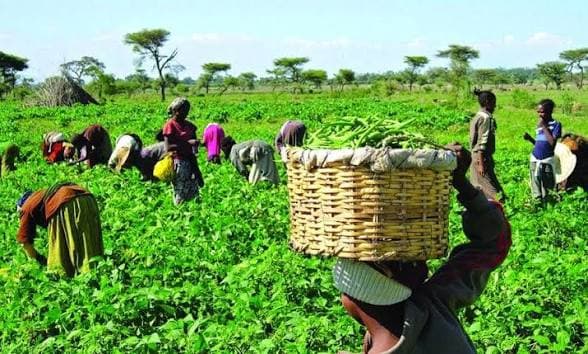
Agriculture in Ghana for years has carried an image that is difficult to shake. A farmer is expected to be on a piece of land, under the sun, tilling the soil, planting crops and waiting for the harvest.
For many young people, that picture has been enough to keep them away. But that idea of agriculture is changing.
Across Ghana’s agri-food system, young people are finding ways to make a living without necessarily owning large farms or spending their days working the land. They are processing food, adding value to farm produce, marketing agricultural products online, working with machinery, exploring hydroponics and building businesses around problems they have identified in the food system.
That was one of the central messages from a virtual Ghana Agrifood Youth Dialogue held on Friday, August 28, as young entrepreneurs and agriculture practitioners discussed how the next generation can find opportunities in the sector.
For Robben Asare, Founder of Aspassion Ltd, the decision to become a farmer was not an obvious one.
His father was a farmer, and he and his five siblings grew up around agriculture. Yet when he eventually decided to pursue farming himself, he did not have the resources and his family was not entirely supportive.
Some of his friends also wondered why he would choose a profession they considered difficult.
His response was simple.
“You dream alone, so you don’t expect anyone to believe in your dream, only yourself,” he said.
That mindset, he believes, is important for young people considering agriculture.
But believing in the dream is only one part of the equation.
The bigger question is what exactly a young person wants to do within agriculture.
Agriculture does not begin and end on the farm
Elison Owusu Fordjour, Principal of the Kumasi Institute of Tropical Agriculture, who works with young people in the sector, says the easiest entry point for many young people is production because those from farming communities can learn from their parents and build on existing family knowledge.
But that is only one part of the story. Young people are increasingly moving into food processing and value addition, while marketing and distribution remain areas with room for more innovation.
He believes digital tools could make it easier to connect farmers and food producers with consumers.
“How well are we doing that to be able to link up customers to products and all that?” he asked.
There is also an opportunity in agricultural inputs. Traditionally, someone looking for seeds, fertiliser or other farm inputs would have to walk into a physical shop.
But Elison believes young entrepreneurs can build businesses around making those products easier to access through digital platforms. Then there is technology that is changing the meaning of farming itself.
For people who do not own land, hydroponics can provide another route into vegetable production. Using pipes and water-based systems, crops can be grown without the traditional large expanse of farmland.
Container gardening offers another possibility, particularly for people living in cities. The point is not that every young person should become a conventional farmer. It is that agriculture has room for different kinds of people.
The mushroom business nobody saw coming
Bernice Yawa Agboada, founder of Mushroom General, knows this from experience.
Mushrooms are not necessarily the first thing that comes to mind when young people think about starting an agricultural business.
Some are discouraged by the work involved in preparing sawdust and setting up production. But Bernice has built a business around it, and she believes the barriers are not as high as many imagine.
A person does not necessarily have to own land or establish the entire production process. There are people who already prepare the materials, allowing others to buy from them and concentrate on growing and harvesting.
And the opportunities do not stop at production. Bernice has people working with her on advertising and labelling, while she has also moved into processing.
Mushrooms are highly perishable, but she now dehydrates them, extending their shelf life to between six and 12 months when properly stored. For her, that is more than a way of preserving a product.
It is another source of income. Her advice to anyone looking at agriculture is to start with a problem.
“We make money from solving problems,” she said.
That philosophy runs through much of the discussion.
You don’t necessarily need money to begin
One of the biggest obstacles young people cited was money.
But the panelists challenged the assumption that capital must always come first.
Elison said the starting point should be an idea. Once there is an idea, partnerships can help turn it into something bigger.
A young person interested in mushroom production, for example, could volunteer with an existing producer and learn the process before trying to establish a business.
The same principle can apply to equipment. According to Rubia Abubakar, AGRA’s Youth, Gender and Enterprise Development Officer, people do not necessarily have to own the machinery they need.
They can rent equipment for processing or other agricultural activities.vThe same applies to land. A young entrepreneur does not always have to purchase land before starting an agricultural business.
These options matter because the cost of entry is often presented as one of the biggest reasons young people stay away from the sector.
When losses become an opportunity
Agriculture is not without risk. Farmers can lose crops to floods, poor market conditions, disease or rising production costs.
But Robben says the response to those challenges can determine whether a farmer survives. He recalled the difficulties faced by rice farmers after significant losses and flooding discouraged many from planting.
Instead of seeing only the problem, he saw what could come next. If fewer farmers planted, he reasoned, there would eventually be a shortage.
So he expanded his own production. With support from Born Agro Ghana, he secured a crawler rotavator capable of working through muddy fields. He also diversified his operations.
Today, he is involved in maize and rice production, processing, mechanisation and farm management.
The strategy is deliberate.
If one part of the business struggles, another can help absorb the shock.
“You have to also look into that diversion, not only focusing on one particular commodity,” he said.
It is a lesson that goes beyond farming. Agriculture, like any other business, requires planning, risk management and the willingness to adapt.
The technology is already here
Technology is also changing what young farmers can do. Elison Owusu Fordjour, spoke about the use of FarmPro to help farmers understand the condition of their soil and identify possible pests and diseases.
By mapping a farm onto the platform, farmers can access information that helps them make decisions about production.
He believes artificial intelligence and the Internet of Things will increasingly become part of agriculture.
The implication is significant. A young farmer no longer has to rely only on experience passed down through generations.
Technology can provide another layer of information to help decide what to plant and how to manage production.
But technology alone is not enough. Technical skills matter, as do the softer skills required to market products, build partnerships and manage a business.
A place for everyone
Perhaps the most important shift is the understanding that agriculture can accommodate people with very different backgrounds.
Dr Betty Annan, AGRA Ghana Country Director, encouraged young people to look at the entire journey “from farm to fork”.
That includes farming, but also technology, logistics, marketing, processing and other services that help food reach consumers.
For women in particular, Bernice believes the sector offers opportunities beyond the physical demands traditionally associated with farming.
A woman can learn social media marketing and help a farm reach customers.
She can process food. She can explore agritourism or agri-finance. She can grow vegetables from home. She can build a business around a skill rather than a piece of land.
“You just have to find your niche and do it well,” she said.
That may be the most useful way to look at the future of agriculture in Ghana.
Young people have been urged not to no longer simply want to become farmers. They should consider where they can fit into a food system that stretches from the farm to the consumer’s table. Especially a generation that often worries about jobs, land and capital, that wider view could open doors that the old image of farming never showed them.



