
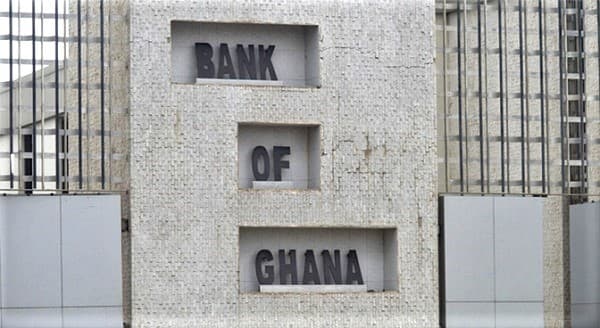
The Bank of Ghana has attributed its GH¢15.63 billion loss in 2025 to the lingering effects of Ghana’s domestic debt restructuring and the high cost of monetary policy operations.
Details from the Bank’s latest financial statements show that although income improved significantly, heavy expenditure pressures, particularly from liquidity management operations, undermined overall performance.
The central bank said its financial position was severely affected by the Domestic Debt Exchange Programme (DDEP), which restructured government securities held on its balance sheet.
According to the report, “the Bank of Ghana recorded negative equity as a consequence of the Domestic Debt restructuring… and the monetary policy operations of 2024 and 2025.”
This contributed to a worsening equity position, with total equity remaining deeply negative at the end of 2025.
A key driver of the loss was the rising cost of open market operations (OMO), used by the Bank to control liquidity and inflation.
The report shows that OMO costs nearly doubled to GH¢16.73 billion in 2025, up from GH¢8.60 billion in 2024.
The central bank explained that policy solvency depends largely on whether it can fund these operations from its own income, noting that high sterilisation costs can erode financial buffers when interest rates remain elevated.
In addition to OMO costs, the Bank recorded substantial losses linked to exchange rate movements and gold transactions.
Revaluation losses and exchange differences, along with net losses on gold deals, formed a significant portion of total operating expenses, further weighing on the Bank’s bottom line.
Despite the current challenges, the Bank expects conditions to improve as macroeconomic stability strengthens.
It projected that declining inflation and a gradual reduction in policy rates would help lower the cost of monetary operations.
“As inflationary pressures recede, the volume of liquidity requiring sterilisation diminishes, directly reducing OMO costs,” the report stated.
To restore its financial health, the central bank is working with government on a structured recapitalisation programme.
The initiative, expected to run from 2026 to 2032, aims to rebuild the Bank’s capital base and reverse its negative equity position over time.
While the financial losses highlight the cost of aggressive monetary tightening, the Bank maintains that these measures were necessary to stabilise inflation and the broader economy.



