
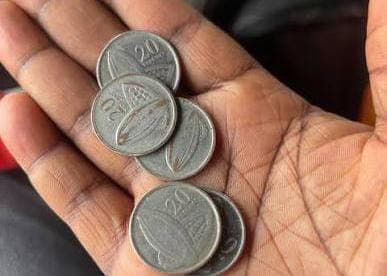
The Bank of Ghana (BoG) has warned traders, transport operators and businesses that refusing to accept Ghana cedi coins is against the law and could lead to arrest, prosecution, fines or a prison sentence of up to three years.
In a public notice issued on Wednesday, July 22, the central bank said it had become increasingly concerned about the “widespread and persistent refusal” by some businesses and individuals to accept pesewa coins and the GH¢1 and GH¢2 coins during transactions.
According to the Bank, the practice undermines the legal status of the country’s currency and violates existing laws governing legal tender.
“The Bank of Ghana has noted with concern, the widespread and persistent refusal by traders, transport operators, and other business entities to accept the 1 pesewa, 5 pesewa, 10 pesewa, 20 pesewa and 50 pesewa coins, as well as the GH¢1 and GH¢2 coins, in payment for goods and services,” the notice stated.
The BoG explained that the directive follows an earlier notice issued on July 14 on the misuse and illegal handling of Ghana cedi notes and coins but focuses specifically on the unlawful rejection of coins.
It reminded the public that all coins issued by the central bank remain legal tender and must be accepted across the country.
“All coins issued by the Bank of Ghana, including the pesewa denominations, remain valid legal tender for the settlement of debts and the conduct of transactions throughout Ghana, and have not been demonetised or withdrawn from circulation,” the Bank stressed.
The central bank further stated that no individual or business has the authority to reject the coins simply because of their denomination.
“No trader, transport operator, business entity, or individual has the discretion to unilaterally refuse to accept these coins in payment for goods, services, or other legitimate transactions on grounds of inconvenience, low value, or personal preference,” it added.
The BoG cited the Currency Act, 1964 (Act 242), warning that refusing to accept legal tender constitutes a criminal offence.
It noted that anyone convicted could face “imprisonment for a term not exceeding three years; or a fine; or both imprisonment and a fine.”
The notice also warned that business owners who direct employees to reject coins would face the same sanctions as those who personally commit the offence.
In addition, the Bank said persons caught committing the offence “may be arrested without a warrant.”
To ensure compliance, the BoG said it would collaborate with the Ghana Police Service and other law enforcement agencies to enforce the law.
“The Bank of Ghana shall work closely with the Ghana Police Service and other law enforcement agencies to enforce this law, and shall ensure that appropriate action is taken against any person or business found culpable of rejecting coins,” the statement said.
The Bank also encouraged members of the public to report incidents of coin rejection to the nearest Bank of Ghana office, the Ghana Police Service or through its official communication channels.
It called on all Ghanaians to “support these efforts by accepting and handling the national currency, in all its denominations, responsibly and in accordance with the law.”



