
Businesses in Ghana should play a bigger role in preventing floods instead of leaving the responsibility entirely to government, the Centre for Social Innovation and Democratic Thought (CSIDT) has said.
According to the Centre’s Executive Director, Eugene Boadu, flooding is no longer only an environmental issue but also an economic one that disrupts businesses, destroys property and reduces productivity.
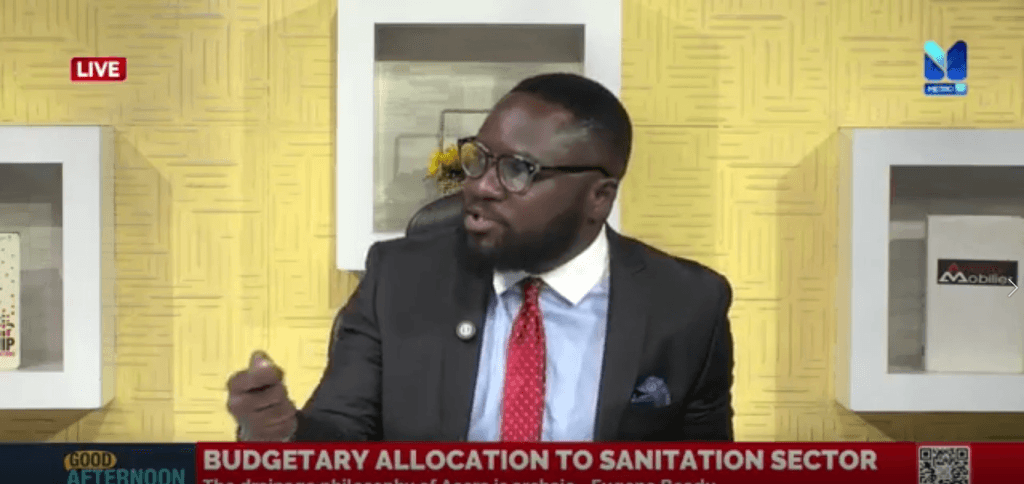
Speaking on Metro TV’s Good Afternoon Ghana on Monday, July 27, Mr. Boadu said investing in flood prevention makes economic sense for both government and the private sector.
“Flood prevention is good economics. It’s good for business,” he said.
He explained that every major flood comes with heavy financial losses for individuals and companies, citing damaged vehicles, interrupted business operations and rising insurance claims.
“Imagine… you work, you break your back and then you save money to buy a vehicle only to wake up one morning and have it washed away,” he said.
According to him, the impact extends beyond personal losses.
“If you have an employee… whose car is missing, that whole week they are going to be destabilised. So the productivity implication… is real,” he said.
He added that the insurance industry also bears significant costs after floods.
“They are going to have bloated claims and that is not good for the health of that financial sub-sector,” he said.
Mr. Boadu therefore called on Corporate Ghana to channel more of its corporate social responsibility (CSR) spending into flood prevention initiatives.
“Corporate Ghana must come to the understanding that when it comes to some of these social problems, it should not be seen as a central government problem. It is a collective social problem,” he said.
He suggested that businesses redirect a portion of their CSR budgets from entertainment activities towards projects that reduce flood risks.
“We can come to a certain view that because these floods are killing our people and disrupting business in Accra, we will redirect a good chunk of CSR budgets into solving the problem,” he proposed.
Mr. Boadu also argued that while overhauling Accra’s drainage network could cost billions of dollars, there are immediate interventions that businesses can support without waiting for large-scale government funding.
These include sponsoring targeted flood alerts, supporting emergency shelters in flood-prone communities and financing smaller mitigation projects that protect lives while long-term drainage infrastructure is improved.
He maintained that tackling flooding requires a collective effort involving government, businesses and communities, saying the cost of inaction continues to outweigh the investment needed to prevent future disasters.