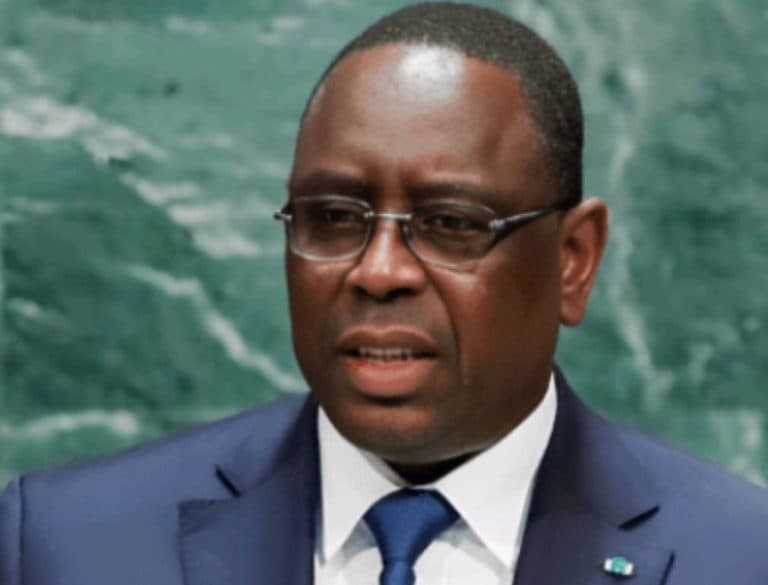
As global tensions rise and trust in international institutions weakens, former Senegal president Macky Sall is being put forward as a strong contender to lead the United Nations, with supporters arguing he could bring balance, credibility and a much needed voice of dialogue to the role.
In a detailed opinion, former Burkina Faso foreign minister Alpha Barry says the choice of the next UN Secretary General comes at a defining moment, as wars drag on, geopolitical divisions deepen and confidence in multilateral systems continues to erode.
Barry argues that the global system is not short of institutions, but of trust. He says the next UN chief must go beyond administration and act as a unifying figure capable of restoring confidence and engaging all sides in an increasingly polarised world.
He points to Sall’s record as evidence of that capability.
Sall led Senegal for 12 years and also served as chair of the African Union, positioning himself as a prominent voice for Africa on the global stage. According to Barry, he combines domestic leadership experience with international credibility, making him one of the few figures able to navigate both national and global challenges.
During his time in office, Sall was active on major global issues. He pushed for reforms to the international financial system, including fairer access to funding for African economies. He also consistently called for climate justice, arguing that developing countries must be supported in adapting to climate change while pursuing economic growth.
On global health, Sall was vocal during the Covid pandemic, advocating equal access to vaccines and stronger pharmaceutical capacity across Africa. In 2022, amid the Russia Ukraine war, he led early diplomatic efforts on behalf of Africa, focusing on dialogue and the protection of food and fertilizer supplies critical to the continent.
Barry also highlights Sall’s role in strengthening Africa’s voice globally, including efforts that contributed to the African Union joining the G20 in 2023. On security, particularly in the Sahel, Sall backed regional cooperation to tackle terrorism while addressing underlying causes of instability.
Beyond policy positions, Barry emphasises Sall’s ability to engage with competing global powers without being aligned to any single bloc. He argues that this balance is essential at a time when divisions between major powers risk paralysing international institutions.
“The next Secretary General must be heard in all capitals,” Barry suggests, noting that credibility across both the Global North and South will be critical to restoring the UN’s influence.
He concludes that the organisation needs leadership that can rebuild trust, promote fairness and respond effectively to interconnected global crises. In his view, Sall represents a candidate with the experience, diplomatic reach and measured approach needed for the task.
As discussions around the UN’s future leadership continue, Sall’s name is now part of a broader conversation about whether the next Secretary General should reflect a changing global order and give greater voice to regions long underrepresented at the highest levels of international governance.