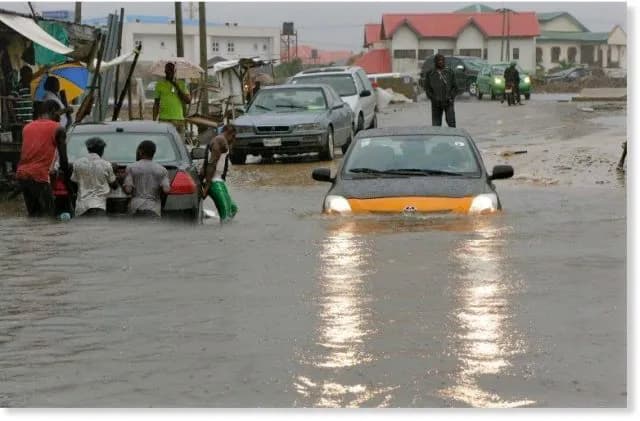
At least 18 people have died after heavy rains triggered flooding, landslides and building collapses across 13 districts in Ghana’s Central Region over the weekend.
The disaster has also left 58 buildings collapsed and hundreds of people displaced, according to officials.
The Central Regional Directorate of the NADMO says the deaths were recorded across multiple districts and were caused by drowning, collapsing structures, falling trees and landslides.
Speaking at a press briefing in Cape Coast, the Regional Director, Mr Kwesi Dawood, said Cape Coast recorded six deaths, including five from drowning and one from a building collapse.
Other fatalities include two deaths in Gomoa Central, one in Mfantseman, one in Twifo Atti Morkwa, three in Upper Denkyira West, one in Agona West, and two in Upper Denkyira East, all linked mainly to drowning incidents.
Mr Dawood said 58 buildings had collapsed across the region as a result of the persistent rainfall and flooding. He noted that many of the affected structures were old and structurally weak, raising wider concerns about building safety.
He added that an assessment by the Regional Emergency Disaster Committee identified 50 buildings in the Cape Coast Metropolis as unsafe and marked them for demolition.
In total, 377 people have been affected by the building collapses. NADMO says it has carried out an initial needs assessment to guide the distribution of relief items.
Mr Dawood said landlords and occupants of the identified unsafe buildings have been given 14 days to vacate before demolition begins. He warned that those who fail to comply will bear the cost of demolition after the deadline.
The agency is appealing for support to replenish emergency supplies, including food, bedding, medical items and temporary shelter materials.
Residents in flood-prone communities have also been urged to relocate to safer areas as the rainy season continues.
Mr Dawood further called on District Coordinating Directors to release funds promptly to support disaster response efforts, warning that delays weaken preparedness and emergency action.