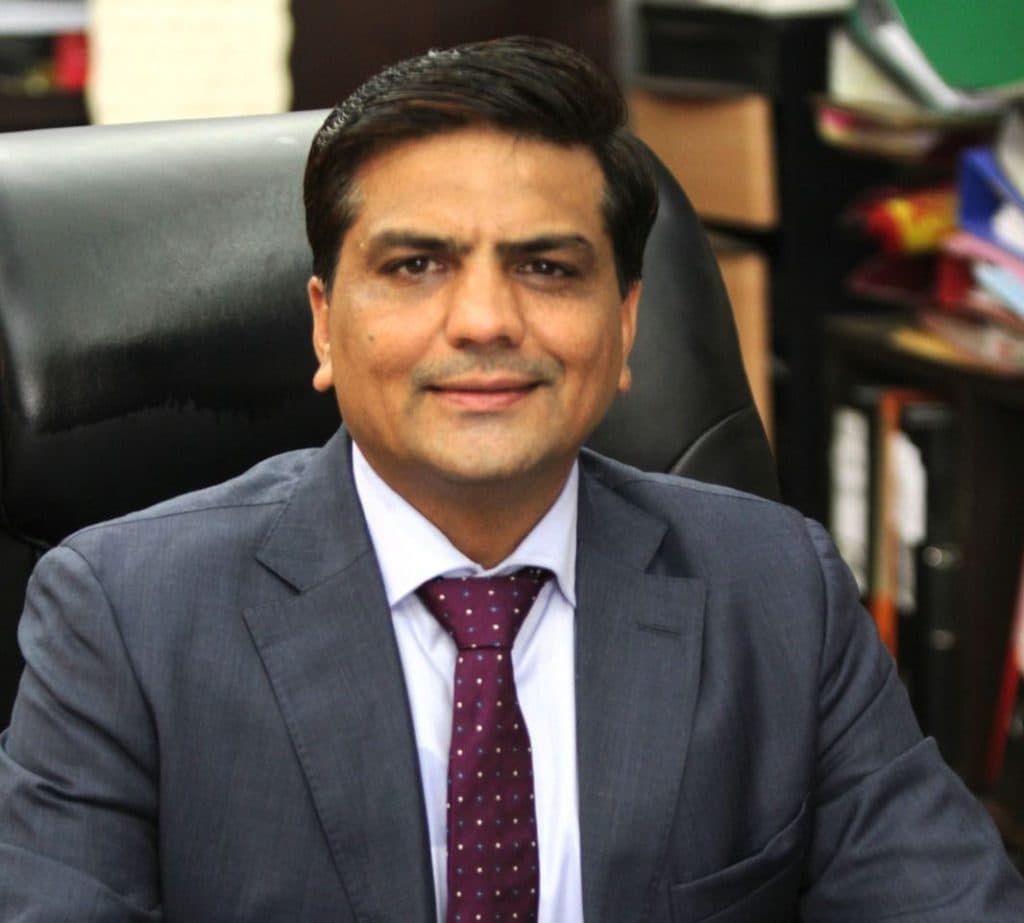
President and Chief Executive Officer of B5 Plus Limited, Mukesh Thakwani, has called on Ghana to prioritize industrialization and value addition, urging the country to shift from exporting raw materials to producing finished goods for global markets.
Speaking at the 10th Ghana CEO Summit 2026 under the theme “From Potential to Production – Ghana’s Industrial Decade,” Mr Thakwani said Ghana must seize the opportunity to transform its natural and human resources into competitive industries capable of driving sustainable economic growth.
“Let us manufacture in Ghana, let us add value in Ghana, let us build with Ghana-made products, and let us compete with the world from Ghana,” he stated during his keynote address attended by President John Dramani Mahama, government officials, diplomats, investors, and business leaders.
The B5 Plus CEO stressed that Africa, and Ghana in particular, could no longer afford to depend heavily on exporting raw materials while importing finished products.
“For too long, Africa has exported opportunity and imported value. Ghana must stop exporting potential and start exporting finished value,” he said.
Mr Thakwani described the Government’s proposed 24-Hour Economy initiative as a major opportunity to accelerate industrial growth, increase productivity, and create jobs across key sectors of the economy.
According to him, manufacturing remains central to economic transformation because it creates employment, stimulates innovation, and strengthens supply chains.
He revealed that B5 Plus had recently commissioned three new steel plants under the Government’s industrialisation drive, positioning Ghana as a potential manufacturing hub for West Africa.
The industrialist further called for stronger local content implementation, insisting that local participation must go beyond policy discussions and become a practical tool for building Ghanaian industries.
“Local content is not a slogan; it is a supply chain,” he emphasised.
Mr Thakwani also advocated for the full operationalisation of a 24-hour economy, where factories, ports, logistics systems, warehouses, and farms operate continuously to maximise national productivity.
“The 24-Hour Economy is not only about longer hours; it is about fuller use of national capacity,” he noted.
On agriculture, he urged Ghana to strengthen value chains by investing in storage, processing, packaging, logistics, and export systems to ensure farmers benefit more from their produce.
He indicated that B5 Plus was ready to support the development of agro-industrial infrastructure through investments in irrigation systems, warehouses, silos, steel structures, greenhouses, and processing facilities.
“Our direction is clear: where Ghana grows, Ghana must process; where Ghana processes, Ghana must package; where Ghana packages, Ghana must export,” he said.
Mr Thakwani also encouraged industries to embrace renewable energy and recycling initiatives as part of efforts to build a sustainable industrial economy.
He disclosed that B5 Plus is investing in renewable energy systems, robotic manufacturing, recycling technologies, and automated industrial processes, including a planned 20-megawatt rooftop solar installation expected to become one of the largest private-sector industrial solar projects in Africa.
The B5 Plus CEO further appealed to government to introduce targeted incentives such as tax exemptions on industrial machinery, renewable energy equipment, and manufacturing spare parts to support local production.
He also called for improved infrastructure, stronger anti-dumping measures, and better road networks within the Tema and Kpone industrial corridors to ease congestion and improve efficiency.
Addressing fellow business leaders, Mr Thakwani urged CEOs to move beyond short-term profit-making and focus on long-term industrial capacity building.
“We must move from trading to making, from short-term profit to long-term capacity, from isolated companies to value chains, and from complaints to bankable proposals,” he stated.
He concluded by reaffirming B5 Plus’ commitment to supporting Ghana’s industrial transformation agenda through continued investment in manufacturing, skills development, renewable energy, and export-oriented production.
The address was widely viewed as a strong endorsement of Ghana’s industrialisation agenda and the Government’s economic transformation policies.