
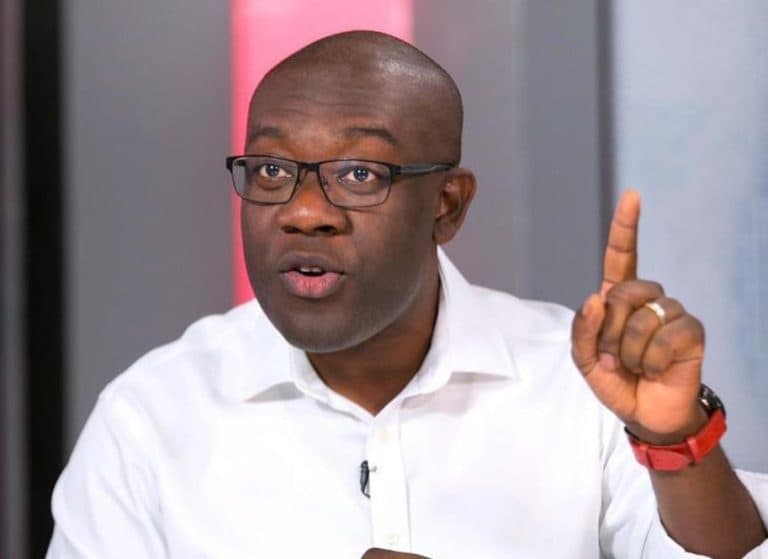
Member of Parliament for Ofoasi-Ayirebi has defended his criticism of state institutions, insisting that speaking against alleged abuses of freedom of speech does not amount to abandoning his principle of institutional independence.
In an interview on Metro TV’s Good Morning Ghana, the former Information Minister rejected suggestions that politicians only defend state institutions while in government and attack them once they move into opposition.
According to him, he has consistently upheld the independence of institutions, including during his time in office.
He cited an incident in which members of his own party allegedly invaded a television station while he was serving as Information Minister.
“I was the one who called the Inspector General of Police and reported them,” he said. “I told him that what they had done was an infringement on media freedom and action had to be taken.”
He argued that defending institutional independence also requires publicly challenging actions that undermine those institutions.
Using the central bank as an example, he accused NDC of interfering in the operations of the Bank of Ghana and compromising its credibility.
According to him, the bank breached provisions of the Bank of Ghana Act by failing to directly publish its financial accounts and instead allowing political actors to present the figures publicly.
He claimed that some financial details were selectively presented during a political press conference in a manner intended to mislead the public.
“When politicians interfere with the operational independence of the central bank, it becomes dangerous for monetary policy credibility,” he said.
The former minister also raised concerns about recent arrests linked to alleged online misinformation.
He referred to comments made by President John Mahama warning that authorities could track individuals through their IP addresses if they spread false information online.
According to him, subsequent arrests by security agencies appeared to confirm fears that state powers were being used to intimidate political opponents and government critics.
He cited the arrest of social media commentator Baba Amando, who he said was detained after making a Facebook post involving the President.
“When you see these patterns, it becomes clear that the tools of the state are being weaponised,” he argued.
Kojo Oppong Nkrumah maintained that his criticism was directed at specific actions and practices rather than the institutions themselves.
“That is not a departure from my principles,” he said.
“It is precisely because I believe in protecting the independence of institutions that I must speak up when I believe that independence is under threat.”



