
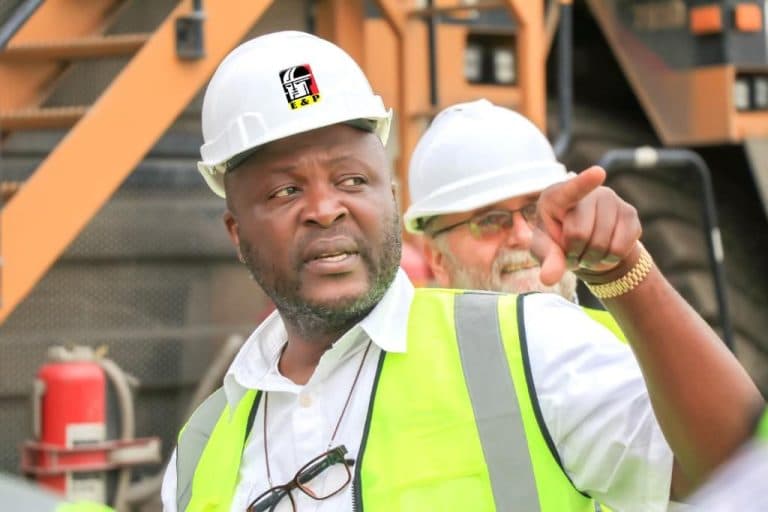
Barima Nana Ntiamoah, a prominent Treasurer hopeful for the New Patriotic Party (NPP) USA, has raised serious concerns over the potential conflicts of interest involved in the decision-making process.
In a move that has sparked national debate, the Government of Ghana recently awarded the Damang Mining Lease to Engineers & Planners, a company owned by the brother of former President John Dramani Mahama. The decision has raised serious concerns about potential conflicts of interest, with critics questioning the transparency and fairness of the process.
The controversial move, which saw the Government of Ghana assume control of the mine and approve a new operator, has sparked nationwide debate, with many questioning the transparency of the process.
Speaking out about the issue, Nana Ntiamoah emphasized that the focus of the debate is not to deny any Ghanaian the right to engage in business but rather to uphold the standards of governance expected when public power intersects with private interests, especially at the highest levels of government.
“The crux of the issue is that when a government makes a decision that involves a national asset—one as strategic as the Damang mine—it is crucial that the process is free from any perception of bias or preferential access,” Nana Ntiamoah stated. “At a time when many Ghanaians are struggling with economic hardships, the expectation is that government decisions should prioritize fairness, transparency, and the national interest.”
The controversy stems from the fact that the lease renewal of the Damang mine was rejected by the government, which subsequently assumed control of the site and granted the lease to Engineers & Planners, a company linked directly to President Mahama’s family. According to Nana Ntiamoah, this raises serious ethical questions that cannot be ignored.
The Ghanaian Constitution is clear on matters of potential conflicts of interest. Article 284 states that public officers must not place themselves in positions where their personal interests conflict with their official duties. In Nana Ntiamoah’s view, the appointment of a company owned by the President’s brother to operate a major national asset could easily create a perception of impropriety, even if no actual wrongdoing occurs.
Furthermore, the government’s own Code of Conduct recognizes that when family members stand to benefit from state decisions, it raises ethical concerns that demand transparency and caution. As Nana Ntiamoah pointed out, the government must take concrete steps to demonstrate that this process was both lawful and free from bias.
“This is where the government must step up. It is not enough to say the process was lawful; they must prove beyond doubt that there was no undue influence or preferential treatment involved,” Nana Ntiamoah said. “This is about more than just one mining lease; it’s about restoring public confidence in governance.”
“These calls are justified,” Nana Ntiamoah stressed. “Ghanaians deserve to know how decisions of this magnitude were made. Without full transparency, the process will always be seen as compromised.”
“At a time when the average Ghanaian is facing economic challenges—low wages, rising living costs, and limited opportunities—the expectation is that government decisions will reflect the values of fairness, discipline, and the national interest. Anything less will only weaken public confidence,” Nana Ntiamoah added.
Nana Ntiamoah concluded his remarks by calling on the government to take decisive action to restore trust in governance. “If this administration is serious about resetting governance and restoring public confidence, this is the moment to act decisively. Publish the full Damang evaluation report. Prove to the people of Ghana that decisions regarding our national resources are made with the highest standards of integrity and transparency.”



