
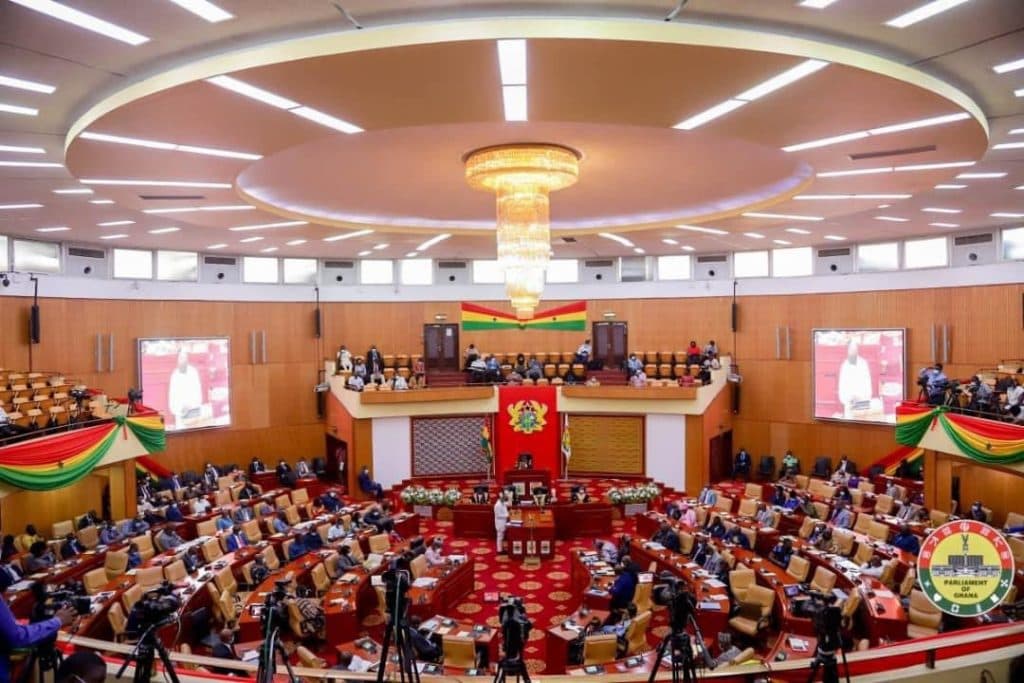
The Ghana Statistical Service (GSS) has urged Members of Parliament to make greater use of data and evidence in their legislative, oversight and budgetary responsibilities, warning that decisions taken without reliable information can have serious consequences.
Speaking at the opening of the International Data Masterclass for Parliamentarians in Accra on Wednesday, Acting Deputy Government Statistician for Economic Statistics and Data Science, Francis Bright Mensah, said Ghana’s development challenges require policy decisions grounded in evidence rather than assumptions.
“We live in a world where decisions made without data are increasingly expensive, and sometimes, they cost lives,” he told participants at the training programme organised under the theme, “Advancing Evidence-Based Parliament: Leveraging Data for Better Decisions.”
According to him, while Ghana faces challenges such as unemployment, inequality, climate vulnerability and infrastructure deficits, the country often falls short in prioritising evidence when making decisions.
“What we are sometimes short of is the habit of reaching for evidence first, before we reach for assumptions,” he said.
Mr Mensah, who delivered remarks on behalf of Government Statistician Dr Alhassan Iddrisu, said the Masterclass was designed to help Parliament strengthen its use of data in decision-making.
“This Masterclass exists to change that habit. And it is built on a simple but powerful truth: Better evidence leads to better decisions. Better decisions lead to better outcomes for Ghanaians,” he stated.
He pointed to the recent release of multidimensional poverty estimates covering all 261 districts in Ghana as an example of how data can support targeted policymaking.
The report, he noted, reveals that poverty affects communities in different ways and therefore requires different interventions.
“Without this evidence, we allocate resources by guess. With it, we allocate resources by need,” he said.
Mr Mensah argued that access to reliable data could improve parliamentary scrutiny of government spending and programmes.
“Think about what it means to scrutinise a budget with poverty data in your hands. You can ask not just whether spending is increasing in a sector, but whether the districts with the highest deprivation are receiving proportionally more attention,” he said.
He added that data allows lawmakers to hold governments accountable with greater precision.
“You can hold government accountable with specificity, not just with rhetoric,” he told the MPs.
The Acting Deputy Government Statistician described Parliament as being at the centre of Ghana’s evidence ecosystem because of its legislative, oversight and representative roles.
He said data strengthens each of those functions and can help lawmakers make more informed decisions on behalf of their constituents.
Mr Mensah also reaffirmed GSS’s commitment to supporting Parliament through the production of accessible and reliable statistics.
“We are modernising how we produce data, making it faster, more reliable, and more accessible,” he said.
However, he stressed that producing data alone is not enough if it is not used.
“Statistics only create value when they are used. Data sitting in a report that no one reads is a missed opportunity,” he noted.
He challenged participants to apply lessons from the Masterclass in their committee work, constituency engagements and debates in Parliament.
“The true measure of this Masterclass will not be how good the presentations are. It will be measured in the quality of parliamentary debates six months from now. It will be measured in budget decisions that are grounded in evidence,” he said.



