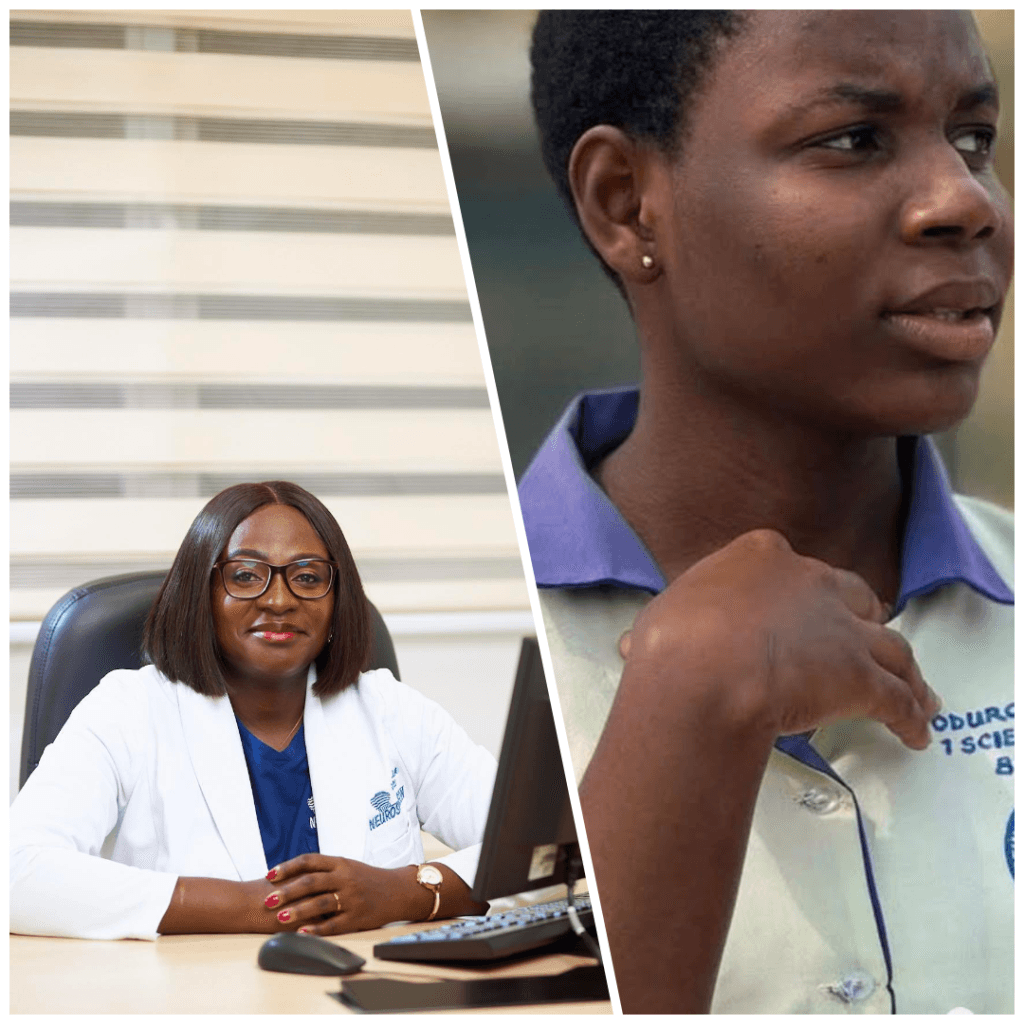
A neurosurgeon, Dr Isabella Opoku, has come under criticism on social media after a Facebook post in which she appeared to belittle a young photographer and content creator while praising the achievements of Harvard graduate Francisca Lamini.
The controversy began after Dr Opoku reacted to the graduation of Francisca Lamini, a former finalist of the National Science and Maths Quiz (NSMQ), who graduated from Harvard University with Summa Cum Laude honours. In her post, Dr Opoku defended the value of the NSMQ and criticised those who had previously questioned its relevance.
However, many social media users took issue with her references to Richlove Oduro, a former student of Nsein Senior High School who became known online for her comment that “NSMQ is for show”. Critics argued that Dr Opoku unfairly targeted Ms Oduro without acknowledging that she is currently studying Computer Science at the University of Cape Coast while also pursuing photography and content creation.
In the post, Dr Opoku wrote:
“People who walk around with cameras into people’s faces think they have made it in life, so they spoke ill of a program that creates opportunities for potential intellectuals @ National Science & Maths Quiz cc Goshers.
According to Wodemaya NSMQ only serves entertainment purposes 😂.
NSMQ single handedly projected this girl into the spotlight, causing many women to Rally around her, guiding her into Havard.
There are so many people who are equally good or better but didn’t find themselves at Havard. This single Educational STEM program will eventually transform Francisca’s unborn generations through her!!!
When Paul Azunre created Khaya AI (the world’s first Ghanaian Language AI), marketing was easy because Ghanaians already knew who Paul Azunre was through NSMQ. Personally My attention was only drawn to the product because I had watched Paul Azunre on NSMQ as a young girl.
People who never made it on NSMQ (not even in their next lives) because they never attended schools that placed any relevance on the program (The case of Goshers who attended Nsein secondary school). You see sometimes in life people also TALK DOWN on things that are beyond their reach 😂.
Congratulations to all former contestants of NSMQ who are excelling in life!
We confuse career relevance with popularity. Not every popular career is of TRUE relevance, that is why you should not be dismissive about young people who have chosen a program that will guide their paths in a certain way. When you are sick you do not look for a content creator, when you need to fix your car, you do not look for a content creator.
Don’t be deceived all those who spoke ill of NSMQ wish they had a sister, daughter, cousin, niece who got catapulted by NSMQ’s spotlight into Harvard, but they will never receive such an honour.
PICTURE B – Anyone knows the whereabouts of the BORDER (as written in her uniform)? Has she made it in life already? Better than her peers who participated in NSMQ??
ENDS
#Francisca From Dabala (Volta Region) to Summa cum laude~ Harvard. (onward to Harvard Medical School ❤️).
#STEM Education no matter how small the impact, is a yes yes for me!”
The post quickly attracted hundreds of reactions, with some people supporting her defence of the NSMQ while others accused her of disrespecting other career paths.
One commenter, Evans Adjokatse, questioned why Ms Oduro’s photograph had been included in the post.
He wrote: “You could have made a cogent argument about the relevance and importance of the NSMQ without dragging specific individuals into the discussion.
“The truth is that every career path has value and deserves respect. We need engineers, doctors, journalists, photographers, content creators, teachers and entrepreneurs. Society functions because people contribute through different talents and professions.”
Another user, Odonkor Offei Frank, said the debate was not about the NSMQ or content creation but about differing views of success.
“Success is not a competition between the laboratory and the marketplace,” he wrote. “The smartest people understand that societies need scientists, doctors, engineers, entrepreneurs, content creators and innovators alike.”
Political Mavis also criticised the comparison, arguing that the achievements of the two young women were unrelated.
“Francisca got an opportunity to study at Harvard and she has completed her studies successfully. Richlove is also studying at UCC and has yet to complete her studies. What’s the comparison here?” she asked.
Others called for a celebration of Ms Lamini’s success without drawing comparisons. Esi Sesewa wrote: “Can we just celebrate Francisca and move on. As a girl yourself it’s unfair to put two girls against each other. The comparison is very unnecessary.”
Renowned photojournalist Senyuiedzorm Awusi Adadevoh also weighed in, questioning the doctor’s judgement and leadership.
“Effective leaders are expected to rise above personal emotions, exercise professionalism and demonstrate sound decision making, especially when addressing matters they believe are wrong,” he wrote.
Not everyone disagreed with Dr Opoku. Bvss Towasky defended her comments, arguing that she was emphasizing the role the NSMQ had played in creating opportunities for Ms Lamini and other contestants.
Another contributor, Yaw Osei, said the discussion should focus on the broader impact of the NSMQ and Ghana’s educational system.
“After more than 25 years, we must honestly evaluate whether the programme’s alumni have measurably improved the lives of average Ghanaians or solved the country’s critical innovation gaps,” he wrote.
The debate has since widened into a broader discussion about academic achievement, entrepreneurship, content creation and the different paths young people take to success.
While many commenters praised Ms Lamini’s academic accomplishments and acknowledged the opportunities created by the NSMQ, critics of Dr Opoku’s post argued that celebrating one person’s success should not come at the expense of another’s aspirations.