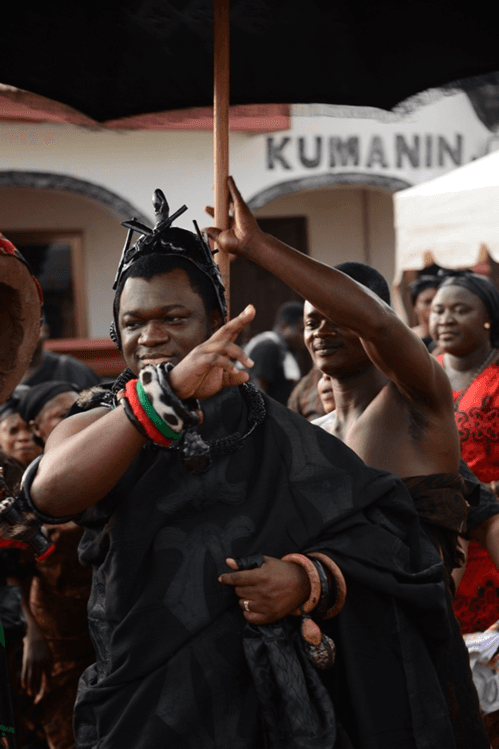
The Konahene of Kona, Nana Konadu Yiadom Kumanin IV, has enstooled entrepreneur and investment executive Dr Maxwell Ampong as the first-ever Aboafuohene of the Traditional Council of Kona, under the Dumankwa-Nifa Kyidom Division of Otumfuo Osei Tutu II’s Asanteman.
Dr Ampong will reign under the stool name Nana Kwadwo Marfo Ampong I — the first person in Kona’s history to hold the Aboafuohene title.
As Aboafuohene, Nana Kwadwo Marfo Ampong I joins Kona’s traditional leadership structure, tasked with mobilizing relationships, ideas, and resources to advance the community’s long-term interests. The office is designed to bridge the Traditional Council with businesses, investors, public institutions, development organizations, and the African diaspora.
Before the enstoolment, Nana Ampong was already known as CEO of Maxwell Investments Group, where he built partnerships spanning finance, insurance, technology, sustainability, and impact investment across Africa. His new role doesn’t replace that identity — it merges it with traditional Asante principles of duty, collective responsibility, and service.
The move reflects a broader trend across Ghana, where traditional institutions are increasingly partnering with the private sector, academia, and international allies to tackle local development challenges — from education and healthcare to youth enterprise and cultural preservation.
The enstoolment was marked by a grand durbar at the Kumanin Palace in Kona on Tuesday, July 28, 2026, under the auspices of Nana Konadu Yiadom Kumanin IV. Guests — dressed in all black — gathered for the late-afternoon ceremony, followed by a dinner reception at the royal residence.
Attendees included representatives from Trassaco Valley, ABSA Bank Ghana, the Embassy of Mexico in Ghana, Appolonia City, Arizona State University, emPLE Insurance, Fidato & Leale Legal Practitioners, Jospong Group of Companies, Business & Financial Times, Korle Bu Teaching Hospital, Ignite Media Group, the Ministry of Food and Agriculture, the Chartered Institute of Supply Chain Management, the Ghana Museums and Monuments Board, Afriterrain, and other local and international organisations.
Officials say the real measure of the new office won’t be its title, but the institutions, partnerships, and opportunities it builds over time. For Kona, it marks a new chapter — one testing whether tradition and enterprise can work hand in hand for the community’s future