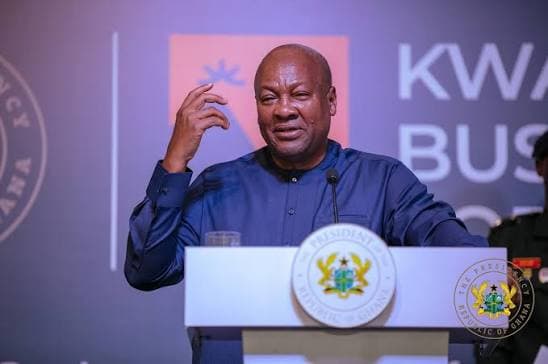
Eco-Conscious Citizens has commended President John Mahama for revoking Executive Instrument (EI) 144, which declassified portions of the Achimota Forest Reserve, but says the government must intensify efforts to tackle illegal mining and protect Ghana’s environment.
In an open letter to resident Mahama dated July 18, the environmental advocacy group praised what it described as Mr Mahama’s commitment to reversing the controversial instrument after engaging civil society groups earlier this year.
The group recalled that during a meeting with civil society organisations on March 30, its Executive Director, Awula Serwah, raised concerns over EI 144, and the President promised to familiarise himself with the matter.
“True to your word, not only did you go and learn about it, but within three months and against some push-back, you saw to it that Cabinet approved the revocation of EI 144,” the group said.
It added, “On behalf of people living in Accra, environmentalists and all the CSOs who campaigned for the revocation of EI144, we say – shidaa. Greater Accra needs more forest, not less.”
Beyond the Achimota Forest issue, Eco-Conscious Citizens renewed calls for accountability over the prosecution of five environmental activists, widely known as the Atronsu5, whose case was recently dismissed.
According to the group, the activists were arrested in November 2024 without evidence and subjected to prolonged legal proceedings.
“The fact is that there was no evidence. The perception is that the police in Sefwi Wiawso were using the judicial system to intimidate the activists, whilst the illegal miners were allowed to walk free,” the letter stated.
It appealed to President Mahama to direct the Inspector General of Police to investigate the conduct of officers involved in the case and their handling of illegal mining activities.
The group also expressed disappointment over what it says is the failure to regularly publish information on the quality of Ghana’s drinking water, despite an earlier commitment by the President.
“Although you agreed that the Water Resources Commission should ‘regularly publish’ the results of the quality of our water… four months on, there is no such publication in our newspapers or generally accessible media,” it said, adding that “Ghanaians need to be regularly and clearly informed about the state of their pipe-borne drinking water.”
Eco-Conscious Citizens further urged the government to declare the Atewa Forest Reserve a national park to strengthen protection against illegal mining.
It noted that Atewa is the source of the Birim, Ayensu and Densu rivers, which provide drinking water to more than five million people, and disclosed plans to present a petition to Parliament in September.
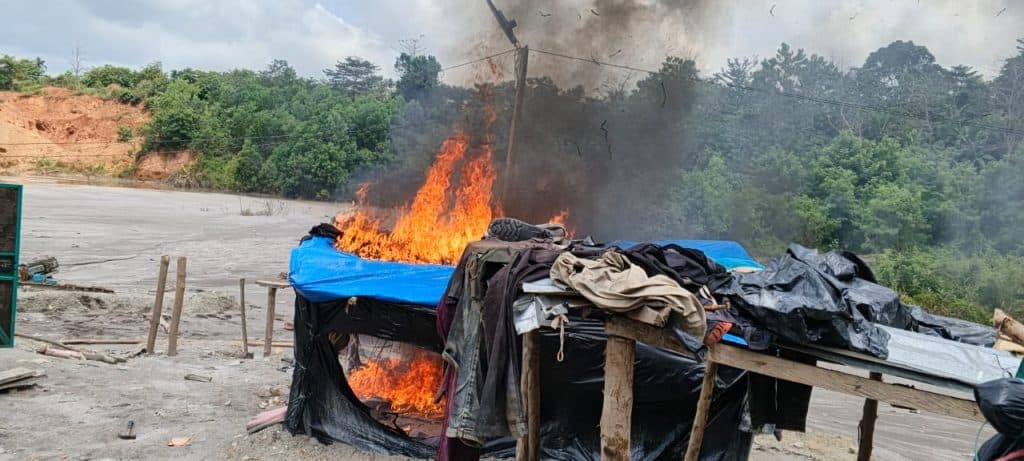
The advocacy group also announced a new international campaign seeking to have Ghana’s gold classified as “Blood Gold” until stronger measures are taken to eliminate illegal mining.
“Eco-Conscious Citizens’ #BloodGold campaign is calling on international precious minerals, finance, and commodity markets to formally classify large portions of Ghanaian gold as ‘Blood Gold’ until the government takes decisive action against illegal mining,” the statement said.
It argued that while gold remains important to Ghana’s economy, the environmental and public health consequences of illegal mining outweigh its economic benefits.
“As important as our economy is, there is a greater cost to our farmlands and waterbodies, not to mention the contamination of our foods and drinking water, and the increase in kidney disease,” the group stated.
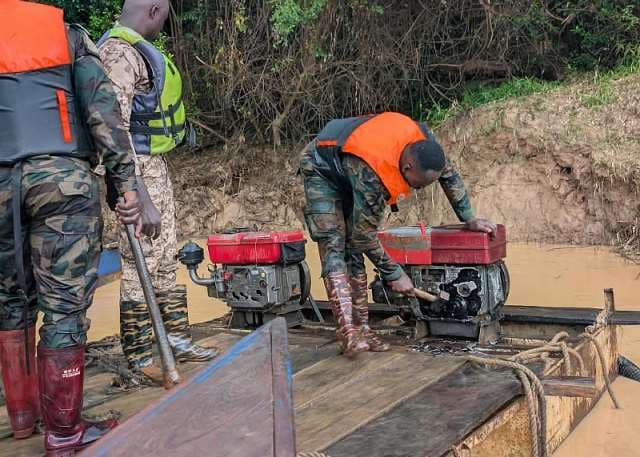
The organisation also called for the deployment of patrol boats on rivers to combat illegal mining, saying it hopes funds allocated for the initiative have been released.
While thanking President Mahama once again for revoking EI 144, the group said its environmental scorecard shows that “3.5 of the 16 points have thus far been delivered” and expressed hope that all outstanding commitments would be fulfilled during his presidency.
Eco-Conscious Citizens also drew the President’s attention to what it described as an unauthorised container structure occupying part of a gutter in Cantonments, Accra, warning that such developments contribute to flooding and undermine the government’s efforts to improve sanitation and urban drainage.