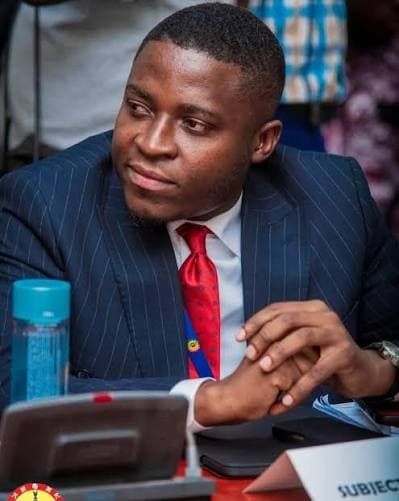
Ketu North lawmaker Eric Edem Agbana has backed Minority Leader Alexander Afenyo-Markin’s call for a collective, non-partisan approach to Ghana’s education challenges.
However, Abana said the challenges confronting the country’s education sector should not be reduced to partisan politics, arguing that the future of Ghanaian children requires a united response from stakeholders.
His comments come after Afenyo-Markin raised concerns about the state of Ghana’s education system following the release of the 2026 West African Senior School Certificate Examination (WASSCE) and the Basic Education Certificate Examination (BECE).
“Aside the subtle attempt to present this problem as a ‘Mahama government creation,’ I agree with you that we need a national conversation and collective action to improve our educational system,” Edem Agbana wrote in a Facebook post.
According to him, he has previously raised concerns in Parliament about declining confidence in the education system, particularly the widening gap between public and private schools as well as disparities in educational quality between rural and urban communities.
Edem Agbana said the situation in his Ketu North constituency was particularly worrying.
He cited an analysis of the 2025 Basic Education Certificate Examination (BECE) results, which he said showed an average aggregate of 39.3, with only 17 students recording aggregates between 6 and 20.
Of those 17 students, he said only one came from a public school.
“The best aggregate from a public school was 19, while the overall best was 9, recorded by a private school,” he stated.
Edem Agbana said the figures should concern Ghanaians irrespective of their political affiliations.
He argued that the factors contributing to the challenges in the education sector were multifaceted and therefore required comprehensive interventions rather than political blame.
“The factors are multifaceted, and we must confront them head-on,” he said.
He further called for education policies that are based on reliable data and evidence, with a focus on achieving sustainable improvements in learning outcomes.
“The solution must begin with policy: policy that is data-driven, evidence-based and focused on sustainable outcomes, rather than short-term electoral gains,” Edem Agbana stated.
The Ketu North MP also urged political actors to avoid turning the issue into another area of partisan confrontation.
“This is not an issue we should politicise. The future of our children is at stake,” he said.
Edem Agbana expressed confidence in President John Mahama’s administration to improve the country’s education outcomes, while stressing that government alone could not resolve the challenges.
“I trust President Mahama. He is on course, and I believe he will deliver on this front too,” he said.
He called for a coordinated effort involving government, Parliament, teachers, parents, communities, traditional leaders and the private sector.
“But improving education outcomes requires all of us: government, Parliament, teachers, parents, communities, traditional leaders and the private sector. We must come together and act with urgency,” Edem Agbana added.