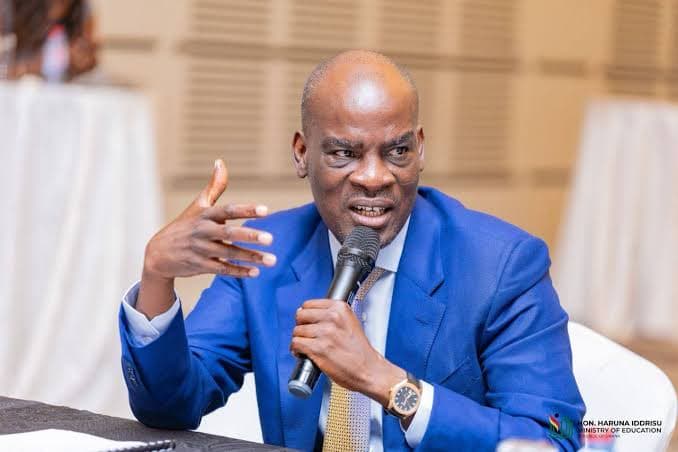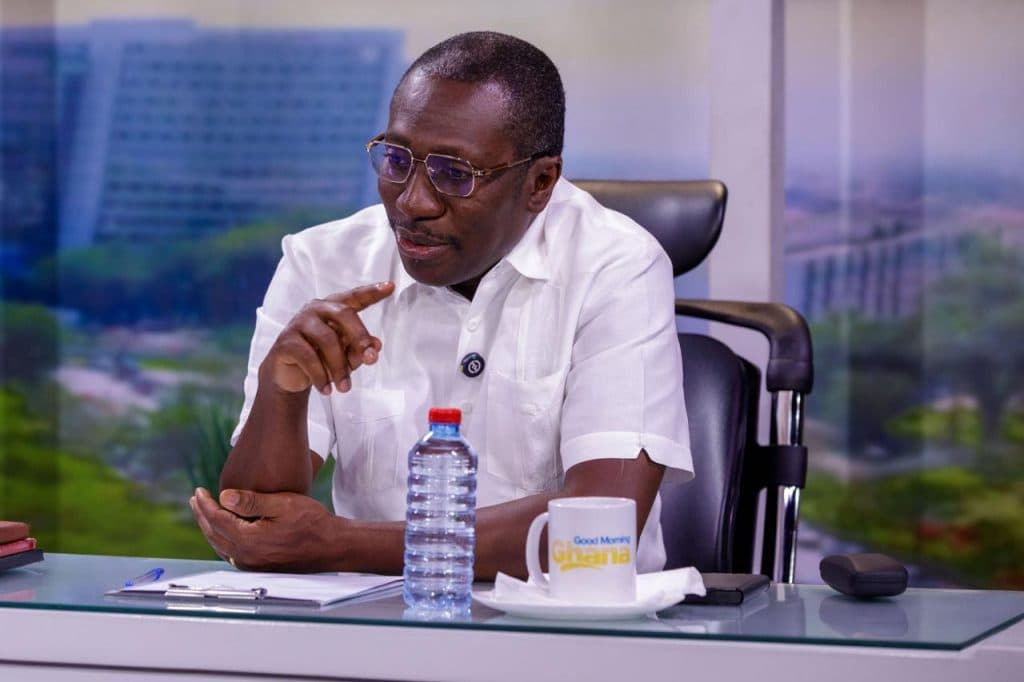
Minority Leader of Parliament and Member of Parliament for Effutu, Alexander Afenyo-Markin, has called for an urgent national conversation on education, warning that recent WASSCE and BECE outcomes point to a growing crisis that could leave more than 200,000 young Ghanaians behind.
According to Mr Afenyo-Markin, the latest West African Examinations Council (WAEC) results should concern every Ghanaian, particularly as 183,233 young people completed secondary school without obtaining a credit pass in Core Mathematics.
He also pointed to a decline in English Language performance, with the credit pass rate falling to 62.40%—the lowest level in four years. Performance in both subjects, he noted, remains below the levels recorded in 2024.
The concerns, he said, extend beyond the WASSCE results to the transition from basic to secondary education.
Mr Afenyo-Markin said 54,985 BECE candidates were initially denied automatic placement, with reports emerging of some children being wrongly placed in special schools and others arriving at their assigned schools only to discover that there was no space for them.
He questioned the apparent mismatch between the placement challenges and available capacity, noting that government figures indicate 859,828 vacancies for 623,072 candidates. He added that 85 private schools participating in the Free SHS programme also have available capacity.
“A self-placement portal is not a school place; every child needs an actual seat in a functioning classroom,” he said.
Mr Afenyo-Markin therefore warned that more than 200,000 young Ghanaians could be at risk of being left behind at different stages of the secondary-school system.
He urged the government to move beyond reacting to educational problems only after they become public and take concrete steps to address the situation.
Among other measures, he called on the government to publish the final placement outcomes, explain the rules and pass marks applied in the placement process, adequately fund teaching and remedial programmes, and establish clear pathways into technical and vocational education and training (TVET), apprenticeships and skills development for students who fail to obtain the required WASSCE credits.
“The Mahama government is expected to treat this as a major national crisis requiring immediate action and lasting solutions,” he said.
The Effutu MP also called for a broader national discussion on educational funding, teaching quality, contact hours, teacher motivation, learning materials, infrastructure and supervision.
He said the conversation must be separated from partisan politics because the stakes extend beyond any political party.
“This must rise above partisan excuses because the future of an entire generation is at stake,” he said.
Mr Afenyo-Markin further defended the education policies introduced under the previous New Patriotic Party (NPP) administration, saying the expansion of access through Free SHS, as well as Free TVET, apprenticeship and skills-development opportunities, was based on the principle that poverty or a single set of examination results should not determine a child’s future.
He stressed that the immediate challenges facing students require practical solutions, particularly for those who have completed the BECE or WASSCE without securing the expected progression.
“The 54,985 BECE candidates need real school places; the 183,233 WASSCE graduates need a second chance,” he said.
Mr Afenyo-Markin said the situation was already creating anxiety among parents and pressure on teachers, while leaving many young people uncertain about their next steps.
“Parents are worried, children are anxious and teachers are under pressure,” he said.
“When our children’s education is in crisis, Ghana’s future is in danger. The time to act is now.”