
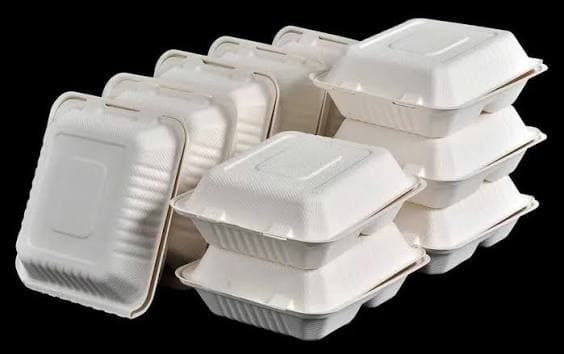
Beginning January 1, 2027, Ghana will officially ban the production, importation, sale, distribution, and use of polystyrene foam products, commonly known as Styrofoam takeaway packs.
The decision by the Environmental Protection Agency marks one of the country’s boldest environmental policy shifts in recent years. But why exactly is Ghana moving against takeaway packs that have become deeply embedded in everyday food vending and packaging culture?
What are Styrofoam takeaway packs?
Styrofoam takeaway packs are made from expanded polystyrene (EPS), a lightweight plastic foam material widely used for packaging food because it is cheap, heat-resistant, and convenient.
In Ghana, they are commonly used by restaurants, chop bars, food vendors, event caterers, and street food sellers.
However, environmental experts say the convenience comes at a huge cost.
They are a major source of plastic pollution
One of the biggest reasons for the ban is the growing plastic waste crisis in Ghana.
Styrofoam products are non-biodegradable, meaning they do not naturally decompose for hundreds of years. Instead, they break into tiny particles that pollute soil, drains, rivers, beaches, and oceans.
Because the material is extremely light, it is easily blown into gutters and waterways, contributing significantly to flooding during heavy rains.
Cities like Accra and Kumasi continue to battle choked drains heavily filled with plastic and foam waste.
The EPA says the ban is intended to help “reduce plastic pollution” and improve environmental sanitation nationwide.
Difficult and expensive to recycle
Unlike some plastics, Styrofoam is notoriously difficult to recycle.
The material is bulky, lightweight, and often contaminated with food residue, making collection and recycling economically unattractive.
As a result, most takeaway packs end up in open dumpsites, drains, or are burned in the open.
Environmental advocates have long argued that the cost of cleaning up Styrofoam waste far outweighs its economic convenience.
Health concerns from burning and chemical exposure
Another concern is the public health risk associated with Styrofoam disposal.
In many communities, foam containers are openly burned together with household waste, releasing toxic fumes into the atmosphere.
Scientific studies globally have linked the burning of polystyrene products to the release of harmful chemicals that can affect air quality and human health.
There are also concerns about chemicals from hot food and drinks leaching into foam containers, especially when used repeatedly or exposed to high temperatures.
Global shift against single-use plastics
Ghana’s move reflects a growing global trend against single-use plastics and foam packaging.
Several countries and cities around the world have already restricted or banned Styrofoam products because of their environmental impact.
Governments are increasingly pushing businesses and consumers toward reusable, biodegradable, and recyclable packaging alternatives.
The EPA says Ghana’s policy aligns with broader sustainable development and environmental protection goals.
What products will be affected?
The ban will cover:
Food takeaway packs
Disposable foam cups and plates
Foam packaging materials
Foam insulation products
Foam mattresses and bedding materials
Other commercial EPS products
However, medical and scientific EPS products will be exempted under regulatory supervision.
Next step of action?
The transition period between now and January 2027 is expected to focus on public education, stakeholder consultations, and industry adjustments.
Food vendors, importers, manufacturers, and hospitality operators are being encouraged to adopt paper-based, biodegradable, reusable, or recyclable alternatives before the ban takes effect.
The EPA says it will work with Metropolitan, Municipal and District Assemblies, customs authorities, and other regulators to enforce compliance nationwide once implementation begins.