
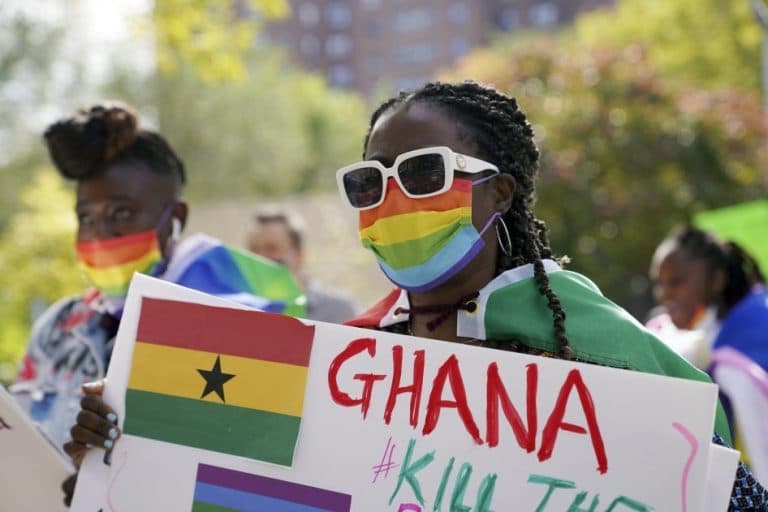
Parliament have passed Ghana’s controversial Human Sexual Rights and Family Values Bill, 2025, but not without drama, especially from the Minority side of the House.
At the centre of the disagreement was Clause 9 of the bill.
So what exactly was being changed?
The proposed amendment sought to create exemptions for some professional groups who may interact with LGBTQ persons as part of their work.
The changes were meant to protect lawyers, journalists, doctors, psychologists and counsellors from being punished under the law simply for carrying out their professional duties. Under the amendment, a lawyer defending an LGBTQ person in court, a journalist reporting on LGBTQ issues, or a doctor offering treatment or counselling would not automatically be considered as promoting LGBTQ activities.
According to Majority Leader Mahama Ayariga, the goal was simple: prevent professionals from being accused of “promoting” LGBTQ activities simply for doing their jobs.
In Parliament, Ayariga argued that concerns had been raised by the media and legal fraternity about possible violations of constitutional freedoms.
He explained that the amendment was intended to “narrowly set out those exceptions” so professional duties would not be criminalised.
Why did the Minority reject it?
For the Minority and sponsors of the bill, the amendment weakened the very purpose of the legislation.
But the Minority and sponsors of the bill were not convinced.
Rev. John Ntim Fordjour, Assin South lawmaker and lead sponsor of the bill, strongly opposed the proposal, arguing that the exemptions could create dangerous loopholes that would indirectly encourage or support LGBTQ activities in Ghana.
To him, some individuals and institutions already promote LGBTQ causes “behind the scenes and sometimes overtly,” and granting exemptions would make enforcement of the law more difficult.
Their argument was straightforward:
If the bill is meant to completely discourage LGBTQ advocacy and activities, then carving out exemptions could undermine enforcement.
Ntim Fordjour also suggested the proposed changes indirectly admitted that the earlier version of the bill, the one submitted to former President Nana Akufo-Addo for assent, had flaws.
He warned that the sponsors would resist any attempt to soften the legislation.
“And if the House will use their majority numbers to push it through, I, as a sponsor, will advise myself accordingly,” he declared during proceedings.
The constitutional debate
The disagreement exposes the tension surrounding the anti-LGBTQ bill in Ghana.
Supporters say the law is necessary to protect Ghanaian family values and cultural norms.
Opponents, however, continue to argue that some provisions risk infringing on constitutional rights such as freedom of expression, press freedom and access to legal representation.
That is why groups within the media, legal and medical sectors have been closely watching the bill’s wording.
Even though Parliament has now passed the bill, the controversy surrounding it is unlikely to end anytime soon, especially as questions over its constitutionality and potential legal challenges continue to grow.