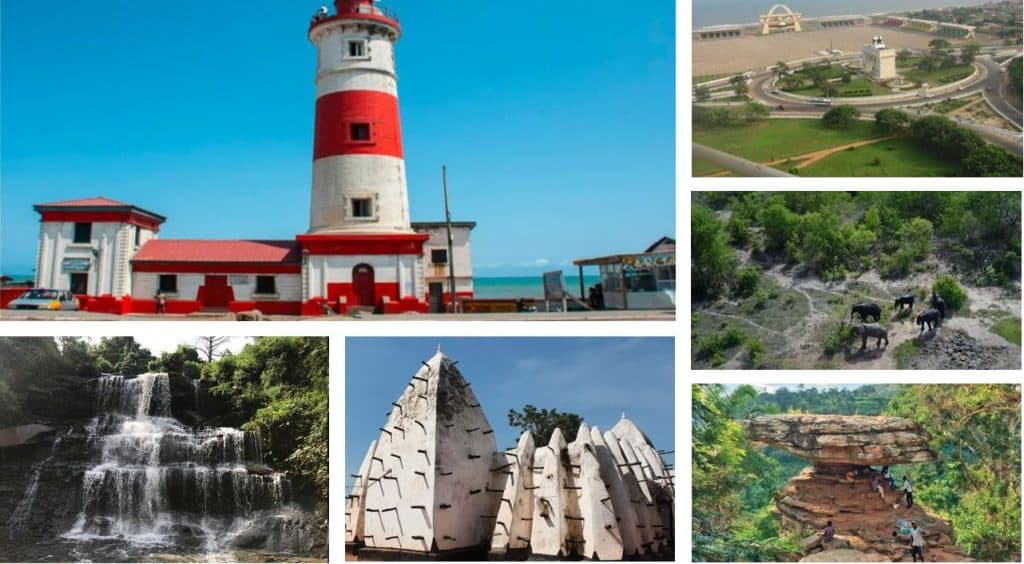
As Ghana marks Ghana Month in March, the country’s rich tourism heritage is once again in the spotlight, offering visitors and residents a chance to explore historic landmarks, wildlife reserves and natural wonders across the country.
From a scenic waterfall in the Eastern Region to historic forts along the coast and a famous wildlife reserve in the north, Ghana boasts several destinations that reflect its culture, history and natural beauty.
One of the lesser known attractions is the Asenema Waterfall, tucked away in the rainforest of the Akuapem Hills in the Eastern Region.
Located about 15 minutes from Akropong and north of Aburi, the waterfall is a short five minute walk from the main road along a marked trail. Surrounded by lush forest and rolling hills, the falls feed a lively stream and are most impressive during the rainy season when the water flow is strongest.
For wildlife lovers, the Mole National Park remains Ghana’s largest and most popular wildlife reserve. Covering about 4,912 square kilometres, it is home to the widest range of wildlife in the country and the only place where visitors can see elephants in the wild. The park also hosts antelope, bushbucks, monkeys, warthogs and baboons.
In the capital, the historic Fort Ussher in Jamestown stands as a reminder of Ghana’s colonial past. Built by the Dutch in 1649, it served as a trading post and slave dungeon where captives were shipped across the Atlantic.
The fort later functioned as a prison and once held Ghana’s first president, Kwame Nkrumah, in 1951 during the struggle for independence.
In the Central Region, the hilltop Fort St Jago overlooks the famous Elmina Castle. Originally built by the Portuguese as a chapel between 1555 and 1558, the structure later became a watchtower and played a strategic role when the Dutch captured the castle.
Further north, the Larabanga Mystic Stone continues to attract visitors because of its legendary history. According to local lore linked to village founder Ayuba, attempts by British road builders in the 1950s to remove the stone repeatedly failed when it mysteriously returned to its original location. The road was eventually redirected around it, and today the site remains a cultural symbol near the historic Larabanga Mosque.
Along the coast in the Western Region, the centuries old Fort San Sebastian reflects another chapter of Ghana’s colonial history. Built by the Portuguese between 1520 and 1526 to protect trade in the area, the fort has often been described as a smaller version of St George’s Castle.
In the Ashanti Region, the Okomfo Anokye Sword Site remains one of the country’s most revered landmarks. According to tradition, the legendary priest Okomfo Anokye drove the sword into the ground in the 17th century as a symbol of unity for the Ashanti Kingdom. The sword has remained firmly embedded in the earth for more than three centuries despite several attempts to remove it.
Nature lovers can also visit the Duasidan Monkey Sanctuary near Dormaa Ahenkro in the Bono Region. The 40 acre forest sanctuary provides a protected home for several rare monkey species and offers visitors a unique blend of wildlife conservation and traditional beliefs.
As Ghana celebrates its culture and heritage this March, tourism authorities say exploring such destinations not only promotes national pride but also helps preserve the country’s natural and historical treasures.
Story by Nana Akua Amponsah || Metro Digital