
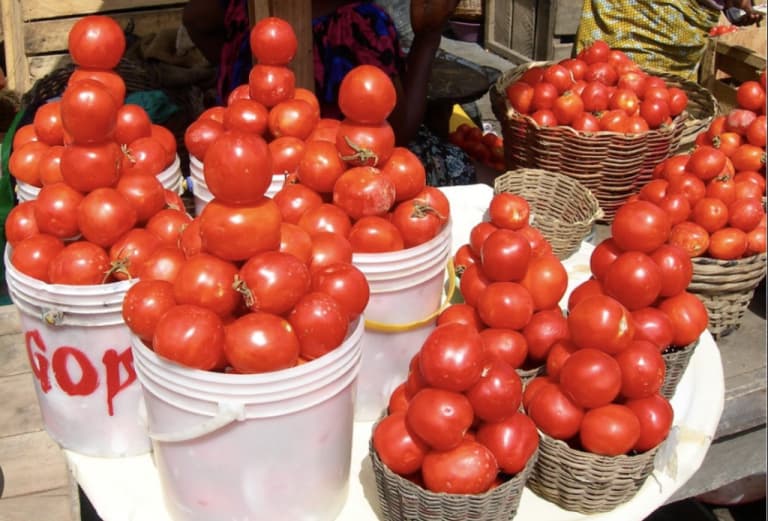
The Food and Beverages Association of Ghana, FABAG, has issued a sharp ultimatum to the Ministry of Food and Agriculture, demanding swift action to resolve the country’s tomato shortage following a disruption in imports from Burkina Faso.
In a statement released on Monday, the Association expressed deep concern over the situation, describing it as a clear sign of weak planning and ineffective agricultural policies. It argued that Ghana’s continued reliance on a neighbouring country for such a basic food item is unacceptable, given the country’s vast agricultural potential.
According to the Association, tomatoes are a short-cycle crop that can be cultivated and harvested within two to three months under the right conditions. With irrigation and improved seed varieties, it said, the country should be able to restore supply within 60 to 90 days.
FABAG insisted that any suggestion that the shortage cannot be resolved quickly points to failures in leadership and policy direction rather than a lack of resources.
It noted that Ghana has fertile land, irrigation infrastructure, trained farmers, research institutions and a large pool of unemployed youth who could be mobilised for production.
The Association warned that depending on imports for a staple food poses a broader national risk, stressing that food security must be treated as a priority.
To address the crisis, FABAG called for immediate emergency measures, including the rollout of a national tomato production programme, rapid distribution of seeds, subsidised inputs, activation of irrigation systems and support for storage and processing. It also urged authorities to work towards making Ghana self-sufficient in tomato production within a year.
The group emphasised that the moment demands decisive action rather than continued policy discussions. It warned that if the Ministry fails to organise nationwide tomato production within the next two to three months, government should consider restructuring it into a more results-driven agricultural authority with clear targets and accountability.



