
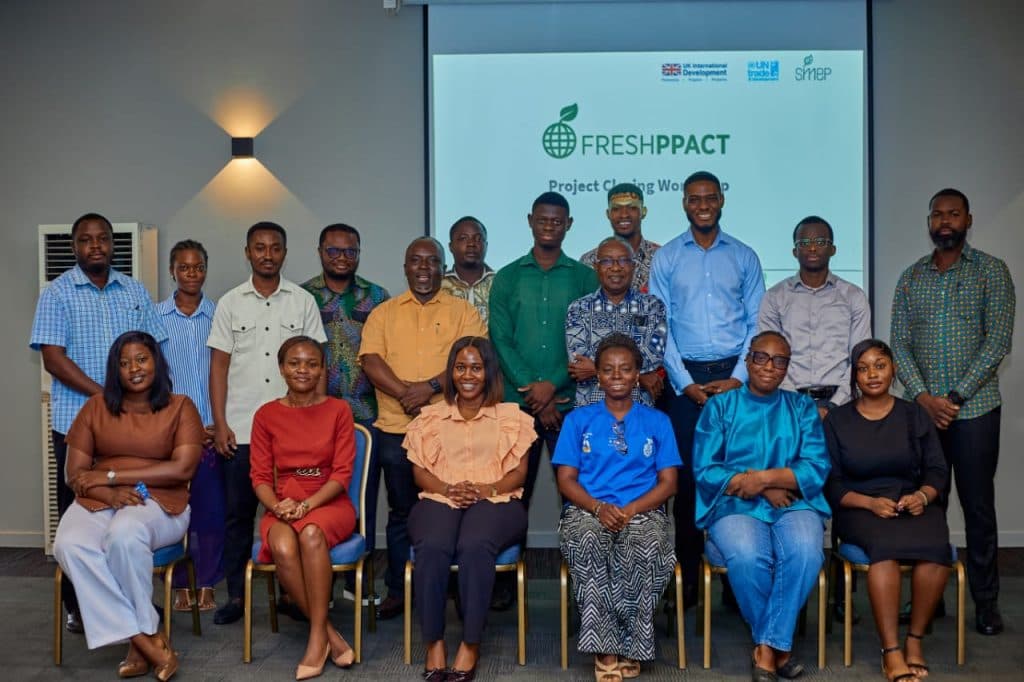
Ghana marked a pivotal moment in the fight against plastic pollution. The closing ceremony for the nation’s first-ever policy blueprint aimed at transitioning to sustainable plastic alternatives underscored the country’s commitment to addressing environmental challenges head-on.

The blueprint, hailed as a game-changer in West Africa, offers a comprehensive strategy for transitioning Ghana toward a circular economy powered by sustainable, locally-produced materials. The policy will lay the foundation for the widespread commercialization of eco-friendly alternatives, such as biodegradable coconut fiber (cocomulch) and other innovative packaging solutions, making Ghana a regional leader in sustainable development.
The transition away from conventional plastics is not just an environmental necessity—it’s an economic and societal imperative. Dr. Ebenezer Laryea, the Project Lead for FRESHPPACT, shared his insights on the urgency of adopting sustainable alternatives. “This initiative is not just about reducing plastic waste—it’s about creating a future where sustainable materials drive Ghana’s development,” Dr. Laryea emphasized during the ceremony.
Ghana’s current waste management strategies, while important, are no longer enough to address the mounting plastic pollution crisis. With an extremely low recycling rate, the country faces a critical need for systemic change. Dr. Laryea further highlighted that without a shift toward sustainable alternatives, plastic waste could become a major barrier to agricultural growth and environmental health.
A key highlight of the initiative is its focus on local innovation. Ghanaian entrepreneurs and businesses are leading the way in developing eco-friendly packaging solutions. One notable example is the conversion of coconut waste into biodegradable packaging materials—an innovative approach that not only reduces plastic pollution but also contributes to the country’s economic growth by creating new jobs in rural areas.
Madam Dorothy Deadoo, Farm Internal Auditor for Blue Skies, a key partner in the initiative, spoke passionately about the company’s role in empowering local communities. “Our sustainable packaging solutions are designed to not only reduce plastic pollution but also create meaningful employment for farmers,” she explained. “This initiative is about building a system that benefits both the planet and the people who sustain it.”
The launch event emphasized the importance of collaboration across all sectors—industry, government, and communities. The policy blueprint reflects years of research and partnership-building, with organizations such as Zoomlion Foundation playing a critical role in educating and engaging local communities in the movement toward sustainability.
Thomas Narh Korley, Head of the Zoomlion Foundation, reinforced the importance of education and awareness in achieving long-term success. “Our job is to spread knowledge and engage the youth in schools. The next generation must understand the importance of sustainability, and we are here to equip them with the tools to make a difference,” he stated.
The event in Accra was more than just a policy launch—it was a celebration of Ghana’s growing role as a leader in the global sustainability movement. The partnerships formed through FRESHPPACT, Blue Skies, Zoomlion, and other key stakeholders are set to drive meaningful change and inspire neighboring countries to adopt similar policies.



