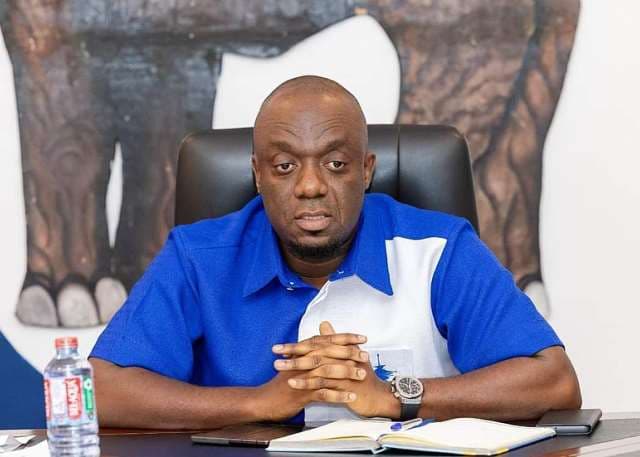
Minister of Communication, Digital Technology and Innovations, Samuel Nartey George, has outlined key achievements and challenges during his tenure, highlighting efforts to modernise Ghana’s technology landscape and deliver tangible benefits to citizens.
Speaking on Metro TV’s Good Morning Ghana on March 24, the Ningo-Prampram MP said his first-time appointment as a minister offered a unique perspective on governance.
“Well, it’s been a deeply rewarding journey, rewarding because it’s given me a chance to experience governance from a completely different perspective. I didn’t go through the usual route of being a Deputy Minister first, so I’m particularly grateful for the confidence reposed in me with that direct appointment,” he said.
Samuel Nartey George described the ministry as central to modern governance, affecting sectors ranging from education and healthcare to finance and transport.
“The ministry serves as an enabler across the entire government architecture, which makes the role both critical and demanding,” he added.
On taking office, the minister said his team confronted years of stagnation, outdated systems, and legislation unfit for the AI-driven world.
“I recall saying at my first management meeting that our legal framework didn’t belong in a modern tech ministry, t belonged in a museum,” he noted.
Under his leadership, the ministry is overhauling laws across its 11 agencies, introducing 15 new pieces of legislation to bring Ghana’s tech sector into the 21st century.
Ghanaians have already seen measurable benefits, particularly in the cost of data. Through engagement with telecom operators, civil society, and regulators, the ministry achieved improved data value across networks, rising 10 to 15 percent in some cases, and expanded data bundles, sometimes doubling what consumers previously received for roughly the same price.
On broadcasting, Nartey George said reforms on DSTV pricing have brought direct household savings.
“When the broader economy stabilises, when the cedi is stronger and inflation is easing, consumers should feel it. People are now paying less for the same or even better packages. Premium football content that used to cost around 570 cedis is now far more accessible.”
The minister acknowledged challenges, noting that pushing reforms sometimes meets resistance even from those meant to benefit. Yet, he emphasised, public service requires perseverance.
Among the milestones he cited is the National AI Strategy, which has received Cabinet approval and is set for official launch. The framework aims to guide Ghana’s use of artificial intelligence to transform key sectors and drive national development.
“Overall, we’ve made solid progress, but there’s still a lot more to do. We remain focused, committed, and determined to keep delivering for the Ghanaian people,” Nartey George concluded.