
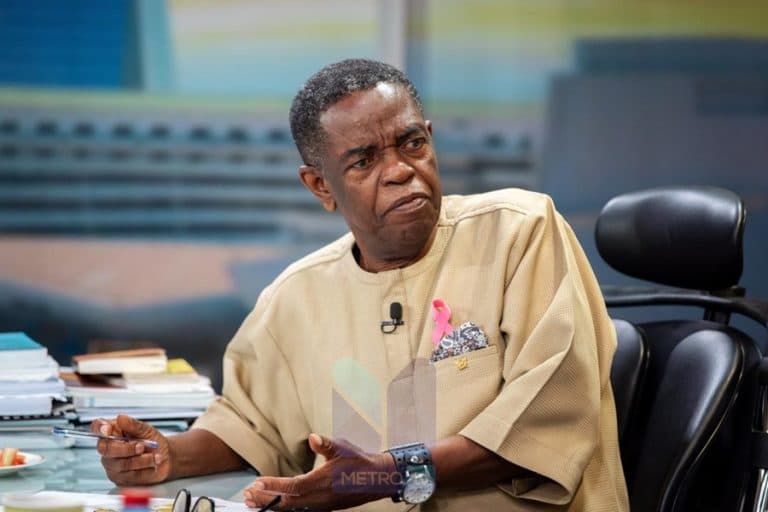
The United Nations’ recent vote endorsing reparations for the transatlantic slave trade marks a historic moment in a decades-long struggle for justice, according to Kwesi Pratt Jnr., former Managing News Editor of the Insight Newspaper.
Speaking on Metro TV’s Good Morning Ghana, Pratt traced the historical context of slavery and systemic racism, noting that its impact continues to shape global inequalities. “Racism is almost endemic in the United States. In my lifetime, blacks and whites could not take the same buses. It took Rosa Parks to protest so blacks could sit anywhere,” he said. He also highlighted incidents in Ghana’s early post-independence period: “After Ghana’s independence, Kwame Nkrumah Agyeman was denied access to a cafe because he was black. This is recent history.”
Pratt emphasized the economic dimensions of reparations. “Reparations as payment, return of resources, and so on… the US economy will suffer the most because it is the largest beneficiary of the accumulation and stealing of value generated by slave labour,” he explained. Using concrete examples, he traced the stolen wealth from Africa to Europe: “If you take Barclays Bank, the resources which went into establishing Barclays Bank… the Barclay brothers were slave traders. Today, King Charles rides in a gold chariot… that gold came from Cape Coast. That is the wealth of the African people which was stolen.”
The journalist also criticized attempts by some nations to minimize the crime.
“The European Union, the United States, and Israel argued that the Holocaust was the worst crime against humanity… but the law establishes a hierarchy of crimes. That argument collapses in this context,” Pratt said.
He compared the atrocities of the transatlantic slave trade with other historical crimes: “At least 12.6 million Africans were captured into slavery. Their skin was used to make belts and bags… children born to enslaved women belonged to the slaveholders, not their mothers. We were treated worse than the cows on their farms.”
Pratt highlighted the systematic destruction of African knowledge and science, citing examples of early African medical and technological achievements that were suppressed or appropriated.
“An African woman was arrested at Elmina Castle, tried for witchcraft for using an African sword in self-defense, and taken to Portugal… African science was destroyed,” he said.
Despite these injustices, Pratt framed the UN resolution as a vindication for decades of struggle led by both African and Caribbean nations.
“We have to appreciate the fact that the resolution was moved by President Mahama on behalf of 55 African countries. But credit also belongs to the Caribbean nations who have long been at the forefront of this fight,” he said.
Pratt concluded with a question for the future: “This is a major vindication… but the most important question is, where do we go from here?”



