
Artificial intelligence (AI) is no longer a distant idea reserved for science fiction. From education and content creation to employment, communication and everyday problem-solving, AI has quickly become part of how Generation Z learns, works and navigates the world.
But as AI becomes more accessible, one question is becoming increasingly difficult to ignore: Is AI making Gen Z smarter, or is it making us lazier?
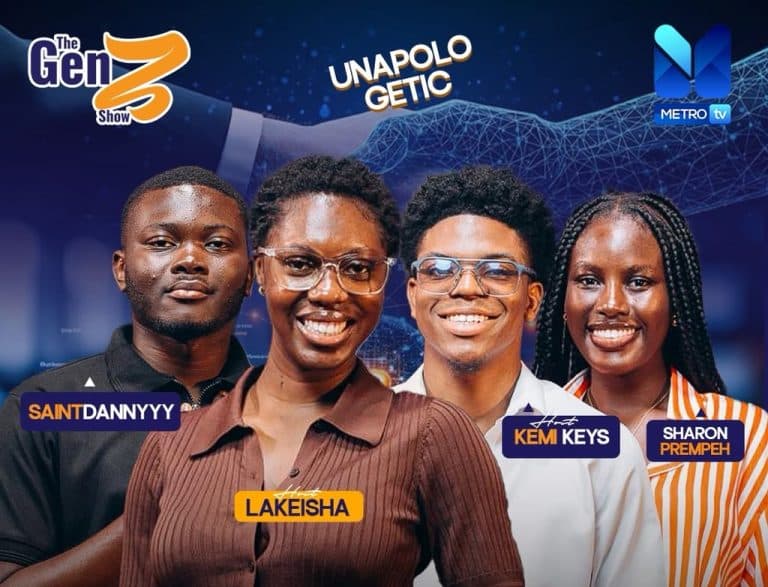
That question takes centre stage on the latest episode of The Gen Z Show, as hosts Lakeisha and Kemi Keys sit down with Sharon Prempeh and Saint Danny for a thought-provoking conversation about the opportunities, risks and uncertainties surrounding artificial intelligence.
At the heart of the discussion is the growing dependence on AI tools such as ChatGPT. While these tools can make information more accessible and help users work faster, the conversation raises concerns about what happens when convenience begins to replace critical thinking.
Sharon Prempeh argues that society may already be giving AI too much responsibility for how we think.
“We are outsourcing our cognitive thinking to AI, and that is concerning. The real challenge is finding the balance.”
Her concern speaks to a broader question about the role of technology in human development. If AI can write, research, explain, create and solve problems within seconds, are we strengthening our abilities by using it—or gradually allowing those abilities to weaken?
For Lakeisha, the disruption is much bigger than productivity. AI is already changing the world of work, and she believes the next few years could bring even greater transformation.
“The next five years could redefine how we work, live and compete. AI is only getting started.”
From automated tasks to AI-assisted creativity and changing workplace expectations, the technology is forcing young people to reconsider what skills will remain valuable in the future.
But Saint Danny offers another perspective: perhaps the AI we are experiencing today will eventually look primitive.
“Ten years from now, the way we use AI today may seem outdated, just as yesterday’s technology does to us now.”
His point highlights the speed at which artificial intelligence is evolving. What feels revolutionary today could become ordinary tomorrow. The bigger challenge may therefore not be whether young people use AI, but whether they can continuously adapt as the technology changes.
For Kemi Keys, adaptation is no longer something young people can afford to postpone.
“We have reached a point where AI is no longer optional. Embrace the disruption, or risk being left behind.”
The debate ultimately moves beyond the simple question of whether AI is good or bad. AI can undoubtedly make learning, creativity and productivity more accessible, but its impact depends heavily on how it is used.
Used as a tool, AI can expand what people are capable of. Used as a substitute for thinking, it could weaken the very skills that make human beings valuable.
And perhaps that is where the real conversation lies.
AI is here. The question is no longer whether Gen Z will use it, but whether Gen Z will learn to use it without losing the ability to think for itself.
Catch The Gen Z Show featuring Lakeisha, Kemi Keys, Sharon Prempeh, and Saint Danny as they unpack the question: AI – Help or Hype? Is AI Making Gen Z Smarter or Lazier?
By: Kemi Keys