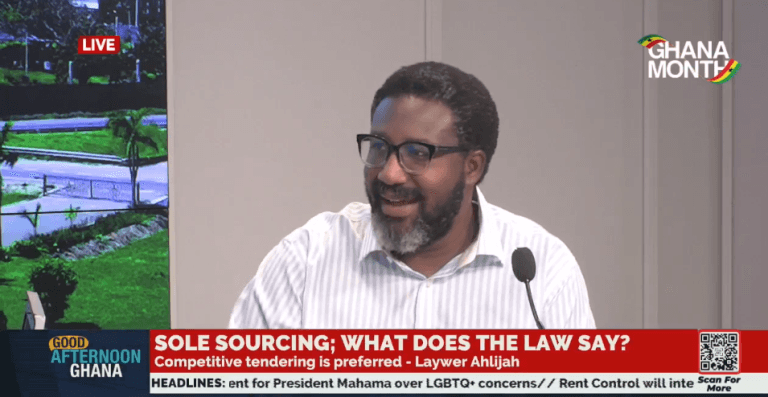
Lecturer at GIMPA Law School and energy consultant Lom Nuku Ahlijah says Ghana enjoys a strong global reputation, but the country must invest more in practical education and human capital development to sustain growth.
Speaking on Good Afternoon Ghana on Metro TV on Wednesday, March 25, 2026, Lom Nuku Ahlijah said Ghana is widely respected internationally, with many people recognising the country for its history, culture and stability.
“Most of the time, even when you travel outside Ghana and you mention that you’re from Ghana and people know Ghana, straight away they start mentioning things… Kwame Nkrumah, I know somebody from Ghana, I’ve eaten jollof before,” he said.
He noted that Ghana has positioned itself as a strong cultural ambassador for Africa but still has more to do, especially in tourism promotion.
“Ghana is good… we have something good going for us. Kenya is really big on tourism and has pushed their brand even more significantly than Ghana. We have perhaps a lot we can also learn from them.”
Mr Ahlijah added that initiatives such as the December tourism season show Ghana’s growing global appeal, but the country should expand its reach beyond visitors from the United States.
“One of the things we should be looking at as a nation is how to push that further so it’s not just U.S.-driven traffic but even Europe and Asia and all over the world.”
He also pointed to Ghana’s unique cultural practices gaining international recognition, citing the global fascination with Ghana’s artistic funeral caskets.
“I went to a museum outside Ghana and one of the unique things about Ghana there was how we design our caskets for funerals… it was fascinating because I didn’t even know that concept had travelled so far.”
On education, Mr Ahlijah said Ghana’s system produces capable students who perform well abroad, but there is a need to shift from theory to practical learning.
“Generally, we do quite well when we study outside, which means what we have in Ghana is not bad. Perhaps the difference is that there’s a lot of emphasis on practicalisation… taking knowledge into action.”
He explained that many Ghanaian institutions still focus heavily on theory, especially in science and technical education, where investment in equipment and infrastructure is needed.
“You can have a science student finishing school without seeing certain equipment required in the lab… which means we need to do more investment in education because education can drive everything.”
Mr Ahlijah cited countries like Singapore and Finland as examples Ghana can learn from in building a strong education system driven by human capital development.
“There are nations that barely have natural resources but because they focus on building strong human capital, they are able to do a lot… there is no reason why Ghana cannot learn from countries like Finland.”
He said improving education and investing in people remains key to Ghana’s long-term development and global competitiveness.