
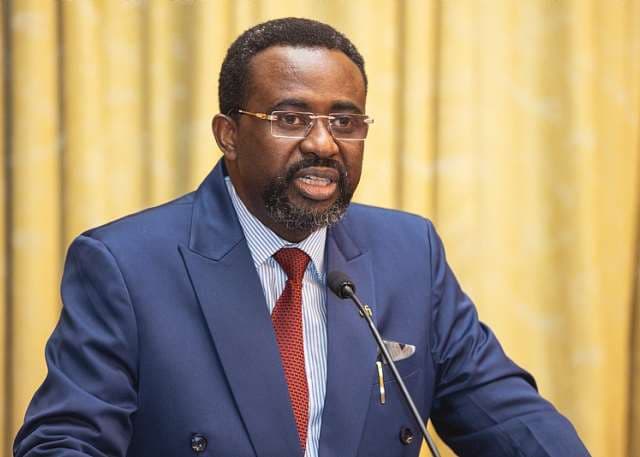
Bank of Ghana (BoG) Governor Dr Johnson Asiama has disclosed that tensions in the Middle East and wider global economic uncertainty have put significant pressure on Ghana’s international reserves in recent months.
According to the Governor, Ghana has experienced a challenging period over the past three to four months as external developments increased pressure on the country’s reserves and required the central bank to support critical sectors of the economy.
“The past three to four months have been quite challenging for us when it comes to the country’s international reserves,” Dr Asiama said.
He added: “I am therefore not surprised that we lost $1.2 billion reserves.”
Ghana’s reserves fall to $12.9 billion
Data released by the Bank of Ghana in its July Economic and Financial Data shows that Ghana’s international reserves declined from $14.1 billion to $12.9 billion.
The decline comes amid heightened global uncertainty, including tensions in the Middle East, which have contributed to volatility in international markets and increased pressure on economies such as Ghana.
Dr Asiama said the development highlights the importance of building and maintaining adequate reserve buffers to protect the economy when external shocks occur.
“This is why we can say that one of the good things we did last year was to build some high reserves for interesting times like this,” he said.
The Governor said maintaining strong international reserves remains critical to Ghana’s economic stability, particularly during periods of heightened uncertainty in the global economy.
International reserves provide a buffer that allows a country to meet external obligations, support essential imports and respond to pressure on its currency and balance of payments.
Dr Asiama described the decisions involved in managing reserve pressures as difficult choices that countries must make when confronted with external shocks.
His comments came during Part Two of Time with the Governor, an engagement with students from the Department of Economics at the University of Ghana and the University of Ghana Business School (UGBS).



