
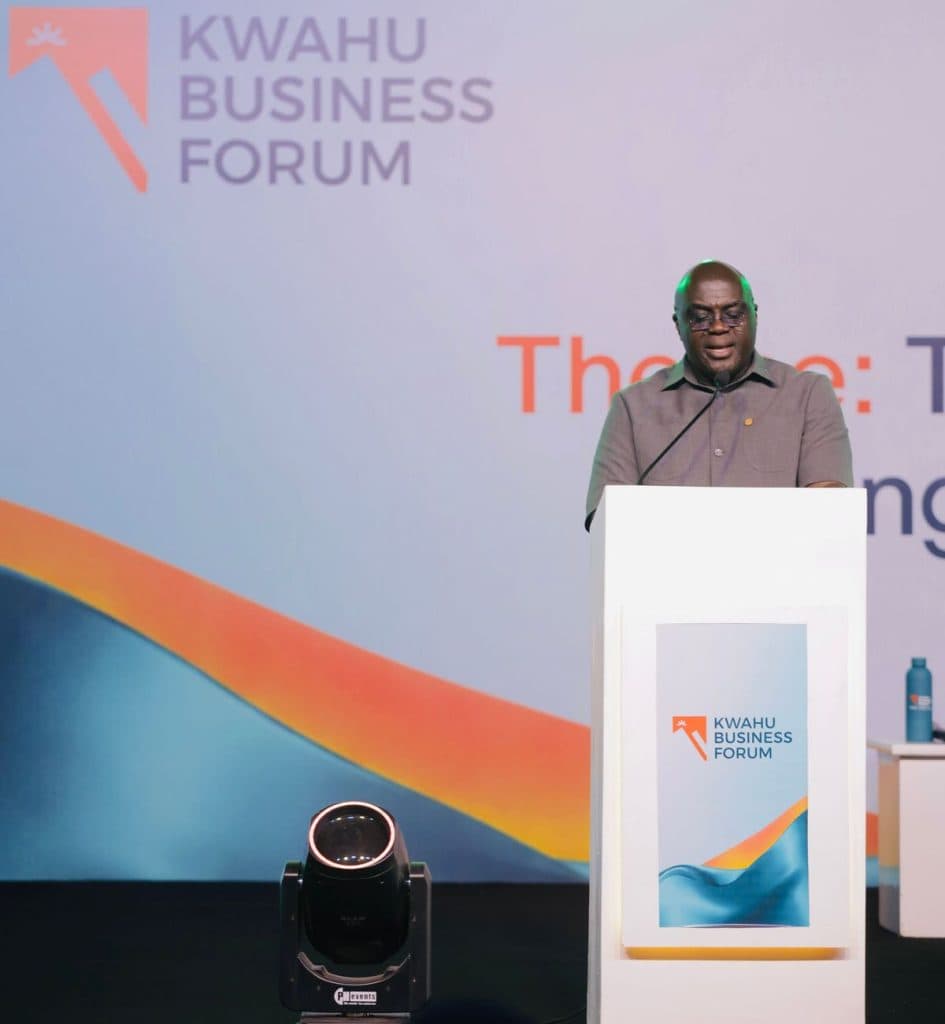
Chief of Staff Julius Debrah has stressed that Ghana must now seize the opportunity to become the manufacturing hub of West Africa.
Speaking at the opening of the 2026 Kwahu Business Forum on April 3, 2026, Debrah emphasized the government’s commitment to transforming Ghana’s economy into a manufacturing-driven powerhouse, drawing on the nation’s abundant resources and entrepreneurial spirit.
Debrah outlined the government’s focus on shifting Ghana’s economic strategy away from traditional production-based industries to a modern, diversified, and manufacturing-centric economy. This transformation is in line with President John Dramani Mahama’s broader vision for national economic growth and job creation.
“At the heart of this transformation is the government’s commitment to partnering with the private sector, aiming to create a conducive environment where businesses and industries can thrive,” said Debrah. He also highlighted that this change is not only crucial for the economic development of the country but also vital for the empowerment of Ghana’s workforce, with manufacturing playing a key role in generating sustainable jobs for citizens.
The Chief of Staff did not shy away from criticizing the limitations of the current “Guggisberg economy,” a reference to the historical reliance on the primary sector, which he believes has hindered Ghana’s potential. He urged policymakers, business owners, and investors to rise to the challenge and move beyond the traditional economic models to embrace industrialization.
“The time for Ghana to take the leap into industrialization is now. We can no longer afford to be a country full of potential without converting that potential into tangible results, such as factories, products, and a broad base of skilled jobs,” Debrah added.
For Ghana to emerge as the dominant manufacturing hub in West Africa, Debrah stressed the importance of strategic investments in infrastructure, technology, and skill development. By fostering a strong manufacturing sector, the government aims to boost national GDP, create high-quality jobs, and increase Ghana’s global competitiveness.
“Manufacturing is not just about producing goods – it’s about creating an ecosystem of innovation, job creation, and long-term sustainable growth. This is the future we want for Ghana,” he explained.



