
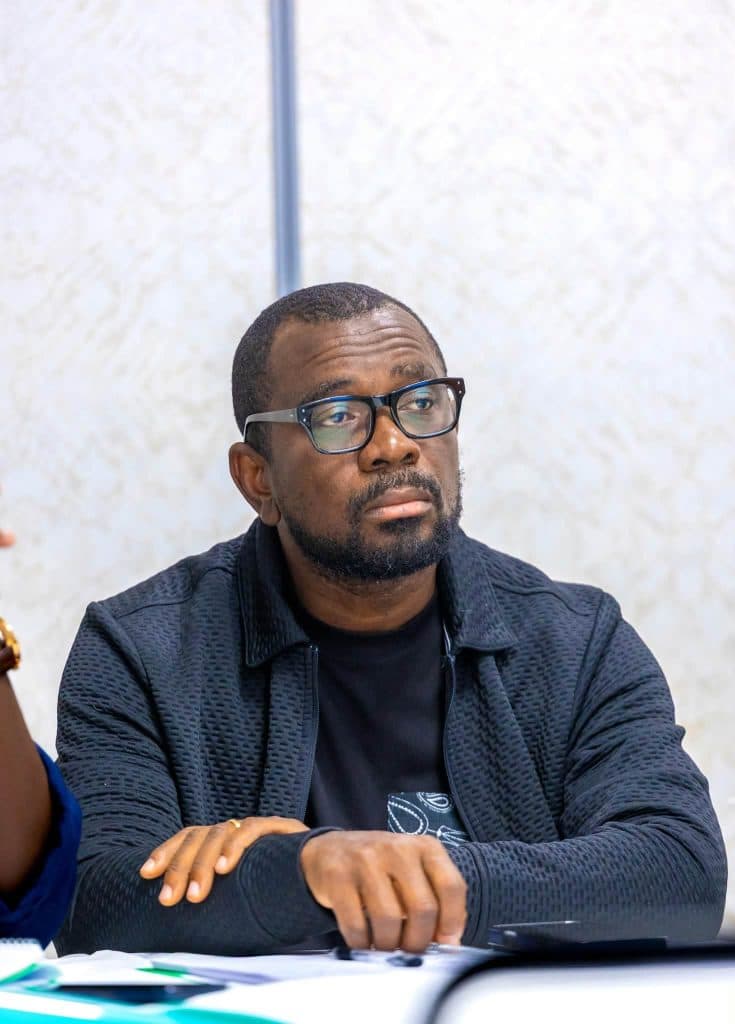
The Ranking Member of Parliament’s Roads and Transport Committee, Kennedy Osei Nyarko, has called for greater private sector participation in Ghana’s road infrastructure development, arguing that government budgets alone cannot address the country’s road deficit.
According to Mr. Osei Nyarko, Ghana must urgently adopt a stronger Public-Private Partnership (PPP) approach to finance the construction and expansion of its road network.
He made the comments in a post on his Facebook page while outlining road infrastructure figures he attributed to the former Akufo-Addo administration and proposing what he described as a long-term solution to Ghana’s road infrastructure challenges.
Mr. Osei Nyarko said the Akufo-Addo administration inherited a total road network of 78,401 kilometres in January 2017, with less than 30% of the network paved.
He claimed that by the time the government left office in 2024, Ghana’s total road network had increased to 94,203 kilometres, representing an increase of about 20%.
He further stated that paved roads had reached 25,435 kilometres, representing approximately 27% of the country’s total road network.
According to him, this meant that about 1,915 kilometres of new paved roads had been constructed during the period.
He added that the figures did not include approximately 1,955.25 kilometres of roads that were resurfaced.
Mr. Osei Nyarko also cited 2,538.80 kilometres of roads under rehabilitation programmes, noting that some of those projects have been continued by the current Mahama administration while others, according to him, have been abandoned.
The MP acknowledged that Ghana still has a significant gap to close if the country is to achieve a modern and efficient road network.
“Yes, I agree with you that a country like Ghana should not have less than 50% of its road network size paved,” he said.
However, he argued that the major challenge has been inadequate investment in road infrastructure.
According to Mr. Osei Nyarko, countries that devote less than 5% of their Gross Domestic Product (GDP) to road infrastructure risk suffering significant economic consequences.
He also claimed that successive governments have failed to provide even 40% of the annual investment required to address Ghana’s road infrastructure needs.
Mr. Osei Nyarko believes Ghana needs to move away from relying predominantly on annual government budget allocations to finance major road construction.
“No serious nation can solely rely on Government’s annual budget to build any serious road infrastructure,” he stated.
He therefore proposed increased use of private capital and PPP arrangements to accelerate road construction.
According to him, if the government attempts to finance and construct the country’s entire road network on its own, it could take almost 40 years to achieve the objective.
He said PPPs could help shorten that timeline by bringing private investment into the sector.
He argued that the government’s annual budget should focus primarily on road rehabilitation and maintenance, while the construction of new roads should increasingly be financed through private investment and PPP arrangements.
However, he said government would first need to create the right environment for private investors.
“To be able to attract private investments into the sector means the Government must put down the necessary measures and remove all the bottlenecks or impediments to attract private investments and PPP,” he said.



