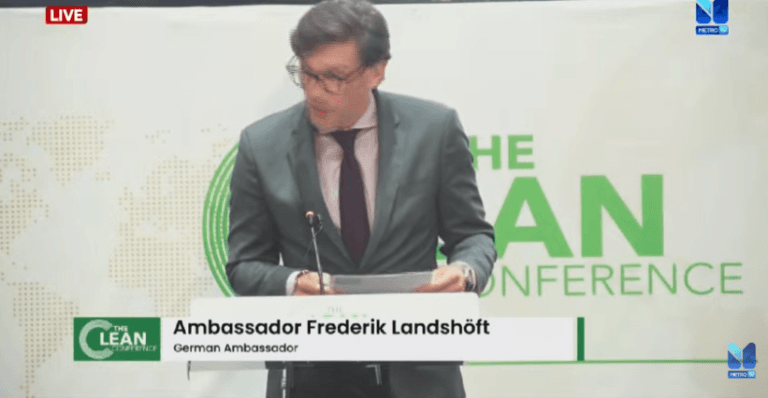
German Ambassador to Ghana, Frederik Landshöft, has urged Ghana to intensify efforts to protect its water bodies, saying the recovery of polluted rivers in other parts of the world shows that environmental damage can be reversed.
Speaking at the Clean Conference organised by Ignite Media Group at the Cedi Conference Hall of the University of Ghana, Legon, on Friday, August 21, Mr Landshöft said the experience of Germany’s Rhine River offered an important lesson for Ghana.
He recalled growing up in Krefeld, near the Rhine, when the river was heavily polluted and residents were warned against swimming in it.
“But the Rhine was heavily polluted. We were told not to swim in it. The fish were dead, the river was dead,” he said.
According to him, decades of environmental action have transformed the river, with fish returning and people once again swimming in parts of it.
“Today, the Rhine is a different river. The fish have returned, people even swim in it again, life has returned. A childhood dream has come true,” he added.
Mr Landshöft said similar signs of recovery could be seen in other major rivers, including parts of the Yangtze in China and the Ganges in India.
He said these examples demonstrated that sustained action could restore degraded water bodies.
“Yet, they demonstrate one important fact. Action works. Water bodies can recover,” he stated.
The Ambassador, however, expressed concern about the pace of global efforts to meet the United Nations Sustainable Development Goals, particularly those relating to water, sanitation, sustainable cities and energy.
He noted that the world had committed in 2015 to achieving the SDGs by 2030, including universal access to safe water and sanitation.
“We are now less than four years away from that deadline, and the world is not on track to achieve SDG 6, 7 and 11, and unfortunately not even close,” he said.
Mr Landshöft said the urgency of the situation meant countries could no longer postpone action.
“The question is no longer what we want to achieve someday. The question is what we are prepared to do today,” he said.
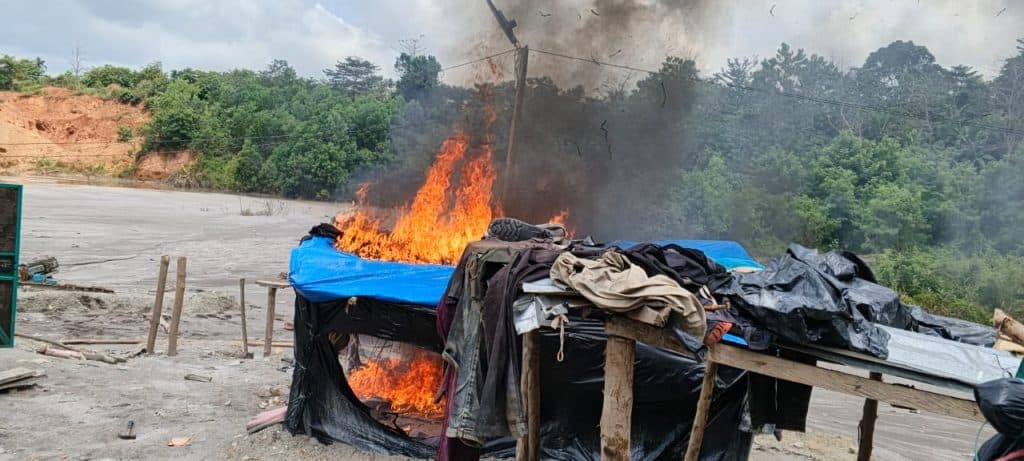
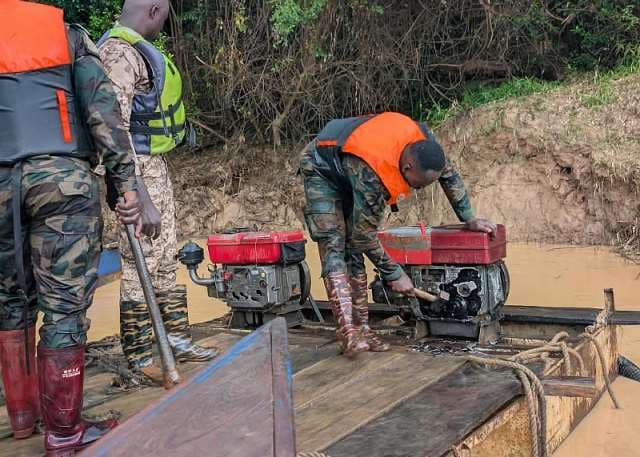
Turning to Ghana, he noted that the country’s water bodies continue to face serious threats from waste, plastic pollution and illegal mining, popularly known as galamsey.
“Here in Ghana, water bodies remain under enormous pressure, from waste and plastic pollution, and of course, from the devastating effects of Galam Sey,” he said.
He nonetheless commended the Ghanaian government for what he described as renewed efforts to protect water bodies and improve sanitation.
“Environmental decline is not inevitable. And Ghana is taking action,” he said.
Mr Landshöft also pointed to Germany’s longstanding environmental cooperation with Ghana, particularly in the area of electronic waste management.
He said German cooperation through GIZ had worked with Ghanaian partners to promote safer recycling and better management of e-waste around Old Fadama and the Korle Lagoon, involving institutions such as the Environmental Protection Agency.
He disclosed that the German Embassy, in partnership with the EPA, would soon launch a new environmental diplomacy project focused on plastic pollution.
The initiative, he said, would bring together government, businesses and communities to discuss practical ways of tackling the problem.
The Ambassador urged stakeholders to draw lessons from rivers that have successfully recovered, stressing that the condition of a water body can change when meaningful action is sustained.
“Their story may be different, but each of them reminds us that the condition of a water body is not written in stone,” he said.
“It can change, and sometimes life returns.”
The Clean Conference, organised by Ignite Media Group, the parent company of Metro TV, Original TV and Original 91.9 FM, brought together policymakers, environmental experts, academics, development practitioners and private-sector leaders to examine Ghana’s progress towards the United Nations Sustainable Development Goals.