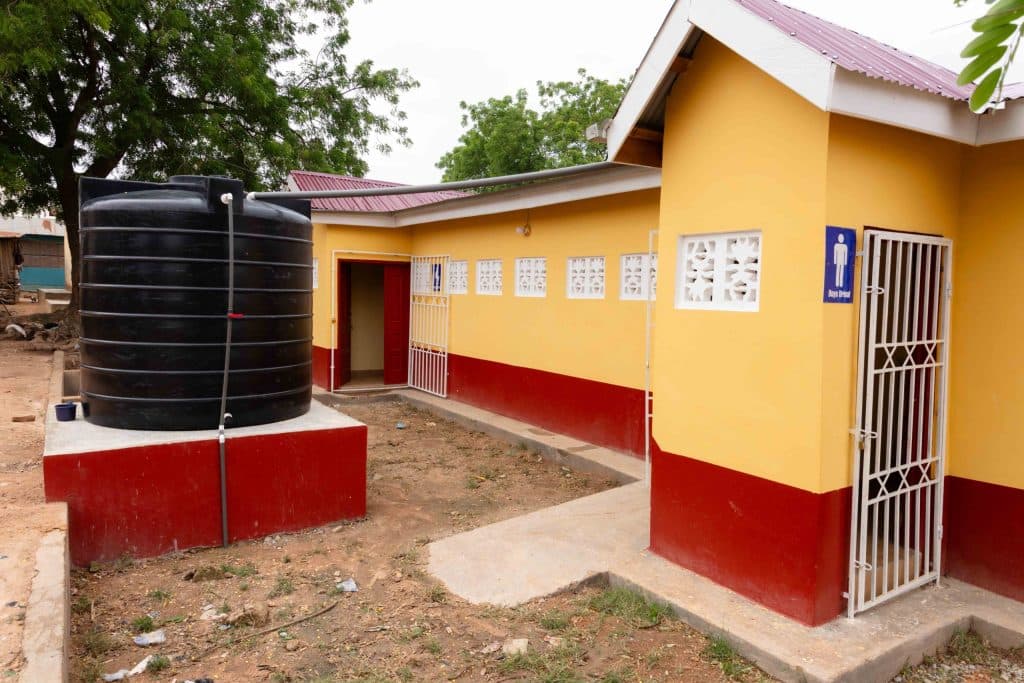
Ghana’s persistent challenges with sanitation in schools are partly the result of poor prioritisation and weak institutional structures, according to Yaw Atta Arhin, WASH Technical Specialist at World Vision Ghana.
He said the country’s focus on school infrastructure often centres on classrooms and learning materials while paying inadequate attention to toilets, handwashing facilities and other sanitation needs that are critical to effective learning.
“Because we haven’t prioritised sanitation enough, we think that the school infrastructure is enough. The classrooms, the slates, the chalks, the pens are enough,” Mr Arhin said.
“But it is not. We forget to remember that sanitation creates the conducive environment for academic excellence.”
Speaking during a panel discussion at the Clean Conference on Friday, August 21, 2026, he argued that poor sanitation can directly affect academic outcomes, particularly in schools where pupils struggle to access functional toilet facilities.
“Wherever sanitation is poor and children struggle to access toilet facilities, academic performance is poor,” he said.
The comments came in response to a question on why many schools across Ghana continue to lack functional toilets and handwashing facilities despite evidence linking poor sanitation to absenteeism, particularly among girls during menstruation.
Mr Arhin said beyond funding and maintenance, the country must address what he described as a deeper institutional problem within the sanitation sector.
“For sanitation, the institutional arrangements, for me, are weak,” he said.
He pointed to the absence of a dedicated operational agency responsible for implementing sanitation policies across the country.
“From ministry to the field, there is no operational agency for sanitation. And so when the policies are developed, who takes them and implements them?” he asked.
Comparing the sanitation sector with the health sector, he noted that the Ministry of Health is supported by several specialised agencies and institutions responsible for carrying out specific functions.
“When you come to the sanitation sub-sector, there is not even one. And how do you expect such a structure to succeed?” he said.
Mr Arhin called for the establishment of operational agencies that can take responsibility for implementing sanitation policies and programmes across the country.
“Beyond creating the ministry, it is also important that we establish the necessary operational agencies to be able to implement sanitation across board,” he said.
He warned that without such institutional arrangements, responsibility for sanitation would remain unclear.
“Once that does not happen, there will continue to be that missing link. And it will become nobody’s business,” he said.
The Clean Conference was held under the theme, “Assessing Ghana’s Progress Towards UN Sustainable Development Goals 2030.”