The Ghana Health Service (GHS) has dismissed as false and misleading claims circulating on social media that the insecticide-treated mosquito nets currently being distributed to primary school pupils contain harmful chemicals that pose health risks.
In a press release issued on Friday, June 26, 2026, the Service assured the public that the nets are safe for use and have undergone rigorous international and national safety assessments before being approved for distribution.
“The attention of the Ghana Health Service has been drawn to a video circulating on social media purporting that the insecticide-treated nets (ITNs) currently being distributed to primary school children contain dangerous chemical compounds that are harmful to human health. We wish to state categorically that these claims are false, misleading, and without any scientific or regulatory basis,” the statement said.
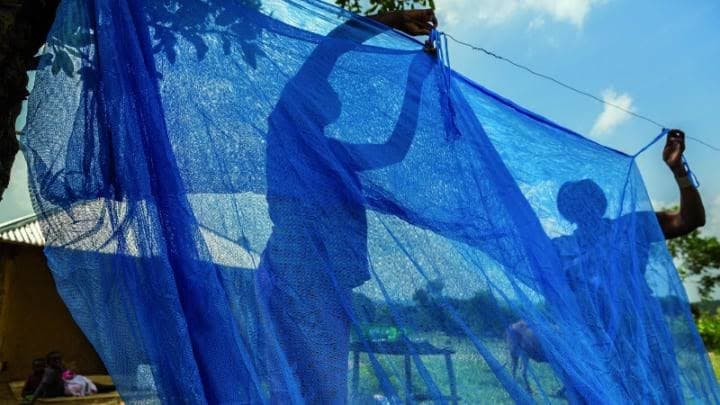
The Health Service explained that the nets being distributed are the Interceptor® G2, a World Health Organization (WHO)-approved Long-Lasting Insecticidal Net used as part of Ghana’s malaria elimination programme.
According to the Service, the nets contain two insecticidal compounds, chlorfenapyr and alpha-cypermethrin, which have been widely used in public health programmes around the world for many years.
“It contains two insecticidal compounds, chlorfenapyr and alpha-cypermethrin, both of which have been in use in public health programmes around the world for many years and are well-known to health and regulatory authorities,” the GHS noted.
The health authority further stressed that the Interceptor® G2 net has received WHO Prequalification and has also been approved by Ghana’s Food and Drugs Authority (FDA).
Addressing concerns that the chemicals could cause respiratory illnesses, the GHS said the insecticides have an “extremely low vapour pressure,” meaning they do not become airborne during normal use.
“This implies that a person sleeping under this net breathes normal air, not insecticide,” the statement explained.
The Service added that despite decades of insecticide-treated net use across Ghana and sub-Saharan Africa, “not one documented case of respiratory illness has ever been linked to sleeping under a properly used ITN.”
The Health Service urged parents and caregivers not to reject or discard the nets, describing them as a critical tool in protecting children against malaria, which remains one of the leading causes of illness and death among children in Ghana.
“Use the nets. Do not discard, return, or refuse them. These nets protect your children from malaria, which remains a leading cause of childhood illness and death in Ghana,” it advised.
To improve user comfort, the Service recommended airing newly received nets in a shaded, well-ventilated area for up to 48 hours before first use to allow any mild new-net smell to dissipate.
It also cautioned the public against spreading unverified health information, warning that misinformation could undermine efforts to combat malaria.
“Refrain from sharing unverified health claims. Misinformation causes unnecessary fear and puts children and everyone at risk,” the statement said.
The Ghana Health Service reaffirmed its commitment to public safety, insisting that every insecticide-treated net distributed under the national programme has been thoroughly tested and verified as safe before reaching households.