
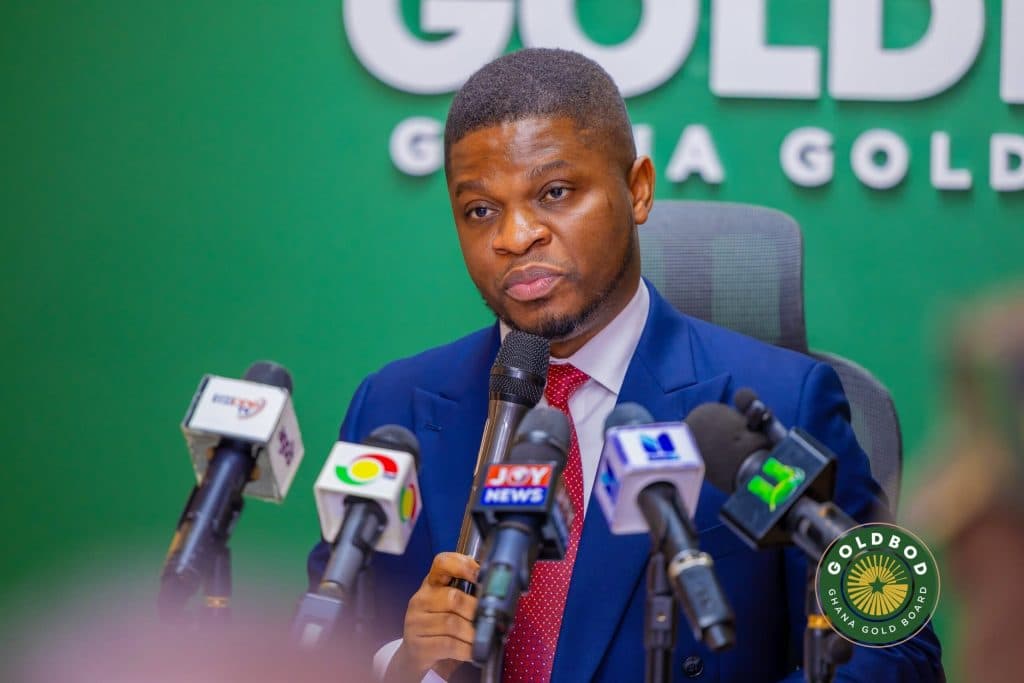
The Ghana Gold Board (GoldBod) plans to roll out a gold tokenisation programme in 2027, allowing citizens and other Africans with modest funds to participate in gold-backed investment opportunities.
The Chief Executive Officer of GoldBod, Sammy Gyamfi, announced the plan at the National Mining Dialogue in Accra on Tuesday, August 18.
He said the initiative is intended to broaden access to Ghana’s mineral wealth by allowing more people to own a stake in gold without necessarily having to purchase physical gold.
“The GoldBod is also preparing to roll out a gold tokenization program in 2027 to promote fractional ownership of Ghana’s gold resources by citizens and Africans,” Mr Gyamfi said.
“Through this initiative, citizens with modest funds can participate in gold-backed investment opportunities.”
He said the broader objective was to ensure that Ghanaians do not remain spectators in an industry that generates significant wealth for the country.
“The objective is simple: we must all own and share in the mineral wealth of our nation,” he said.
The announcement forms part of GoldBod’s broader push to increase Ghanaian participation in the gold value chain.
Mr Gyamfi said GoldBod was seeking to move Ghana beyond the traditional model of extracting gold and exporting it, with greater emphasis on local ownership, refining and downstream industries.
He said the institution had already made local gold trading the preserve of Ghanaians and was creating opportunities for Ghanaian jewellers, refiners and young entrepreneurs to participate more directly in the sector.
GoldBod is also planning to establish a Ghana Gold Village in partnership with the private sector to support jewellery manufacturing, gold fabrication and access to international markets for Ghanaian gold products.
According to the GoldBod boss, the project will be led by GoldBod Jewelry Limited and is expected to provide opportunities for skills development, enterprise and jobs.
The tokenisation programme is therefore expected to add another layer to GoldBod’s efforts to expand participation in Ghana’s gold economy by giving people with relatively small amounts of money an avenue to participate in gold-backed investments.
Mr Gyamfi said the policy direction was ultimately about ensuring that the wealth generated from Ghana’s gold resources is shared more broadly.
He argued that communities hosting mining activities and Ghanaians generally should have a greater stake in the value created from the country’s mineral resources.
“Production without ownership is limited. Production without value addition is leakage. Production without community transformation is a broken social contract,” he said.



