
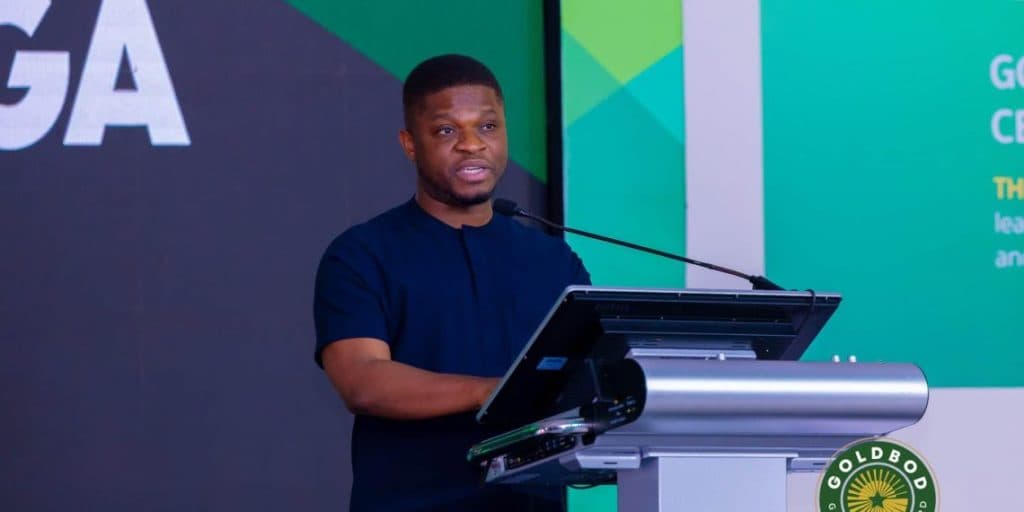
GoldBod Chief Executive Officer Sammy Gyamfi has defended his call to formalise eligible unlicensed small-scale miners, arguing that operators working outside protected forests, water bodies and other environmentally sensitive areas should be given an opportunity to enter the legal mining sector.
His comments follow criticism over remarks suggesting that unlicensed miners operating outside prohibited areas could be formalised rather than pursued by security personnel.
In a response to the controversy, Gyamfi maintained that the government’s approach should distinguish between miners who can be brought into the formal sector and those whose activities pose serious environmental and public safety risks.
He stressed that mining operations that pollute water bodies, encroach on forest reserves or take place in dangerous locations must not be tolerated.
These prohibited locations, he said, include roadsides, school lands and residential spaces such as bedrooms, where mining activities could endanger lives and property.
According to Gyamfi, artisanal and small-scale miners operating outside prohibited areas could qualify for formalisation under the government’s Responsible Cooperative Mining and Skills Development Programme (rCOMSDEP), provided their operations do not cause environmental harm.
He explained that the initiative is designed to transition eligible unlicensed miners into the formal sector by providing the necessary legal documentation, permits, certifications and training.
The approach is intended to promote responsible mining practices while improving compliance with regulations governing Ghana’s small-scale mining industry.
Gyamfi argued that formalisation offers a way to bring eligible operators under regulatory oversight, rather than relying solely on enforcement measures against miners working outside the legal framework.
The GoldBod CEO also rejected the circulation of what he described as an edited version of his earlier comments, arguing that the footage left out important details about the government’s proposed support for eligible miners.
He said the broader policy approach includes formalisation, skills development and access to financing to help operators adopt more responsible mining methods.
According to him, these measures are expected to support environmental protection, improve accountability and strengthen traceability in the small-scale gold mining sector.
The position, he maintained, does not amount to an endorsement of mining in protected areas or activities that threaten water bodies, forests and communities.



