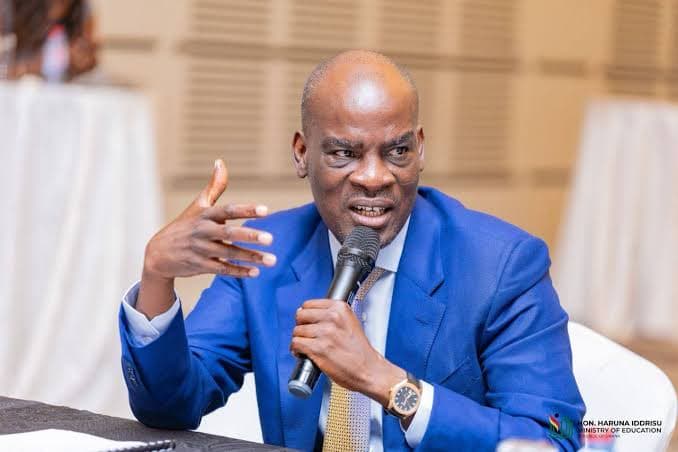
Education Minister Haruna Iddrisu has announced plans to resolve the challenges associated with school placement as government seeks to increase the number of Category A schools and upgrade some Category B and Category C schools to meet high demand from students and parents.
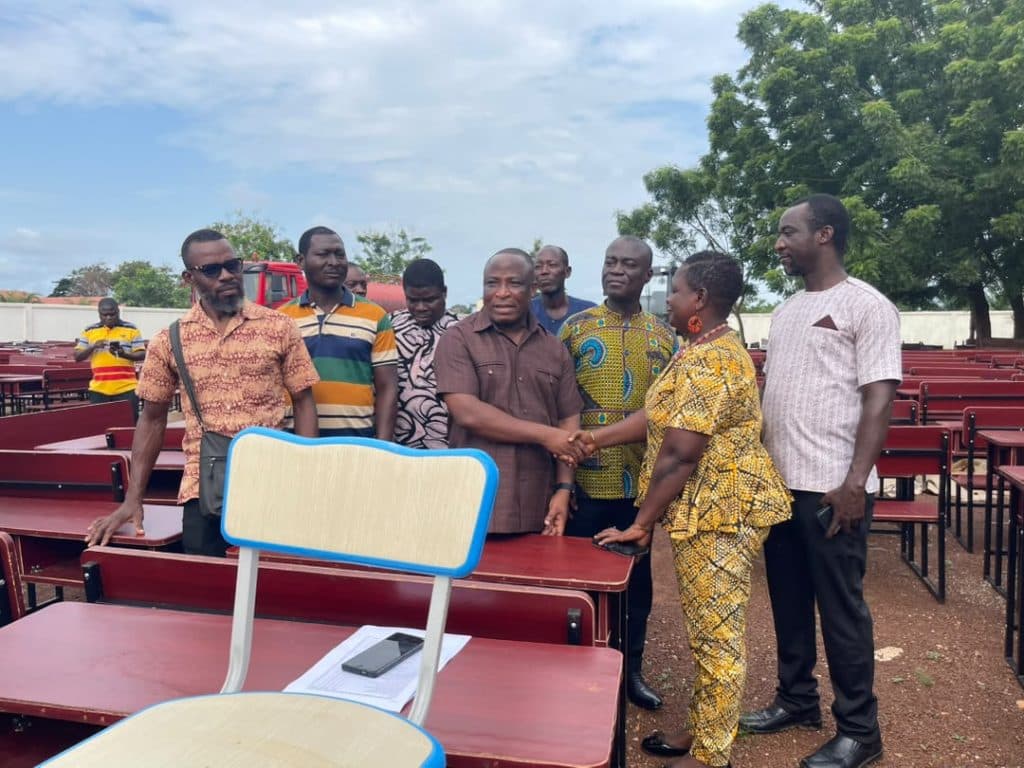
He made the announcement during the commissioning and official handing over of six educational projects in the Asuogyaman Constituency.
To support the expansion of secondary and basic education infrastructure, the Minister said government has secured $300 million in World Bank funding under the STAG programme, with GH¢2.8 billion dedicated directly to physical infrastructure and quality assurance. An additional $200 million in World Bank financing is also being pursued.
According to Mr Iddrisu, part of the funds will be used to upgrade schools to address placement challenges, which he attributed to the failure of the previous NPP government to expand infrastructure after increasing enrolment through the Free SHS policy.
He also announced the nationwide rollout of the “John Mahama Model Basic School” policy from 2027. The initiative is aimed at addressing infrastructure deficits, as Auditor-General data indicates that nearly three million children currently study under trees in 10,900 basic schools across 13 regions.
Under the new model, basic education infrastructure will be standardised into modern, all-in-one facilities. Each unit will feature a 12-classroom block comprising Kindergarten, Primary and Junior High School, along with a STEM computer laboratory, dining hall, 14-seater water closet facility and dedicated changing rooms for girls.
The Member of Parliament for Asuogyaman, Hon Thomas Ampem Nyarko, expressed joy at how he managed, while in opposition, to cut the long distance children in his constituency had to walk to access JHS in other communities.
The District Chief Executive for Asuogyaman, Godwin Bobobee, explained that the district-led design was introduced to solve recurring structural challenges such as bat infestations, ripped roofs and lack of sanitation facilities. The projects were built at a cost of GH¢910,000 using the District Assembly Common Fund.
By: Kofi Adjei | Metrotvonline.com | Ghana