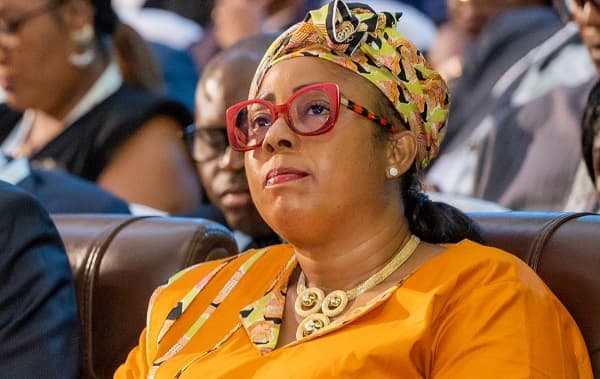
The Greater Accra Regional Coordinating Council has called for urgent and sustained action to tackle the region’s worsening sanitation challenges, warning that poor waste management poses serious risks to public health, safety and development.
The call was made by the Okaikwei North Municipal Chief Executive, Christian Tetteh Badger, who represented Greater Accra Regional Minister Linda Obenewaa Akweley Ocloo at the Clean Conference organised by Ignite Media Group on Friday, August 21, 2026.
Speaking on the topic, “Tackling Poor Sanitation in Greater Accra,” Mr Badger said the devastating June 29 floods had once again exposed the consequences of poor sanitation and environmental management.
“Following the devastating rain disaster of June 29th, 2026, which severely affected parts of the region, we have been reminded once again that sanitation and environmental management are not matters we can afford to treat casually,” he said.
He said Greater Accra’s rapid population growth was putting enormous pressure on sanitation infrastructure, drainage systems, waste management facilities and other essential services.
According to him, the challenge goes beyond the amount of waste generated, with poor storage, collection, transportation, treatment and disposal contributing to indiscriminate dumping, littering and choked drains.
“We continue to witness indiscriminate dumping, littering, choked drains, illegal disposal of waste, and poor attitudes towards environmental cleanliness,” he stated.
Mr Badger said poor sanitation was directly linked to flooding, environmental degradation, disease outbreaks and a decline in the quality of life of residents.
“Sanitation is a public health issue. It is an environmental issue. It is an economic issue. Above all, it is a development issue,” he said.
He stressed that government alone could not solve the problem, calling for stronger cooperation among local assemblies, private waste management companies, traditional and religious leaders, civil society organisations and residents.
He urged private waste management companies to move beyond the traditional practice of collecting waste and transporting it to disposal sites, and instead invest more in waste prevention, segregation, reuse, recycling and recovery.
“Waste should not always be viewed as something to be thrown away. With high technology and investment, waste can become a resource that creates jobs, supports entrepreneurship, and drives innovation,” he said.
Mr Badger also placed responsibility on residents, insisting that no amount of infrastructure could compensate for irresponsible environmental practices.
“We cannot build enough drains to compensate for the irresponsible environmental practices,” he warned.
He said households, businesses, schools, churches, mosques, markets and other institutions must make cleanliness part of their daily routines rather than waiting for government-announced clean-up exercises.
Five-point approach
The MCE outlined five key areas he said should guide efforts to achieve a cleaner Greater Accra: prevention, collection, recovery, enforcement and behavioural change.
He called for measures to reduce the amount of waste generated, reliable waste collection across communities and increased recycling, reuse and composting.
He also called for stricter enforcement of sanitation laws and bylaws, while urging residents to change attitudes towards environmental cleanliness.
“Infrastructure alone would not solve our sanitation problem if our attitudes remain unchanged,” he said.
Mr Badger further called for better data on waste generation and collection, illegal dumping sites, inspections and sanitation offences to help authorities identify gaps and measure progress.
“What we measure, we can manage. What we manage, we can improve,” he said.
He disclosed that additional funds had been allocated under the District Assemblies Common Fund to support environmental and sanitation activities.
He also noted that sanitation forms part of the 2026 performance contract signed by Metropolitan, Municipal and District Chief Executives, saying assemblies therefore had little justification for persistent poor performance where resources and responsibilities had been provided.
Mr Badger urged authorities to give greater attention to household toilet provision and the safe management of sanitation facilities, warning that Greater Accra could not afford to normalise open defecation or unsafe disposal of human waste.
He said the region needed to move “from promises to performance, from campaigns to systems, and from reaction to prevention.”
He ended with a call for collective responsibility, saying the sanitation crisis could only be addressed if government, assemblies, the private sector, community leaders and citizens played their respective roles.
“Cleanliness cannot be achieved by government alone. It must become a shared value and a shared responsibility,” he said.
He urged participants at the Clean Conference to ensure the event resulted in practical action rather than becoming another platform for discussing and lamenting the region’s sanitation challenges.
“Let this conference mark not just another gathering to discuss and lament our sanitation challenges, but a renewed commitment to action,” he said.