
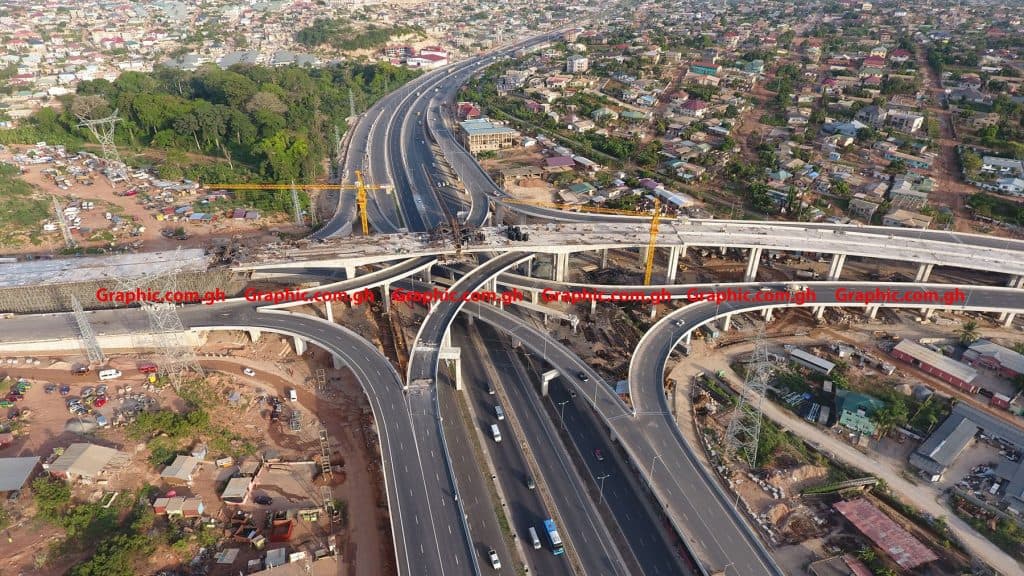
The Ghana Statistical Service (GSS) is urging government to accelerate infrastructure development as building cost pressures continue to ease across the country.
This follows the latest Prime Building Cost Index (PBCI) report for February 2026, which showed a sustained decline in construction inflation, creating what the Service describes as a strategic window for public investment.
“This is a good time to spend strategically and fast-track key infrastructure projects, including the Big Push, while targeting the top drivers,” the report recommended.
According to the GSS, the steady drop in inflation – now at 2.4% – signals improving stability in the construction sector, making it more predictable for large-scale government projects.
The Service believes this environment allows policymakers to undertake major infrastructure programmes at relatively lower cost compared to the high inflation period recorded in 2025.
Beyond spending, the report also highlighted structural issues within the sector, particularly labour-related challenges.
“The persistent labour inflation also suggests a skills gap, so expanding training for artisans is important,” the GSS noted.
Although labour inflation has declined significantly – from 5.4% in January to 2.4% in February – it remains a key area of concern due to underlying workforce constraints.
The data suggests that while overall inflation is easing, the construction industry still faces shortages in skilled labour, which could drive future cost increases if not addressed.
The GSS emphasised that government intervention at this stage could have multiplier effects on the broader economy, especially through job creation and improved infrastructure delivery.
With cost pressures moderating and price increases slowing to just 0.4% month-on-month, analysts say the current conditions present a rare alignment for policy efficiency.
The PBCI report, which tracks prices of building materials, labour, and equipment across 16 regions, is widely used by policymakers and investors to guide decisions in the construction sector.



