
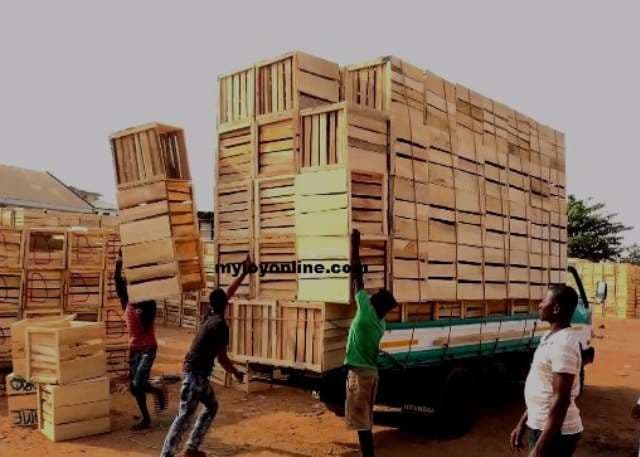
The Ghana Union of Traders Association (GUTA) has called on the government and regional authorities to provide timely security alerts for traders following the reported killing of Ghanaian tomato traders in Burkina Faso.
Joseph Paddy, Vice President of GUTA, said Good Afternoon Ghana on Metro TV on Tuesday, February 24, 2026, that the lack of information on risks in neighbouring countries leaves traders vulnerable.
“It’s been a worrying situation for the business community when we heard about the purported killing of our businesswomen who apply their trade in Burkina Faso,” Paddy said.
“That’s why we’re calling on government and the sub-region to tighten security and safety in our borders.”
He explained that Ghanaian traders rely on inland countries like Burkina Faso for products such as tomatoes, while Burkinabe traders use Ghanaian ports.
He warned that insecurity could increase prices at home. “When the women are not applying their trading in Burkina Faso, you see that the cost of tomatoes will go up in the market space,” he said.
Paddy said traders have not received alerts from national security on potential risks in neighbouring countries, leaving them exposed.
“Most of the time, the U.S. government gives alerts to their nationals. I don’t remember the last time national security has come out to give the trading community an alert when trading in Togo, Benin, Nigeria, or any part of the West Africa sub-region,” he said.
He urged authorities to identify unsafe areas and provide guidance to traders.
“These alerts must come from national security so we can inform our members about security zones and what precautions to take,” he said.
Paddy also suggested that authorities consider escorting traders across borders, as was done when Nigeria previously closed its border.
“When women are travelling, our national security could escort them to the border, then the Burkina Faso security takes over and escorts them wherever they are trading,” he said.
According to Paddy, inland countries such as Burkina Faso, Mali, and Niger are particularly risky.
“Most of our drivers complain that they go through challenges in the desert when travelling from one place to another. There is always a risk of attack, but government does not inform us,” he said.
Paddy said GUTA has been engaging with sector leaders to manage the situation, but warned that without official alerts, traders remain exposed.
“We need timely information from government so that whenever our members are travelling, they can tread cautiously and trade in a safe environment,” he said.
He also highlighted the economic consequences of insecurity, noting that both traders and transporters are reluctant to move goods, which affects supply and market prices.



