The Institution of Engineering and Technology (IET) Ghana officially inaugurated a Student Chapter at Cape Coast Technical University (CCTU) on Friday, 6th March 2026.
The ceremony and workshop, held under the theme “Surviving and Thriving in Engineering,” brought together national and regional IET executives, faculty members, alumni, and students in a shared commitment to nurturing the next generation of engineers.
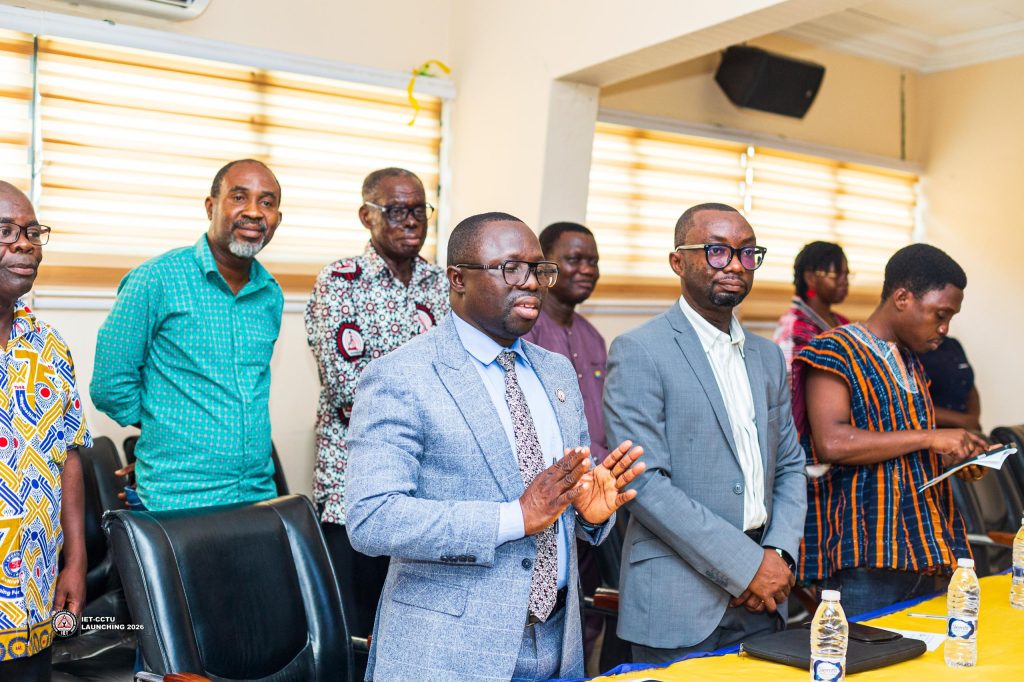
The event was chaired by the Dean of the School of Engineering, Engr. Prof. Eric Awere, while the IET Ghana National President, Ing. Wonder Salami Davor, led the formal inauguration of the student chapter.
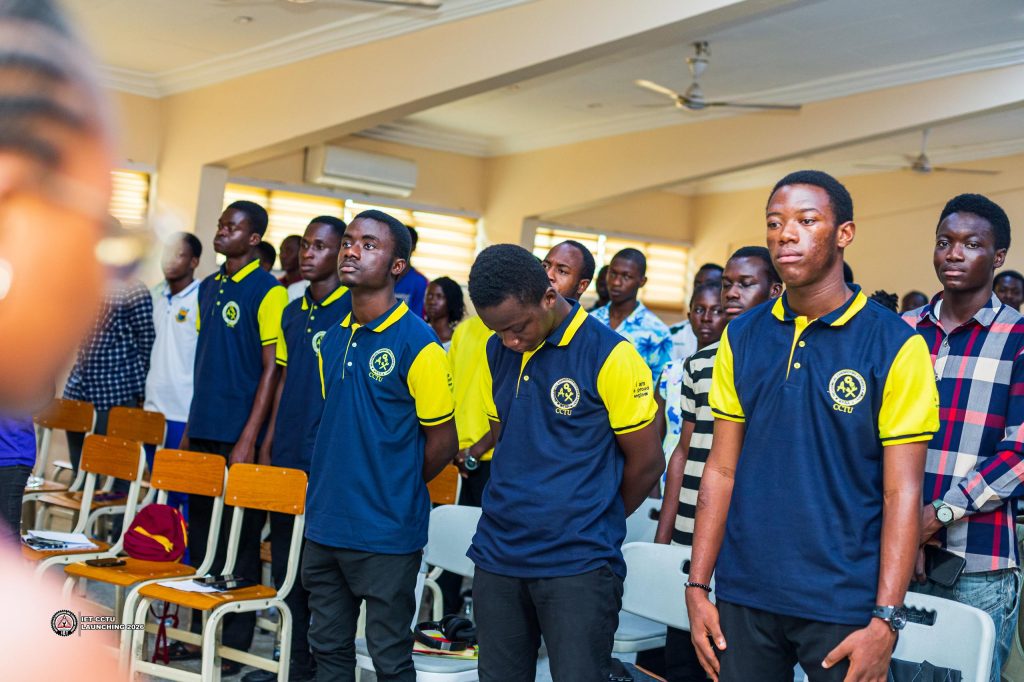
In a defining moment of the programme, Ing. Wonder Davor formally declared the chapter open. Addressing the students, he spoke candidly about the discipline required to succeed in engineering.
“Engineering is not for geniuses — it is for disciplined thinkers. It demands discipline, not brilliance. Engineering students do not find time; they create time,” he said.
He cautioned students against common academic pitfalls such as studying only before examinations, avoiding difficult courses, and isolating themselves from their peers.
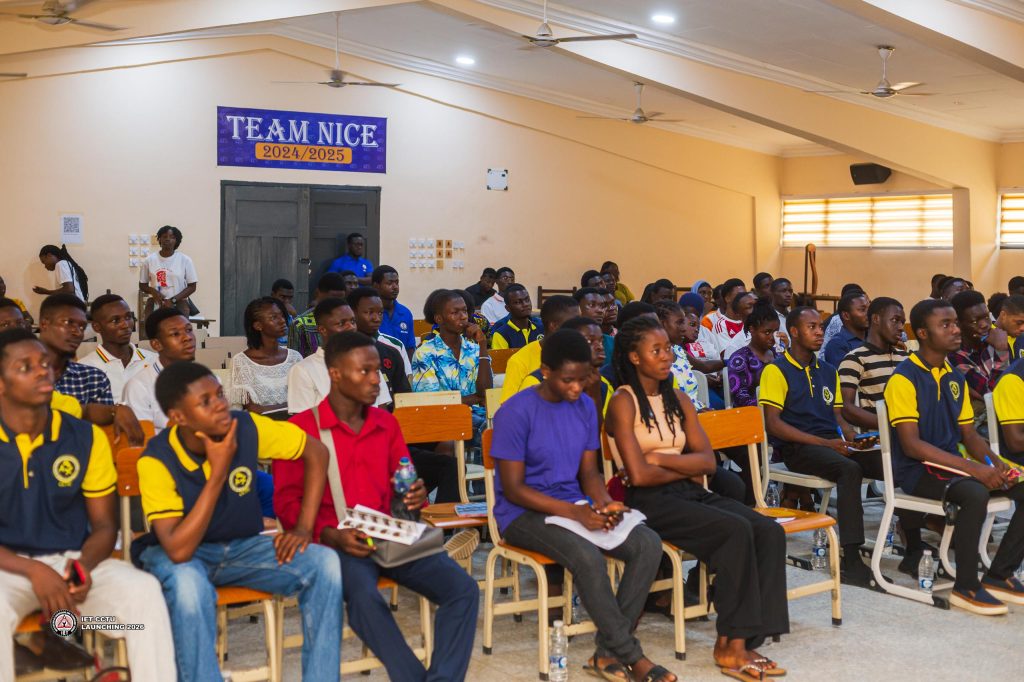
Ing. Davor further urged students to view the IET student chapter not merely as an extracurricular activity but as a platform for accelerating professional development. According to him, student chapter members are eligible for professional certification immediately after graduation, unlike non-members who must complete a minimum of three years of supervised work before qualifying.
In his welcome address, Engr. Prof. Eric Awere acknowledged the presence of the IET delegation and reaffirmed CCTU’s commitment to strengthening professional engineering education.
He revealed that more than 40 faculty members at the university are professionally affiliated with IET Ghana, a development he said positions the institution well for collaboration.
“As the Dean, I make a solemn pledge to support the survival and growth of the IET CCTU Student Chapter. We can only achieve this by working together,” he stated.
The inauguration was followed by a workshop session that offered students practical guidance on building successful engineering careers.
Engr. Dr. Oteng Peprah opened the session with a presentation on The Engineer’s Mindset, encouraging students to move beyond rote learning and embrace structured problem-solving and innovation. He challenged participants to become engineers who design systems that prevent problems rather than merely reacting to failures.
Engr. Dr. Mrs. Ernestina Degraft, Head of the Department of Mechanical Engineering, delivered a presentation on A Student’s Roadmap. She stressed that engineering education must combine academic excellence with professional exposure through internships, industrial attachments, and mentorship.
Prof. Awere also reflected on the importance of professional responsibility and collaboration in engineering, emphasising that integrity, innovation, and accountability are just as critical as technical knowledge.
Engr. Prof. Charles Emmanuel Oppon, patron and coordinator of the student chapter, broadened students’ perspectives with a presentation on Opportunities in Engineering You Don’t Know About Yet.
He highlighted emerging fields such as artificial intelligence, renewable energy, robotics, and additive manufacturing, while also encouraging students to explore careers in entrepreneurship, research, policy, and education.
“Engineering is not just a profession — it is a platform for innovation, service, and transformation. Dare to explore opportunities you may not yet see,” Prof. Oppon told the students.
In his closing remarks, Engr. John Ebo Bentoom, First Vice President of IET Ghana, commended the active participation of the students and encouraged them to apply the lessons shared during the programme.
“Learn hard and graduate as a professional engineer from IET. Let’s continue growing Ghana and building the knowledge gap,” he said.
Ing. Davor concluded the event with a reminder that engineering is a regulated profession. He explained that graduates who were not part of a recognised student chapter must work under a licensed professional engineer for at least three years before they can obtain professional certification.
Membership in the IET Student Chapter, he noted, provides a pathway that allows graduates to transition more quickly into professional certification.
“When you come out of school without being part of the student chapter, you would have to work under a professional for at least three years before you can get your professional certification. Being a member of the student chapter, you have the opportunity to join immediately after school. This is just one of the many benefits,” he explained.