Policy think tank IMANI Africa has raised concerns over the Environmental Protection Authority’s (EPA) proposed chemical treatment of polluted rivers, warning that the initiative could become a costly intervention if it is pursued without addressing the root causes of illegal mining pollution.
This comes after the Executive Director of the Environmental Protection Authority, Nana Ama Klutse, defended the agency’s proposal to “dechemicalise” Ghana’s contaminated water bodies using nano-liquid particles.
In a brief titled The Miracle on the Birim: Ecological Restoration or Procurement Pitfall?, IMANI said the proposal is based on laboratory successes where nano-liquid particles are said to settle suspended solids and neutralise pollutants in water.
However, the think tank cautioned that replicating such outcomes in natural river systems could prove far more complex.
“The primary concern for analysts is not merely the chemistry, but the inevitable intersection of environmental policy and public procurement,” the brief stated.
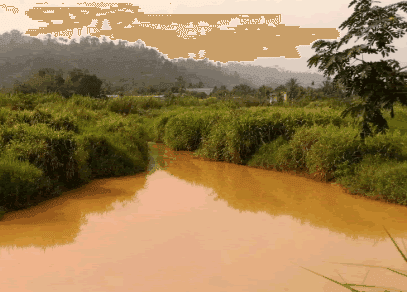
The concerns follow a public demonstration conducted on the Birim River, a tributary of the Pra River. The river originates in the Atewa Range near Kibi and flows through areas that have been heavily affected by illegal mining activities.
According to IMANI, the EPA demonstration involved introducing nano-liquid particles into a contained, non-flowing section of the river.
The results were visually striking. “Within hours, sediments settled, and the water transitioned from a turbid ochre to relative clarity,” the brief noted.
But the think tank argued that the controlled nature of the test limits the conclusions that can be drawn about its effectiveness in real river conditions.
“To the casual observer, it was a ‘miracle.’ To a prober, however, the ‘controlled’ nature of the experiment failed to account for the velocity, sectional depth, and volume of a living, flowing river,” the report said.
The Birim River was also seen as symbolically significant because it flows through the home region of former President Nana Akufo-Addo, who once pledged to “put his presidency on the line” to end illegal mining, widely known as galamsey.
Beyond the technical debate, IMANI raised concerns about the financial implications of applying the chemical restoration approach to Ghana’s rivers.
The brief cited EPA estimates indicating that restoring polluted rivers using the technology could cost about $200,000 per kilometre. When extrapolated across several major rivers, including the Birim, Tano, Pra, Ankobra, Densu and Offin, the total cost could exceed $227 million, equivalent to roughly GH¢2.4 billion.
“This raises a fundamental question of public choice: is this an investment in ecology, or the birth of a lucrative new industry for ‘restoration contractors’?” the think tank asked.
IMANI further argued that chemical treatment alone would not solve the problem if illegal mining activities continue upstream.
“Pouring chemicals into rivers while illegal mining remains unchecked is an exercise in futility,” the brief warned, noting that the number of forest reserves affected by illegal mining reportedly increased from 44 to 50 between 2025 and 2026.
The think tank therefore proposed a structured approach to ecological restoration that prioritises enforcement against illegal mining before any chemical treatment is considered.
It said authorities must first ensure strict enforcement and declare rivers free from galamsey activities before undertaking restoration efforts. In addition, diverted river sections should be reconnected to their natural channels, while degraded lands surrounding riverbanks should be reclaimed with vegetation to prevent further siltation.
“Until the source of the pollution is neutralised, any chemical miracle will be washed away by the next tide of illegal activity,” the think tank cautioned.
IMANI Africa added that without these measures, the proposed “dechemicalisation” programme risks becoming “a drain of resources rather than a solution.”