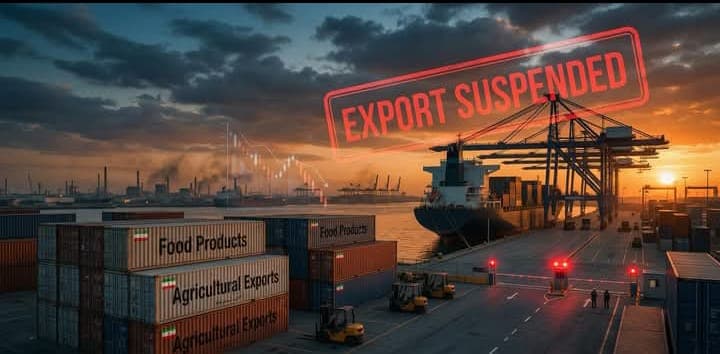
Iran has banned the export of food items and agricultural inputs to other countries, a move that could disrupt trade with about 80 nations and tighten food supplies in parts of the Middle East and Asia.
The decision comes at a time of heightened tensions between Iran and the United States, with Israel closely aligned with Washington in the long running dispute over Iran’s nuclear programme.
The crisis has intensified in recent months, with threats, sanctions and military posturing raising fears of a wider confrontation.
Iran is a major agricultural exporter and the ban is expected to affect several key commodities that bring in significant foreign exchange. Among them are pistachios, a flagship export that earns the country about 1.7 billion dollars annually. Iran is one of the world’s largest producers of the nut, supplying markets across Asia and Europe.
Fruits and vegetables such as apples, watermelons, tomatoes and cucumbers are also widely exported. Dairy products are shipped to neighbouring countries including Iraq, while dates and saffron remain important earners. Iran is one of the world’s leading producers of saffron, the high value spice used in food and cosmetics.
The suspension of exports could hit some of Iran’s closest trading partners, including Iraq, the United Arab Emirates, Russia, Pakistan and Afghanistan. Traders in these countries rely on Iranian produce for both wholesale markets and retail shelves.
While Tehran has not issued a detailed public explanation, the ban is widely seen as linked to the growing confrontation with the United States and Israel over nuclear issues. Iran has faced years of economic sanctions led by Washington, targeting its oil exports, banking sector and access to global markets.
Israeli leaders have repeatedly warned that they will not allow Iran to develop nuclear weapons capability, a claim Tehran denies, insisting its nuclear programme is for peaceful purposes.
Under pressure from sanctions and facing economic strain at home, Iran appears to be tightening control over its domestic food supply.
The country imports several staple items to meet local demand, including wheat, corn and barley. It also brings in rice, particularly the popular IR64 variety, soybeans and soybean oil for livestock feed and cooking, sugar, meat and livestock, as well as fertilisers and agrochemicals to support its farms.
Analysts say the export ban may be aimed at safeguarding domestic stocks and preventing price spikes if the conflict worsens or if further sanctions restrict trade routes. It could also be a strategic signal to regional partners and global markets that Tehran is prepared to use its economic leverage during the standoff.
For farmers and exporters inside Iran, the move raises uncertainty. For import dependent neighbours, it could mean higher prices and tighter supplies in the weeks ahead, especially for specialised products such as pistachios and saffron.
As diplomatic tensions continue and military rhetoric grows sharper, the impact of the export ban may be felt far beyond Iran’s borders, underscoring how geopolitical disputes can quickly spill over into everyday markets and household kitchens.